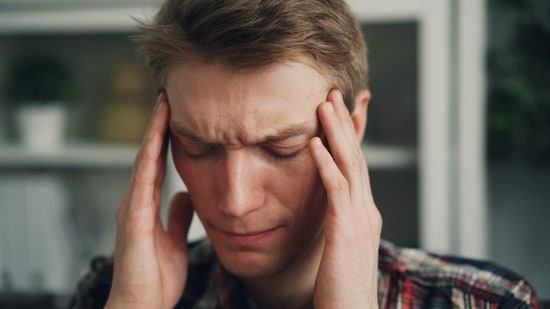
Headache is a common problem, and most of the time, it is thought to be due to poor sleep, stress, or excess work. At first instinct, most do not narrow in on the physiological causes of headaches, which can vary from neurological to ophthalmological. From the perspective of ophthalmology, headaches are also connected to eye health and may indicate a need to get your eyes checked.ALSO READ: Smog affects your eyes too: Doctor shares care tips, common mistakes and signs you need medical help
Let's see what headaches can mean for your eyes. Dr Vivek Garg, Associate Director and HOD, Ophthalmology at BLK-Max Super Speciality Hospital, commented that when headaches occur, people believe the cause is neurological, when it could be related to the eyes as well.
He said, “In my clinical practice, I frequently meet patients who have spent months—sometimes years—taking analgesics, undergoing brain scans, or consulting neurologists for chronic headaches, only to discover that the culprit was hiding in plain sight: their eyes."
How is headache connected to your eyes?
Dr Garg explained how the visual system is connected to cranial nerves, saying, "Your visual system and cranial nerves are intricately linked. When eyes endure continuous visual fatigue, the surrounding ocular and facial muscles overwork to maintain focus. This persistent muscular spasm radiates directly into the forehead, temples, and neck, mimicking a classic tension headache.”
So, discomfort in your eyes may not stay confined to them. You may experience an ache around your forehead or temples without realising that prolonged visual effort could be contributing to it.
{{/usCountry}}So, discomfort in your eyes may not stay confined to them. You may experience an ache around your forehead or temples without realising that prolonged visual effort could be contributing to it.
{{/usCountry}}
What can a headache mean for your eyes?
Different eye conditions may cause headaches, so there is no single explanation. Dr Garg outlined some possible causes, ranging from problems with focusing and eye coordination to changes in pressure within the eyes:
1. Uncorrected refractive errors:
- Even minor astigmatism, hyperopia (farsightedness), or age-related presbyopia (after age 40) forces the tiny ciliary muscles inside the eye to work continuously.
- This non-stop contraction causes a dull, persistent ache across the brow.
2. Convergence insufficiency:
- To read or work on screens, both eyes must turn inward simultaneously.
- When eye muscles cannot coordinate smoothly, the brain works overtime to fuse two misaligned images, triggering throbbing pain behind the eyes.
3. Digital eye strain:
- Screen time reduces natural blinking from 15–20 times a minute down to just 5–7 times.
- The result is dry eyes, excessive glare sensitivity, and prolonged accommodative stress that trigger end-of-day headaches.
4. Undiagnosed glaucoma:
- A sudden or recurrent spike in intraocular pressure (fluid pressure within the eye) can cause severe pain radiating around the orbit and temple.
- It is sometimes accompanied by nausea or colored halos around lights.
How can you tell if your headache is vision-related?
Headaches can vary and show up differently. The symptoms that accompany them may offer clues. Dr Garg shared the following signs:
- It begins or intensifies in the afternoon or after prolonged reading/laptop use.
- Pain is localized around, behind, or between the eyes.
- Resting your eyes in a dim room eases the discomfort within 30 minutes.
- You experience subtle blurriness, double vision, neck stiffness, or burning eyes.
Should you take painkillers?
The tendency to take painkillers is instinctive, but is it advisable? The expert advised against relying on them alone, as they only mask the symptoms and do not correct the biomechanics of your vision. His recommendation is to get your eyes checked if you experience recurrent headaches.
He added what could ease your vision-related headaches: “A quick roadside optometry chart test is not enough—you need an evaluation that checks binocular muscle coordination, refractive error, corneal health, and intraocular pressure. Simple interventions such as updated spectacles, blue-cut coatings, lubricating drops, and the 20-20-20 rule can eliminate your headaches entirely.”
Note to readers: This article is for informational purposes only and not a substitute for professional medical advice. Always seek the advice of your doctor with any questions about a medical condition.
Catch your daily dose of Fashion, Taylor Swift, Health, Festivals, Travel, Relationship, Recipe and all the other Latest Lifestyle News on Hindustan Times Website and APPs.
Catch your daily dose of Fashion, Taylor Swift, Health, Festivals, Travel, Relationship, Recipe and all the other Latest Lifestyle News on Hindustan Times Website and APPs.