
 E-Paper



Truffles: not a trifle matter in the culinary world

 Prefer HTon Google


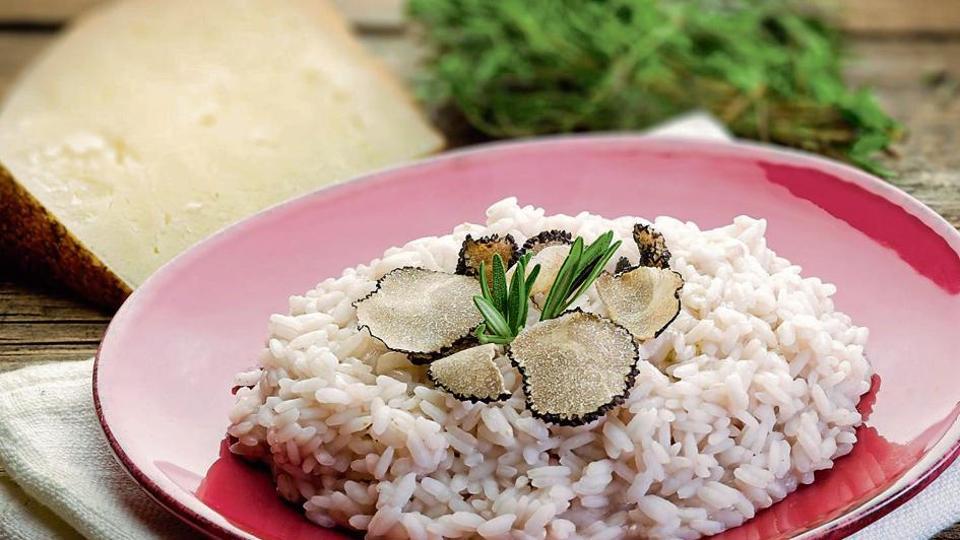
There’s hardly a food aficionado who doesn’t love to gorge on the aromatic and flavourful truffle mushrooms
There’s hardly a food aficionado who doesn’t love to gorge on the aromatic and flavourful truffle mushrooms. These diamonds of the kitchen, though officially from the fungus family, have the magical ability to raise the profile of any dish. “Their musky fragrance and inimitable garlicky, umami flavour can elevate any simple preparation,” says Rajesh Wadhwa, executive chef, Taj Palace, New Delhi.
Edible truffles are held in high esteem across various culinary cultures, and often reserved as a delicacy. “Even a small shaving of truffle or a sprinkling of truffle oil is enough to deliver a pungent aroma and distinctly earthy taste. They are a hot culinary commodity when it comes to chefs, but used quite sparingly owing to their high price but magnificent taste”, says Manish Sharma, executive chef, The Oberoi Gurgaon.
Special fungi spores are injected into oak or hazelnut trees when the trees are just seedlings. As the trees grow, the truffles grow underground by attaching themselves to the roots. “Truffles are best found by scent as they have a strong aroma, and dogs and pigs are used to hunt truffles. Once found, these delicate truffles are cleaned carefully with a brush to remove the soil and avoid damage,” says chef Neeraj Tyagi, director of culinary, Pullman New Delhi Aerocity. Truffles are then wrapped in a clean tissue paper or a breathable container and stored in a dark space to retain the aroma.
Truffle: the aristocratic relative of the mushroom
Fascinating fungi
Don’t confuse them with the truffle chocolate. Truffles are subterranean fungi grown in calcareous soils near the roots of broad-leaved trees such as oak or hazelnut. They are produced in France, Italy, New Zealand, China, North Africa, the Middle East, and the Pacific Northwest.
Luxe and rare
White truffles, the most valuable ones, tend to be similar to a rough-skinned potato on the outside. On the inside, they have the kind of marbled mushroom quality that you find in truffles, although in a somewhat diverse form,” says chef Ishijyot Surri.
Variety
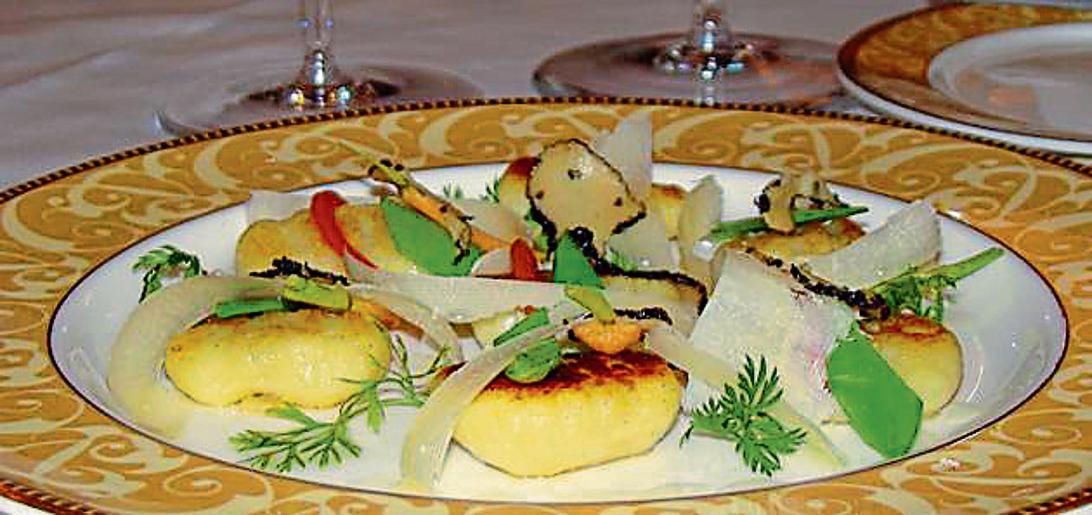
Edible truffles include white truffles, black truffles, summer or burgundy truffles, and garlic truffles. Black truffles have a rough, grainy exterior, that resembles solid clumps of dirt. Their insides are more eye-catching by comparison.
Pairings
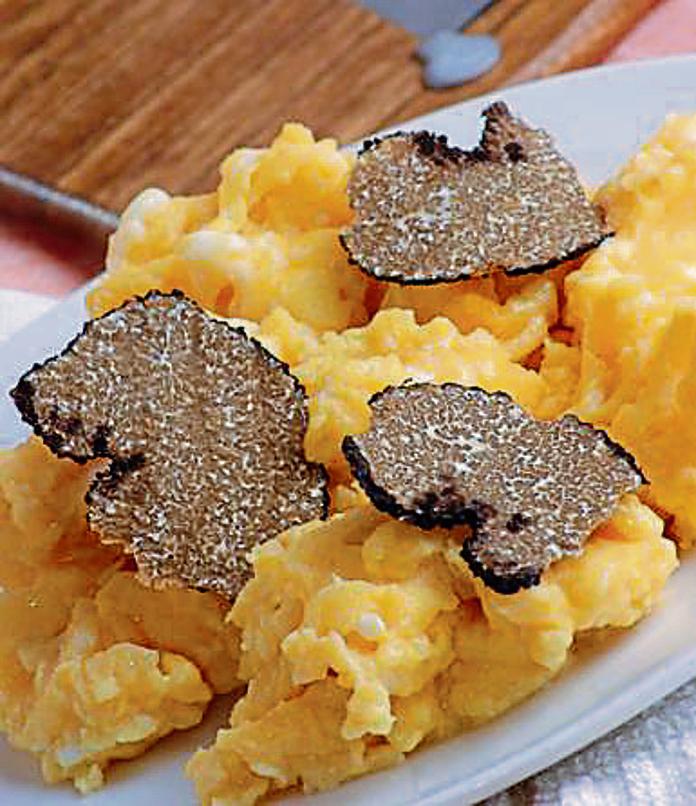
Truffles make for a luxe addition in preparations. They slowly unravel flavours in the mouth. Parmesan fondue with black truffle tortellini, grilled ocean lobster with black truffle and the classic scrambled eggs with truffles are some of dishes made using the delicate ingredient. Being exorbitantly priced, truffles are measured in front of the guests and then shaved on the dish. ‘Rare to cultivate and luxurious, Truffles are earthy, nutty, a little sweet and aromatic,” says Sahil Arora, Executive Chef, Shangri-La’s Eros Hotel, New Delhi
Pricing
Truffles take up to four years to grow and not all harvests yield success, thus making them super expensive. The rarest Italian white truffles cost over $4000 per kilo. “Exquisite black truffles that we source from Italy are served at ₹ 400 per gram,” says chef Sharma.
A whiff of truffle
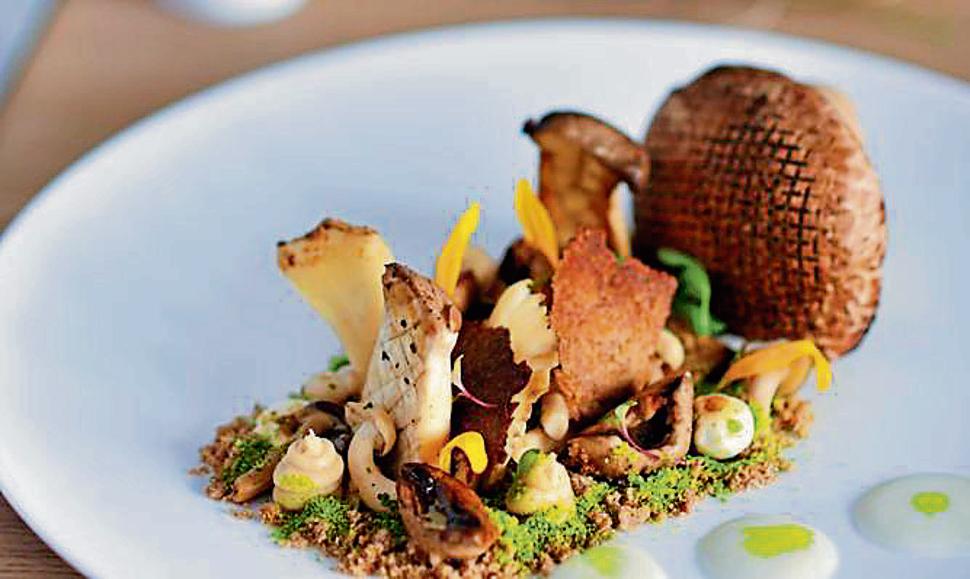
Mushroom on the Forest Floor
Ingredients
Portobello mushroom 100 gm, ceps mushrooms 50 gm, enoki mushrooms 20 gm, hon shimeji mushroom, 20 gm, powdered maltodextrin textures 20 gm, white truffle oil 10 ml, spinach 50 gm, nutmeg 1 gm, hazelnut 10 gm, maldon salt 2 gm, olive oil 10 ml, basil leaves 10 gm, black pepper powder 2 gm, goat cheese 20 gm, rye bread 20 gm, cream 20 ml
Preparation
Wash and clean all the mushrooms properly, cut them into segments and segregate evenly. Sauté the spinach by adding nutmeg, black pepper and salt as per taste, mix well with goat cheese and stuff it in portobello mushroom.
In a pan, sauté all the other mushrooms and keep them separately.
Dehydrate the rye bread and moisture it with truffle oil.
In a small bowl, mix maltose and truffle oil till it absorbs all the oil. Make a paste of hazelnut in a buttery consistency.
Make a smooth paste of basil by adding olive oil and separate the basil oil from the paste.
Warm the cream and add the basil oil in it.
Now arrange all the sauté mushrooms and stuffed portobello on the bed of dehydrated rye bread.
Garnish it with maltose balls and it is ready to be served.
Recipe by chef Mohit Tak, Machan, Taj Mahal, New Delhi


