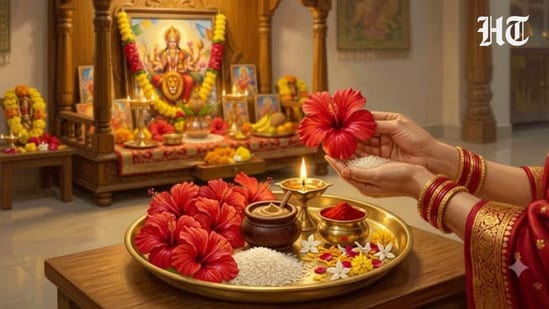
Ahoi Ashtami is an important festival in North India, observed by mothers who fast and pray for the well-being and long life of their children. The fast is traditionally observed four days after Karwa Chauth and is dedicated to Goddess Ahoi.
Ahoi Ashtami 2026 falls on Sunday, November 1. If you are observing the fast this year, here are the puja timings, star-sighting time, fasting rituals, and other details you should know.
ALSO READ: Dhanteras 2026: Puja muhurat, best time to buy gold and silver, and dos and don'ts for the festival
Ahoi Ashtami 2026: Date and puja muhurat
According to Drik Panchang, this year, Ahoi Ashtami will be observed on Sunday, November 1, 2026. Here are the important timings for the day:
| Ahoi Ashtami | Sunday, November 1, 2026 |
|---|---|
| Puja Muhurat | 5:37 PM to 6:55 PM |
| Duration of Puja Muhurat | 1 hour 18 minutes |
| Evening time for sighting stars | 6:01 PM |
| Krishna Dashami moonrise | 11:41 PM |
| Ashtami tithi begins | 2:51 PM on November 1 |
| Ashtami tithi ends | 1:10 PM on November 2 |
| Govardhan Radha Kund Snan | Sunday, November 1, 2026 |
Timings may vary by location, so check your local Panchang before planning the puja or breaking your fast.
Ahoi Ashtami: Significance and fasting tradition
Ahoi Ashtami is observed on Krishna Paksha Ashtami, the eighth day of the waning lunar phase, around eight days before Diwali. According to the Purnimanta calendar followed in North India, Ahoi Ashtami usually falls in the month of Kartik. In the Amanta calendar, which is followed in Gujarat, Maharashtra, and other southern states, it falls in the month of Ashwin. The month name differs, but the fast is observed on the same day.
{{/usCountry}}Ahoi Ashtami is observed on Krishna Paksha Ashtami, the eighth day of the waning lunar phase, around eight days before Diwali. According to the Purnimanta calendar followed in North India, Ahoi Ashtami usually falls in the month of Kartik. In the Amanta calendar, which is followed in Gujarat, Maharashtra, and other southern states, it falls in the month of Ashwin. The month name differs, but the fast is observed on the same day.
{{/usCountry}}The fast and puja are dedicated to Mata Ahoi, or Goddess Ahoi. Mothers worship her and pray for the well-being and long life of their children. The day is also known as Ahoi Aathe because the fast is observed on Ashtami Tithi, the eighth day of the lunar month.
On Ahoi Ashtami, mothers fast throughout the day and pray for their children's health and long life. They usually end the fast in the evening after seeing the stars. In some parts of India, women wait for the moon to appear before eating, although this means fasting for longer as the moon rises late that night.
Ahoi Ashtami puja vidhi: How to observe the fast
Sankalp
After taking a bath in the morning, you can take a pledge, known as Sankalp, to observe the fast for the well-being of your children.
During the Sankalp, you also state your intention to observe the fast without food or water and break it after sighting the stars or the moon, depending on your family tradition.
Ahoi Ashtami Puja preparations
The puja preparations are traditionally done during Sayankal, the evening period before sunset. As part of the ritual, you can draw an image of Goddess Ahoi on the wall.
The image of Ahoi Mata used for the puja should have an Ashta Koshthak (अष्ट कोष्ठक), or eight corners, as the festival is associated with Ashtami Tithi. Alongside Goddess Ahoi, images of Sei (सेई), the hedgehog and her young ones, are also drawn. Sei is a spiny mammal associated with the legend of Ahoi Ashtami.
If drawing the image on a wall is not possible, you can use a large picture or poster of Ahoi Mata for the puja. Many puja calendars also feature the seven sons and daughters-in-law associated with the festival's legend.
Disclaimer: Ahoi Ashtami rituals and fasting practices may vary across regions and families. Please check your local Panchang for accurate timings and follow your family's traditions when observing the fast.