After testing more than 25 different suitcase brands, I have learnt that the hard shell versus soft shell debate is not as simple as picking a favourite. I have used both types on flights, checked them into the hold, pulled them along city streets, squeezed them into cars and opened them up in hotel rooms where there was barely enough space to unpack. And then there are those trips when I have somehow managed to bring home far more than I left with.
My experience has made the choice fairly clear. Hard shell suitcases work better for me when I want a structured case that offers good protection for what is inside. Soft shell luggage makes more sense when I need easier access, a little flexibility, and extra space for those inevitable shopping finds.
For regular travel, though, I keep coming back to one option. An expandable hard shell suitcase gives me the structure I like without making me give up the extra packing space I often need. After using both styles across different kinds of trips, this is the luggage type I would choose for most of my travel.
Hard shell vs soft shell luggage: What actually changes when you travel?
At first glance, choosing between the two seems simple. One has a rigid exterior, and the other uses fabric. Once you start travelling frequently, that difference affects almost everything from how you pack to where you open your suitcase.
- A hard shell suitcase usually opens into two halves. I like this when I want clear separation between clothes, shoes and smaller items.
- Soft shell luggage commonly gives you one deep packing compartment instead. I find that particularly useful when I am carrying bulky clothes or know I will be shopping during the trip.
- The difference becomes even more obvious once the suitcase leaves the bedroom and reaches the airport.
Why I prefer a hard shell suitcase for checked baggage
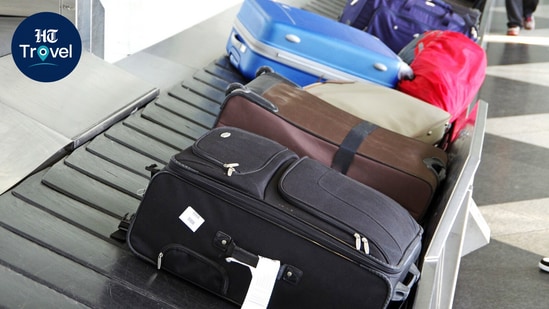
I never really know what my checked suitcase goes through after I hand it over at the airport. By the time I see it again at the baggage belt, it has already been handled, moved around and packed alongside plenty of other luggage. That is one reason I feel more comfortable sending a hard shell suitcase into the hold. The rigid exterior gives the contents some protection from pressure and weight from other bags, which is particularly useful when I have packed anything that could be damaged or crushed.
The trade-off is that hard shell cases tend to show the signs of travel quite easily. Scratches, scuffs and marks can appear after just a few trips, so a suitcase that looks almost perfect at home may come back looking considerably more used. I have also found that the fixed shape leaves little room for last-minute packing decisions. Once the case is packed to capacity, there is not much you can do.
An expandable hard shell suitcase solves that problem for me. I get the firm structure I want for checked baggage, along with an extra section that can be opened when I need more space. It has proved particularly useful on trips where I started with a carefully planned suitcase and ended up bringing home shopping that was never on the original list.
Soft shell suitcases work better when my packing keeps changing
There are trips when I know exactly what I am taking with me, and then there are trips when the packing list seems to change right until I zip the suitcase shut. This is where I find soft shell luggage easier to live with. The fabric has some give, so fitting in an oddly shaped item or squeezing in one last thing does not feel like a battle against the suitcase.
I also like the way many soft suitcases are organised. A large main compartment can be useful when I am carrying clothes or other items that do not divide neatly between two sides of a hard case. The external pockets are another feature I appreciate more once I am actually travelling. I can keep documents, chargers, small accessories or things I need during transit close at hand instead of opening the main compartment every time.
The compromise is protection. Fabric cannot offer the same firm outer layer as a hard shell case, so I am more selective about what I pack along the edges. Anything fragile needs a little more thought about where it sits. For me, soft luggage works best when flexibility and quick access matter more than having a rigid layer around everything inside.
Small hotel rooms changed how I think about suitcase opening styles
I did not pay much attention to suitcase opening styles when I travelled less frequently. After spending more time in hotels, particularly smaller rooms, I started noticing the difference. A clamshell hard shell suitcase needs room on both sides to open fully, which means taking up a fair amount of floor space or using the bed as an impromptu packing area.
That is not a problem in a large room, but it can get frustrating when there is barely enough space to move around the bed. A soft shell suitcase with a top opening can be much easier in that situation. I can put it on the luggage rack, open it from the top and get to what I need without having to find space for another half of the case. It probably matters less if you unpack everything as soon as you arrive and put the suitcase away. I rarely do that on shorter trips. I tend to keep using my suitcase throughout the stay, so being able to open it without taking over half the room is a small feature that I now appreciate much more.
Which suitcase works best for airports, trains and road trips?
For flying, I usually lean towards a hard shell suitcase. Airport surfaces are generally easy for spinner wheels, and once I check the bag in, I prefer having a rigid exterior around my belongings. My choice changes a little when I am travelling by road or train.
Lifting a suitcase into a car boot, fitting it onto a train luggage rack or finding space alongside other bags can call for a bit more flexibility. A soft shell case can be easier to handle in these situations because the fabric exterior has some room to give. That can make a difference when every centimetre of available space matters.
Then there is the weather. Hard shell luggage has an advantage during a sudden spell of rain because the outer surface does not absorb water in the same way fabric can. That does not make a standard hard suitcase waterproof, though. Water can still get through zips, seams and other openings.
With a soft shell suitcase, I am more careful if the bag is going to be left outside in wet weather. The level of water resistance depends on the fabric and its treatment, so I would not rely on the material alone during heavy rain. For short transfers, it is rarely a major concern, but for longer periods outdoors, a rain cover or extra protection is worth considering.
Hard shell vs soft shell luggage comparison
| Feature | Hard shell luggage | Soft shell luggage |
| Protection | Rigid exterior offers better protection from pressure | Flexible sides offer less protection from compression |
| Packing flexibility | Fixed structure limits how much the case can stretch | Fabric gives you more flexibility |
| Quick access | External pockets are less common | Front pockets are commonly available |
| Hotel room use | Clamshell opening requires more space | Top opening designs can be easier in small rooms |
| Rain | Exterior handles light rain better | Fabric may absorb water |
| Visible wear | Scratches and scuffs can become obvious | Fabric often hides minor marks better |
| Organisation | Two separate packing sections are common | One deep main compartment is common |
So, which suitcase type would I buy?
For most trips, I lean toward hard-shell luggage, but with one important condition. I want it to be expandable. I like the structure, the protection and the way a clamshell interior separates my packing. Expansion fixes one of my biggest complaints about rigid luggage by giving me extra room when I need it. That does not mean I have stopped using soft luggage. For a shopping-heavy trip, a road trip or a holiday where I expect my packing volume to change considerably, I can easily see myself reaching for a soft case instead. I also appreciate it more when staying somewhere with limited room to open a suitcase. My choice is therefore less about which construction is universally better and more about which inconvenience I am willing to accept on a particular trip.
Hard shell or soft shell? My simple rule
Choose hard shell luggage if you want a rigid exterior, better protection from pressure, divided packing sections and better resistance to a little rain.
Choose soft shell luggage if you want flexible packing space, useful exterior pockets, a deep main compartment and easier access in compact hotel rooms.
For either style, I use packing organisers to keep clothes and smaller items contained. They make packing easier and stop the contents from becoming one large pile by the time I reach my destination. After travelling with both styles repeatedly, I still keep both in my luggage collection. But if I were buying only one suitcase for regular flights, an expandable hard shell would be the one I would take home.
Similar articles for you
Tried and Tested: Every suitcase I have reviewed so far, simplified into one buying guide
I compared hard shell VS soft shell luggage; here's what I'd buy again
Handpicked monsoon destinations in India backed by hospitality experts; what to pack, how to plan
Disclaimer: At Hindustan Times, we help you stay up-to-date with the latest trends and products. Hindustan Times has an affiliate partnership, so we may get a part of the revenue when you make a purchase. We shall not be liable for any claim under applicable laws, including but not limited to the Consumer Protection Act, 2019, with respect to the products. The products listed in this article are in no particular order of priority.
Catch your daily dose of Fashion, Taylor Swift, Health, Festivals, Travel, Relationship, Recipe and all the other Latest Lifestyle News on Hindustan Times Website and APPs.
Catch your daily dose of Fashion, Taylor Swift, Health, Festivals, Travel, Relationship, Recipe and all the other Latest Lifestyle News on Hindustan Times Website and APPs.