After prolonged discussions, the Aam Aadmi Party (AAP) and the Congress seem to have decided to fight separately in the seven Lok Sabha seats in Delhi, although some people suggest the last hasn’t been heard of on this subject. Statements by the AAP say that its overtures for alliance have been rejected by the Congress.
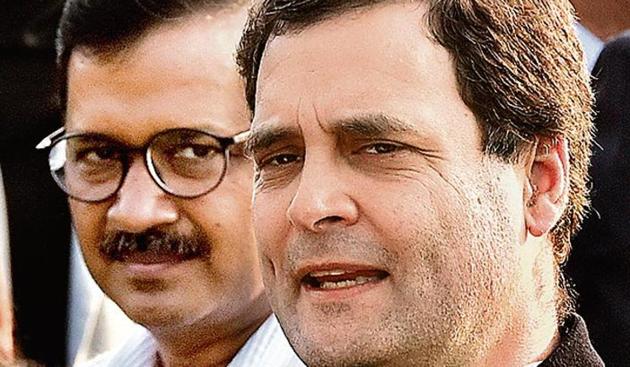
Hindustan Times had, on March 2, reported that both Sheila Dikshit and Rahul Gandhi communicated their refusal for an alliance to the AAP leadership. Arithmetic suggests that this is a bad move.
The combined vote share of the AAP and the Congress would have been enough to defeat the Bharatiya Janata Party (BJP) in six out of seven seats in the 2014 Lok Sabha elections. (see chart 1).

Also, while the 2015 assembly results would suggest that the Congress was virtually wiped out from the city state, the Municipal Corporation of Delhi (MCD) elections held in 2017 suggest otherwise.
The Congress polled 21.1% of the total votes, only five percentage points less than what the AAP could get. Once again, the combined vote share of the AAP and the Congress was significantly greater than the 36% of the BJP. A split in anti-BJP votes allowed the BJP to win two-thirds of the MCD seats with a vote share just above the one-third mark. (see chart 2).

The fact that both the Congress and AAP were almost at par in the MCD elections should have been reason enough to settle seat sharing questions had the two parties been serious about forging an alliance. To be sure, people may vote differently in national elections than they do in municipality ones.
{{/usCountry}}The fact that both the Congress and AAP were almost at par in the MCD elections should have been reason enough to settle seat sharing questions had the two parties been serious about forging an alliance. To be sure, people may vote differently in national elections than they do in municipality ones.
{{/usCountry}}What then explains the failure of the two parties to force an anti-BJP alliance? It might be the Congress’s grudge against the AAP, as the former was the main loser in the growth of AAP as a political force in Delhi. Even though the BJP won all seven seats in Delhi in the 2014 elections, its performance in terms of vote share was better in 1996, 1998 and 1999. The Congress, on the other hand, recorded its lowest ever vote share in the 2014 elections, as it lost a large chunk of its voters to the AAP. (see chart 3).

To enter into an alliance with the AAP would mean that the Congress accepts its reverses in the post-2013 phase as a permanent setback. That the Congress has brought in Sheila Dikshit as its Delhi president suggests that the party hopes to restore status quo ante and regain its pre-AAP dominance in Delhi.
This can only happen if the AAP were to disappear. BJP after all has shown greater resilience in retaining its support base in the post-AAP phase.
The question is how would almost half of Delhi’s anti-BJP voters react to this acrimony between the Congress and the AAP? If they are equally or slightly split like they were in 2017 and 2014, the BJP is bound to win a majority of seats in Delhi.
However, if the AAP is successful in convincing voters that the Congress’s subjective grudge against it is the reason why the two parties could not form an anti-BJP alliance, the Congress’s strategy of regaining its lost ground in Delhi might backfire.