Producing 57,000 kw solar power every day, the Sangam city is fast embracing clean and green energy.
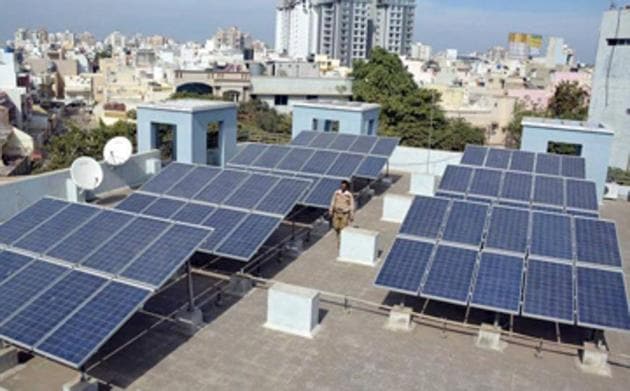
According to officials of the Uttar Pradesh New and Renewable Energy Development Agency (UPNEDA), Allahabad is producing 2500 kilowatt electricity each day from rooftop solar power plants set atop 40 government and private buildings.
“Though the initiative is praiseworthy, power production is still short of demand. But the good news is every day more people are showing interest in installing solar power plants on their rooftops,” project officer, UPNEDA (Allahabad), RN Dwivedi said.
He said two dozen such applications were already pending with UPNEDA in Allahabad alone and a decision on it would be taken soon.
“Besides the 2500 kilowatt power being generated from rooftop solar power plants, we also have a 50 megawatt (50,000 kilowatt) solar power plant in Meja tehsil of the district. Another 5 megawatt (5000 kilowatt) power plant has also been set up in Naini by a private firm EMC Ltd. This adds up to over 57,000 kilowatt solar electricity being produced in Allahabad every day,” Dwivedi said.
{{/usCountry}}“Besides the 2500 kilowatt power being generated from rooftop solar power plants, we also have a 50 megawatt (50,000 kilowatt) solar power plant in Meja tehsil of the district. Another 5 megawatt (5000 kilowatt) power plant has also been set up in Naini by a private firm EMC Ltd. This adds up to over 57,000 kilowatt solar electricity being produced in Allahabad every day,” Dwivedi said.
{{/usCountry}}He said efforts were on to encourage more people to go for rooftop solar power plants with the support of UP Power Corporation Ltd (UPPCL) and UPNEDA.
“Presently, the entire 2500 kilowatt solar power generated through rooftop solar power plants is being fed to the power grid,” he said, adding the government was providing 50 per cent subsidy for installation of 2 kilowatt solar power plant.
Prominent buildings where such rooftop solar power plants have been installed include the Allahabad high court (740 kw), Khelgaon Public School (100 kw), Civil Aviation Training Centre (300 kw), IFFCO, Phulpur (500 kw), NCR general manager’s office, Subedarganj (100 kw), Vikas Bhawan (70 kw), Reserve Police Lines (130 kw), divisional commissioner’s office (50 kw), and Leprosy Mission Hospital, Naini (62 kw).
The remaining buildings have similar rooftop solar power plants of various capacities ranging from 2 kilowatts to 25 kilowatts.