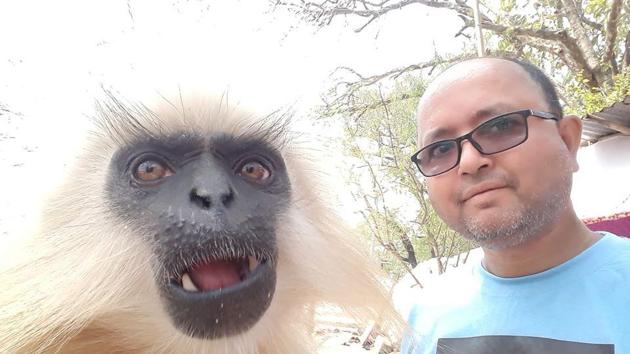
Thirty six years after they were first introduced, the golden langurs of Umananda Temple, located on Peacock Island on Brahmaputra near here, have finally disappeared.
Gobinda, the last remaining member of the species on the island, one of the most endangered primates, died last Saturday after months of living alone on the world’s smallest riverine island.
“This is indeed a great loss. This population of golden langurs could have been saved if appropriate management practices were adopted on time by government authorities in Assam,” said Dilip Chetry, head of primate research and conservation division of Aaranyak, a prominent Guwahati-based NGO.
While the exact details of how Gobinda died are not available some reports say that he could have died due to a variety of factors including old age, loneliness and lack of proper nutrition.
Golden langurs (Trachypithecus Geei) , are endemic to a very small region in Assam and the foothills of Himalayas in Bhutan. Since 2016, golden langurs have been listed among the top 25 most endangered primate species in the world.
Given the name because of their golden coloured coat, there are around 1,500 of them in India and nearly 4,000 in Bhutan.
{{/usCountry}}Given the name because of their golden coloured coat, there are around 1,500 of them in India and nearly 4,000 in Bhutan.
{{/usCountry}}A pair of immature male and female langurs was first introduced in Umananda in 1984. But there’s no clarity on who introduced them.
“The pair gave birth to its first baby in 1990. Over time they bred 6 more times and the population increased to eight in 2002. At its maximum, there were 11 golden langurs in Umananda,” said Chetry.
Built in 1694 by the Ahom rulers, Umananda, which has a Lord Shiva temple, is a popular spot among tourists and pilgrims and over the years the golden langurs had become a popular attraction.
One of the 11 langurs at Umananda died due to dog bite and two others succumbed due to outbreak of some disease during the past few years.
The matter was brought to the notice of the Assam State Zoo in Guwahati and two langurs were first trans-located and in 2017 four others were also shifted.
It is not clear how Gobinda got left behind. Some accounts say he managed to escape getting caught by the zoo personnel while other reports say the authorities failed to shift him due to opposition from the temple priests.
Neither the temple authorities nor officials of the state zoo could be contacted for their comments.
The author can be reached at utpal.parashar@htlive.com
(This story has been published from a wire agency feed without modifications to the text.)
Follow more stories on Facebook and Twitter