
 E-Paper



Mumbai’s urban heritage conservation movement is winning accolades
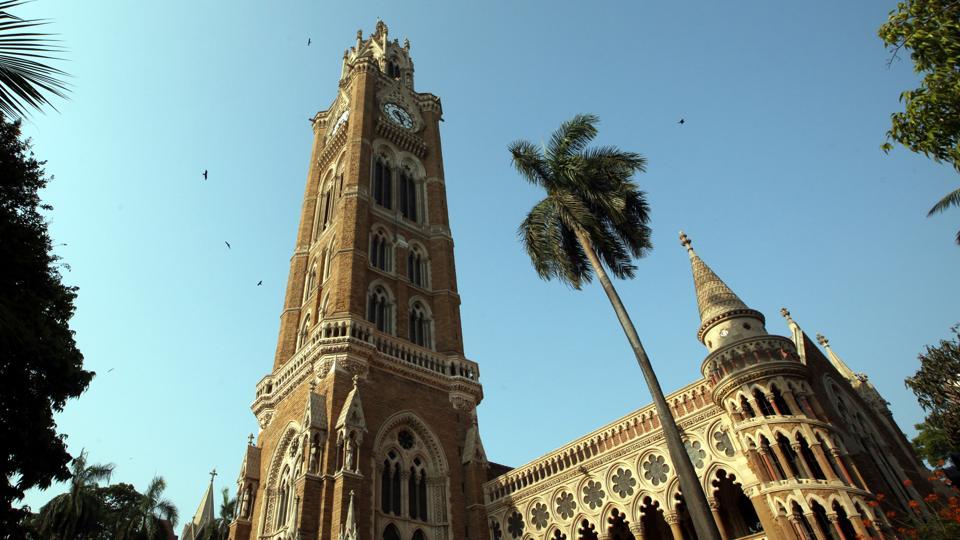
This year, two restored architectural landmarks from Mumbai – the Ruttonsee Muljee Jetha Fountain and University of Mumbai’s Rajabai Clock Tower – won the United Nations Educational, Scientific and Cultural Organization (UNESCO) Asia-Pacific Awards for Cultural Heritage Conservation.

 Prefer HTon Google


This year, two restored architectural landmarks from Mumbai – the Ruttonsee Muljee Jetha Fountain and University of Mumbai’s Rajabai Clock Tower – won the United Nations Educational, Scientific and Cultural Organization (UNESCO) Asia-Pacific Awards for Cultural Heritage Conservation. Mumbai has won 19 recognitions since the inception of the awards in 2000 – the most for any city in India.
Mumbai’s architectural heritage spans centuries – ranging from the fifth-eighth century Elephanta Caves, to the early 20th century Art Deco buildings along Marine Drive and Oval Maidan. The city’s rich architectural heritage means it now has three of the 37 cultural sites in India that are on UNESCO’s World Heritage List. The buildings in the Victorian Gothic and Art Deco Ensembles, centred around Oval Maidan, have been recently added to Elephanta Caves and the Chhatrapati Shivaji Maharaj Terminus (formerly Victoria Terminus), making Mumbai’s count of historical and cultural sites equal to that of Delhi, a city with a much older history.
The UNESCO awards recognise Mumbai’s growing urban conservation movement. The list of sites that the city has restored in the last decade is long and eclectic. It includes the 19th-century structures Esplanade House, a former home of the Tata family; The Royal Opera House, completed in 1915; the Royal Bombay Yacht Club; and the Bomanjee Hormarjee Wadia Clock Tower at JN Petit Institute. Gloria Church, Byculla from the early 20th century and Liberty Cinema, built in the Art Deco style in the late 1940s also make the list.
Less well-known monuments too are getting attention; Mumbai’s neglected fountains are being restored, with Ruttonsee Muljee Jetha Fountain, Fitzgerald Fountain, Sir Cowasjee Jehangir Pyau (Kalachowkie Pyau), Devidas Parbhudas Kothari Pyau, Anand Vitthal Koli Pyau, apart from Flora Fountain and Wellington Fountain getting a much-deserved facelift.
Conservation architect Vikas Dilawari, who restored Ruttonsee Muljee Jetha Fountain and has won 16 UNESCO Asia-Pacific Awards for Cultural Heritage Conservation, including 14 for Mumbai projects, said that the awards show that the city is progressive in its views on urban heritage.
“It is a movement, but it has its ups and down; the idea has started and has snowballed into a movement. But the losses (of urban heritage sites) have also snowballed; we are winning a few battles, but are also losing wars,” said Dilawari, adding that he wished the government would participate more in the effort to conserve the city’s architectural heritage. “Suppose you own an Art Deco building; what do you get? Incentive is a wrong word because most incentives are for redevelopment; what is there for heritage?”
Former bureaucrats have agreed that Mumbai’s urban planning laws are a stumbling block to the preservation of architecture with historical and cultural value. The city is creating a new list of buildings and precincts that need to be conserved.
A former head of the Maharashtra Heritage Conservation Committee (MHCC) said that building and development control regulations have been framed in such a way that the rules work as a disincentive to conservation. Pulling down a building and reconstructing it gets a high floor space index (FSI). So, because land prices are so high in Mumbai it is more profitable to raze a building than conserve it.
“There are no tax rebates or compensations for restoring or redeveloping old structures, which is the need of the hour for a city like Mumbai,” the former bureaucrat had told this newspaper.
One problem is that of old rent control laws, which means that a majority of buildings in the island city are cessed properties. There is no incentive to care for the buildings which fall into dilapidation.
“The idea has a long way to go. Till it works out to be of economic benefit,” said Dilawari who described how it took a long time to convince encroachers around the Muljee Jetha Fountain to move out so that the structure could be restored. “The site was covered with thrash, but now nobody is throwing garbage and the place is clean. Owners of the restaurants around the fountain are taking care of the restored site.”


