Yesterday, Parsi-Zoroastrians in Navsari, a city in south Gujarat, met to discuss a demand from some members of the community that they should create an ‘Aramgah’, or burial ground, for those who do not want to opt for the traditional funeral practice — sky burials.
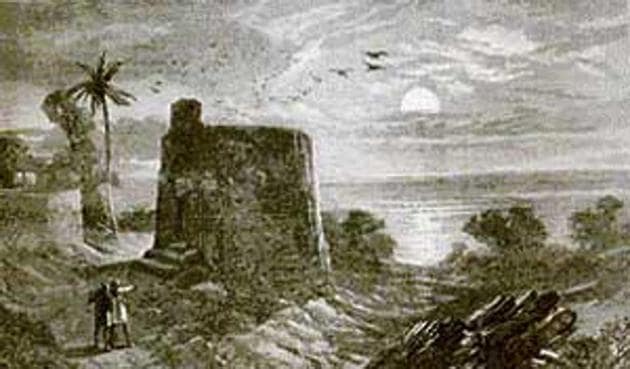
The meeting was significant because Navsari has been a centre of Zoroastrian religion and culture for nearly a thousand years. The city has one of the Atash Behrams – fire temples of the highest grade – in India and some of the most illustrious Parsi families, like the Tatas, have their origins here.
Though the Parsi population in the town has declined to around 2,000 – from a peak of over 8,000 – the community still maintains two Dakhmas, or Tower of Silence, where dead bodies are laid out to be disposed of by the sun and carrion birds. This practice – called Dokhmenishini - draws from the belief that people should, in death, give back to nature what they took during their life. The decimation of India’s vulture population – largely due to the use of a veterinary drug that killed off birds that eat dead cattle, that were injected with the medicine – has jeopardised the tradition.
The Towers of Silence were built to replicate ancient funeral rites in Persia, their ancestral homeland. Corpses are laid out to be disposed of by the sun and carrion birds, but with the near-extinction of vultures the bodies rot for months. In Mumbai, when the Bombay Parsi Punchayet (BPP), which manages their cemetery at Malabar Hill, prohibited families of people who opted to be cremated from conducting funeral prayers at there, reformists built a prayer hall at the Worli municipal crematorium as an alternative for people who do not want to be consigned to the Towers of Silence at Malabar Hill. The hall, built with donations, hosts an average of eight funerals every month. Cremations may be increasing but are still a small proportion of funerals in Mumbai.
{{/usCountry}}The Towers of Silence were built to replicate ancient funeral rites in Persia, their ancestral homeland. Corpses are laid out to be disposed of by the sun and carrion birds, but with the near-extinction of vultures the bodies rot for months. In Mumbai, when the Bombay Parsi Punchayet (BPP), which manages their cemetery at Malabar Hill, prohibited families of people who opted to be cremated from conducting funeral prayers at there, reformists built a prayer hall at the Worli municipal crematorium as an alternative for people who do not want to be consigned to the Towers of Silence at Malabar Hill. The hall, built with donations, hosts an average of eight funerals every month. Cremations may be increasing but are still a small proportion of funerals in Mumbai.
{{/usCountry}}Recently, over 150 members of the local Anjuman, or association, of Navsari’s Parsis signed a letter saying that they wanted a change in the funeral tradition. The group has suggested that a portion of the Dakhma land be kept aside for burials. “The issue (of declining vulture populations) is not unique to Navsari. The system was working well as long as the vultures were there; now there is a problem,” said Yazdi Kasad, a member of the Navsari community.
The request for non-traditional funerals is, like in Mumbai, facing opposition from traditionalists who think that opting for burial and cremations is a dilution of their religion. One of the high priests, Firoze Kotwal, from Mumbai wrote to the association asking them to desist from opting for burial. Kotwal, whose roots are in Navsari, asked the community to read out his letter at the meeting.
Kotwal said that the system of Dokhmenishini has not failed, but the authorities have failed the system. “I hereby suggest that every effort should be made to strengthen the system and efforts should be made to bring back the vultures in the vast area of the Dakhma,” he said in his letter.
According to Kotwal, Gujarat still has a large number of vultures. “It is noted that there are good number of vultures in the village Daamkaa near Surat. Our ancestors had unflinching faith in the system of Dokhmenishini and it is not a wise stand to switch over to an irreligious and anti-Zoroastrian system in a place where Dokhmas are in service.
Kotwal said that the practice of Dokhmenishini should be preserved at all cost, with no concession or relaxation i our practices. He said that any attempt to change the system was ‘irreligious’ and that the vultures should be brought back.
But Navsari’s Parsis want an alternative. “His (Kotwal’s) letter is not important as these are his views. This is our own decision,” said Kasad.
READ MORE
Citizen groups oppose heritage tour of Parsi Tower of Silence
Parsi-Zoroastrians go to vote to find whether Tata head should be a non-Parsi
Stay updated with all the Breaking News and Latest News from Mumbai. Click here for comprehensive coverage of top Cities including Bengaluru, Delhi, Hyderabad, and more across India along with Stay informed on the latest happenings in World News.
Stay updated with all the Breaking News and Latest News from Mumbai. Click here for comprehensive coverage of top Cities including Bengaluru, Delhi, Hyderabad, and more across India along with Stay informed on the latest happenings in World News.