Dipa Karmakar will vault to try and make history at the Rio Olympics on Sunday night, with the entire nation praying and hoping for her to make it to the podium, landing her vault of death—the Produnova.
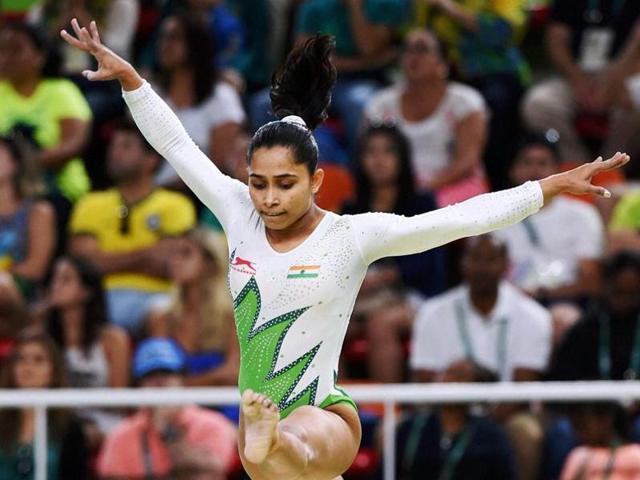
Gymnastics is a hard sport and requires years of systematic and outright painful training to reach the pinnacle. Dipa’s journey to the cusp of Olympic success came not just through hard work in training, but also fighting a lot of adversity as India is a country where there is no established system to identify and train gymnasts.
Read | Young gymnasts practice hard, but don’t have it easy
Dipa hopes that her success in Rio will change all that and she dreams of having teammates with her in the next Olympics. Perhaps India could set up a system mirroring China, the most successful nation in the sport.
China’s domination didn’t happen overnight. Over decades, a lot has gone into the programmes that churn out, with unfailing regularity, world beaters not only in gymnastics but other disciplines.
Cheng Fei, captain of the Chinese gymnastics team at the 2008 Beijing Olympics, was picked out of pre-school for her flexibility and fearlessness. The three-time world champion in vault was taken to a gymnastics school and it wasn’t till she was 17 and had the team Olympic gold to show that she was allowed to see where her parents lived.
{{/usCountry}}Cheng Fei, captain of the Chinese gymnastics team at the 2008 Beijing Olympics, was picked out of pre-school for her flexibility and fearlessness. The three-time world champion in vault was taken to a gymnastics school and it wasn’t till she was 17 and had the team Olympic gold to show that she was allowed to see where her parents lived.
{{/usCountry}}Fei’s favourite event was the vault, just like Dipa. However, the journey they took to reach the Olympic final are very different. Though the institutionalised Chinese system is a bit extreme, their step-by-step nurturing of a gymnast is something India can learn from.
A gymnast in China would start when she is around six and progress through the system.
Here is a peek into the journey she undergoes:
1. The government begins identifying and taking in children as young as six, as this is the best time to determine whether the child is a potential Olympic medal winner.
2. Children are recruited based on their predicted height, weight, bone density, arm span, and flexibility.
3. Once recruited, children are sent to training camps, away from families.
4. Athletes are fed special diets with herbs and exotic Chinese medicines.
5. Use of technology is banned while training. No cell phones or computers are allowed except for during a short period in the evening.
6. Olympic gymnasts train for up to eight hours a day, six days a week. They believe that a break will be counterproductive.
7. Earning gold is the only focus; even silver medallists are looked down upon. Athletes who do not bring home a gold medal are left to fend for themselves with little to fall back on.
8. Once they reach the early teens, the gymnasts who show potential and develop will be part of the gymnastics squad and will get exposure in major continental and global events.
9. By 16 or 17, the best would have been identified who will spearhead the country’s challenge at Olympics and World Championships
Read:
Produnova vault is risky, but so is the sport: Dipa Karmakar’s coach
Rio 2016: Six things to know about gymnast Dipa Karmakar