It was during the gathering chill of October-November 1962 that Chinese troops breached India’s northeastern frontiers, forcing the country into an agonising conflict that ended in a searing national setback.
Sixty-four years later, the political cauldron is being stirred again over purported incursions in the same arena — the North East. While the Union government has cleared the air regarding border integrity, faceless keyboard warriors and an anxious Opposition remain up in arms.
The only real departure from the 1962 episode is an ironic twist of political fortunes. The ideological heirs of those who raised hell in 1962 are now at the helm, while the political descendants of that era’s ruling establishment occupy the Opposition benches.
However, beyond these political tussles lies an uncomfortable reality. The Diwali fairy lights on our balconies and even the sacred idols of Ganesha and Lakshmi on our altars are largely imported from across the Himalayas. Chinese products have become deeply entrenched in everyday life in India while India’s footprint in Chinese markets is virtually negligible.
India must strengthen its economic muscle to a point where Beijing — or any other adversary, for that matter — thinks hard before embarking on a misadventure. The self-reliance campaign that gained momentum after the Galwan Crisis has made commendable progress; but India must traverse a long and arduous path before it reaches parity with China. While China remains India’s single-largest trading partner, India barely makes it to the country’s list of top 10 or 12 trading relationships.
{{/usCountry}}India must strengthen its economic muscle to a point where Beijing — or any other adversary, for that matter — thinks hard before embarking on a misadventure. The self-reliance campaign that gained momentum after the Galwan Crisis has made commendable progress; but India must traverse a long and arduous path before it reaches parity with China. While China remains India’s single-largest trading partner, India barely makes it to the country’s list of top 10 or 12 trading relationships.
{{/usCountry}}Beijing’s authoritarian machinery has long functioned behind an iron curtain. Consequently, the Chinese are woefully unaware of India and its way of life. This information vacuum ensures that border standoffs do not trigger the kind of public outrage in China that they routinely do in India.
When I was in China in June this year, I asked my young Chinese guide what he knew about India. “Very little,” he replied bluntly, “because we only read and see what the State wants us to see.”
The information and economic asymmetry prevents any genuine public groundswell for peace from taking root across the border. It also explains why diplomatic talks on boundary disputes, since 1980, have oftenhit a brick wall.
Owing to historical ambiguities, the Line of Actual Control (LAC) acts as a de facto but undelineated boundary between the two Asian giants. In the absence of clarity on the ground, patrols from both sides occasionally stray into overlapping territory, resulting in inevitable friction. Yet, barring the bloody clash in Galwan, both nations have often exercised restraint to avert all-out hostilities.
The present row can be traced back to a video featuring the just-retired director general of the Indo-Tibetan Border Police (ITBP), Shatrujeet Kapur, that recently went viral. In the video, Kapur says the standoff that flared up in July remains unresolved. Digital provocateurs seized upon the clip and unleashed an avalanche of alarmist commentary and sensational claims. The ministry of external affairs immediately tried to clear the air, and ITBP scrubbed the video from its official handle.
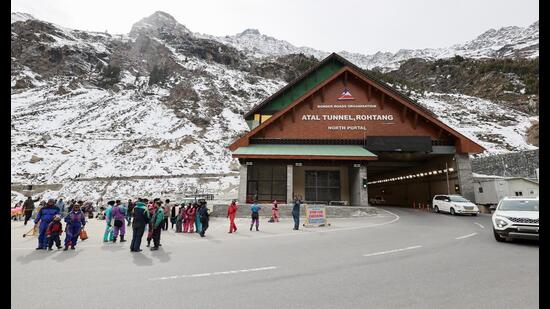
Over the past decade, India has systematically bolstered its security apparatus along the LAC. Engineering breakthroughs such as formidable Himalayan passes, including the Atal and Sela tunnels, along with the nearly complete Zojila project, ensure that strategic supply arteries to forward frontier bases remain operational in all seasons.
Those tracking border infrastructure will be well aware that roads, tunnels, and rail lines are being built on a war footing. Forward landing grounds and airfields have been extensively modernised to ferry heavy armour, logistics, and rapid reinforcements in compressed timeframes.
Further, state-of-the-art Heron Mk II surveillance drones and all-weather perimeter sensors have been deployed to detect and deter clandestine intrusions, backed by dedicated military reconnaissance satellites such as RISAT and EMISAT.
Battle-hardened from the Siachen and Kargil, India’s mountain infantry remains virtually peerless in high-altitude operations. Their tactical superiority was proven after the skirmish (Galwan) when our troops preemptively secured the heights along the Kailash Range.
The doubting Thomases and doomsayers should recall September-October 1967 at Nathu La and Cho La. Riding high on their 1962 victory, Chinese commanders arrogantly demanded that Indian forces vacate both strategic passes by launching a series of incursions. To put an end to the intrusions once and for all, Major General Sagat Singh ordered the erection of a defensive barbed-wire perimeter.
Chinese troops opened indiscriminate fire to stop the barricading on September 11, killing several of our soldiers. Sagat Singh — without waiting for bureaucratic clearances from the Army headquarters — unleashed heavy artillery fire to pound enemy fortifications into submission. Weeks later, on October 1, brave Gorkha soldiers at Cho La drew their khukris and repelled the intruders in ferocious hand-to-hand combat. Over 300 Chinese soldiers were reportedly neutralised, against 88 Indian martyrs.
The message was bold and clear: India will never again be cowed down by a bully. Has India not emerged far stronger since?
Instead of calling the frontier villages the last posts of India, the Modi government has branded them as the first line of defence in a significant morale-boosting exercise. China may well be an economic and military heavyweight, but India is no pushover. India can ably defend its first villages and their valiant citizens.
Shashi Shekhar is editor-in-chief, Hindustan. The views expressed are personal