Last Sunday was the 226th birth anniversary of Thomas Babington Macaulay. Few British statesmen have left a deeper mark on India, or been more misunderstood in the country, than Macaulay. There can be no better way to commemorate his birth than by appreciating his most important contribution: making public examination the pre-eminent route to the civil service, a reform that weakened the hold of patronage and helped modernise public administration in India.
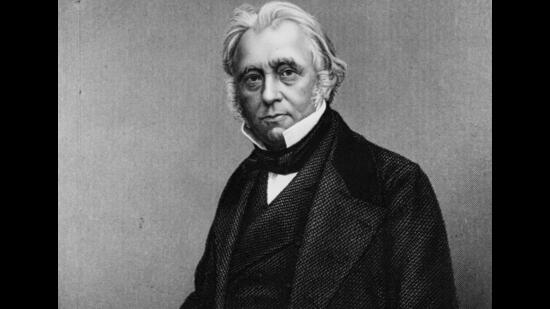
Today, Macaulay is invariably associated with his 1835 Minute on Education. In it, he argued that public funds be redirected from oriental learning towards teaching the English tongue, as the former was the medium of traditional knowledge, which contained “serious errors”, whereas the latter was the language of modern learning, which embodied “useful knowledge”. Critics have poured vitriol on this document. They argue that, by demeaning traditional knowledge and by elevating those educated in English, Macaulay helped create a deracinated class that served as an ally of colonialism.
This account is deeply flawed. Long before Macaulay arrived in India, Indians were flocking to schools to learn English and profit from it. Native opinion had “declared so strongly for English teaching”, William Wilson Hunter wrote, “that Macaulay’s eloquent Minute merely played the part of the shout at which the walls of Jericho fell.” More importantly, Macaulay expected — and wanted — liberal education to foster a questioning spirit in India. When some of his colleagues in the UK Parliament expressed apprehensions about educating Indians, he forcefully replied that it would be immoral and imprudent to “stupefy and paralyse a great people…for the wretched purpose of rendering them more amenable to our control.”
This celebrated speech in 1883, which one contemporary said might console those born too late to hear Edmund Burke, also contained the kernel of what would prove Macaulay’s true contribution to India: an eloquent and effective defence of merit.
{{/usCountry}}This celebrated speech in 1883, which one contemporary said might console those born too late to hear Edmund Burke, also contained the kernel of what would prove Macaulay’s true contribution to India: an eloquent and effective defence of merit.
{{/usCountry}}This intervention emerged from a particular context. In the late 18th century, the UK Parliament grew concerned about the quality of the East India Company’s servants, whom Burke famously condemned as “birds of prey and passage”— men who lacked the motive and the knowledge to govern well. The problem was that appointments in India were the patronage of the Company’s directors. The initial remedy was to train nominees at the East India College at Haileybury. But this did not change the fact that the nominees came from a small pool, with roughly three-quarters being either friends or relatives of the directors. Nor was there much confidence in the training offered at Haileybury; it produced an esprit de corps, but it did little to impart sympathy for or knowledge of India.
Thus in 1813, during a heated debate over the terms on which the Company’s charter should be renewed, Lord Grenville, a former PM, proposed replacing the patronage system with “impartial selection” through “free competition and public examination”. This would make appointments to India a reward of merit and ensure that civil servants were persons who had afforded some promise of superior talent, diligence, and virtue.
Grenville’s idea was ahead of its time. But it was noticed by a rising generation that championed an aristocracy of the intellect. In 1833, when the UK Parliament revisited the Company’s charter, Macaulay stood up to argue that the principle of competition should be applied to appointments in India. Was it not true, he asked his colleagues, that those who attain high distinction in the world are generally men who were distinguished in their academic career? The point was not what they had studied, but how well they had mastered it. The greatest proficients in any given subject, Macaulay contended, would generally be “the flower of the youth, the most acute, and the most industrious.”
Parliament responded by authorising competition in a restricted form: For every vacancy, the directors would nominate four candidates, from whom one would be selected by examination. But the experiment was stillborn. The directors insisted that suitable candidates would not submit to a contest in which three out of four would be disgraced.
By 1853, Parliament had seen enough. Macaulay now pressed again for “academical competition”. A mere qualifying examination, he argued, would leave examiners vulnerable to the father who came “with tears in his eyes” and the mother who wrote “heartbreaking letters”. To prevent such appeals from lowering the bar, it was essential to follow the example set by Oxford and Cambridge, where candidates were ranked by examination. “The effect of competition is to keep up the standard,” he memorably observed. This framework also meant, Macaulay underlined, that should Indians cultivate European literature and prove victorious in competition over European candidates, they would be, “as a matter of right”, entitled to enter the civil service.
On this basis, the Charter Act of 1853 abolished the directors’ monopoly over appointments. The following year, a committee chaired by Macaulay produced a design that remains familiar to this day: an open competition that tested broad learning and led to a published ranking of candidates. The first such competition was held in London in 1855, creating a new sort of civil servant whom Macaulay’s nephew, George Otto Trevelyan, would later call the competition-wallah.
In the decades that followed, there would be ferocious debates over the merits and demerits of this “ruling caste”. Britons complained that examination encouraged cramming, which produced bookish recruits lacking in the “manly” qualities needed to maintain the Empire. Indians, meanwhile, seethed when examinations were held in London and the age limit was lowered, both of which curtailed their chances.
These objections did not negate the broader achievement. By hinging appointments to the Indian Civil Service (ICS) on public examination, Macaulay and his key ally, Charles Wood, the president of the Board of Control, accomplished two great things: They weakened the hold of patrons over clients, and they gave merit a valuable outlet. In the decades that followed, the ideal of the public administrator was utterly transformed in India. This is not to say that the Native States did not value learning. Many avowedly fostered it. However, the connection between learning and public administration was tenuous in most States, with relatives and hangers-on often occupying important posts, leading news reports to routinely bemoan the dismal state of darbars and darbaris. The high calibre of the Indian members of the ICS stood in marked contrast to this scene, which is why, by the end of the 19th century, a return to the old order could scarcely be imagined.
A system based on merit produced a new worry, however — that fairness would be undermined by the unequal resources at the disposal of families. Tellingly, the first Indian entrant by examination was a Tagore. It is not difficult to discern what Macaulay would have suggested as the answer: not to lower the standard of competition but to raise up the competitors. This was why he sought both to foster liberal education and to uphold the integrity of examinations. There is, evidently, much we can still learn from him.
Rahul Sagar is a Global Network professor at NYU Abu Dhabi. His latest book is The Birth of Indian Liberalism. The views expressed are personal