Science alone makes ethanol seem like an inefficient fuel. The conversion efficiency of sunlight-to-biomass-energy is a low percentage figure for sugarcane, compared to around 20% for sunlight-to-electricity through solar panels. And food security is sacrosanct. So, why go for ethanol?
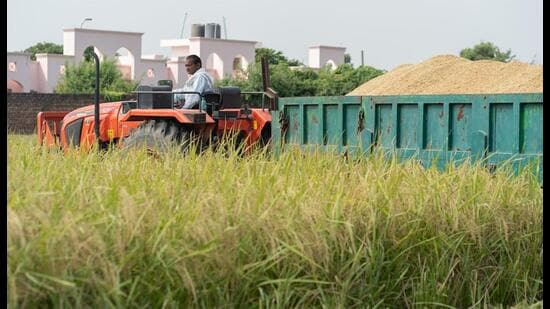
The typical reason why a fuel is chosen is economics: People always want a cheaper alternative. But this isn’t always a sufficient driver. Energy security is another consideration. A third factor, especially in the case of ethanol in India, is what we can call human-fiscal equilibrium. Even if ethanol doesn’t save us money, it changes the recipient of this money — from foreign sellers of oil to India’s farmers.
These are the reasons why ethanol should remain on the table as a component of our energy portfolio. More so, when it is in the form of vehicles capable of running on ethanol alone — the E100 category, for which the Centre has just released rules — which is distinct from a goal of 100%, economy-wide replacement of petroleum by ethanol.
The conventional argument against ethanol is that it comes from sugarcane, but India must prioritise sugar for food rather than divert cane for ethanol production. That doesn’t always hold.
{{/usCountry}}The conventional argument against ethanol is that it comes from sugarcane, but India must prioritise sugar for food rather than divert cane for ethanol production. That doesn’t always hold.
{{/usCountry}}There are three routes of ethanol production from sugarcane: One, from cane juice (which impacts sugar production), from B-heavy molasses (which marginally impacts sugar production), and from C-heavy, residual molasses (which doesn’t impact sugar production). India has shifted ethanol production away from the first type based on national needs.
Now, there is another aspect to the debate: the shift away from sugarcane to grains for ethanol production. In recent times, about two-thirds of India’s ethanol need for 20% blending with petroleum has come from grains. This has involved fresh, fit-for-human-consumption grains and, crucially, reject-grains both.
Grain-based ethanol production not only reduced dependence on sugarcane but also resolved the seasonality challenge of extraction from the cane crop. Thus, the diversity of inputs already partly mitigates the impact on food security. Throw in technology-aided improvements in productivity and new farming techniques such as precision and vertical farming, and the pressures on land and food supply ease to a fair degree. In case of a bumper harvest exceeding food security needs, the excess grains can be directed towards fuel production.
That said, how much ethanol is optimal is a complex question. Complete substitution of imported fuels isn’t the goal even though blending offers both direct savings and increased financial value as a hedge-fuel against swings of the oil market.
Against such a backdrop, a blending range offering, based on macroeconomic and agricultural realities, would perhaps offer more flexibility than a static blend mandate, with accompanying innovation in vehicle technology to facilitate different levels of blended-fuel uptake. Flexible vehicles that tolerate different levels of blending will also be instrumental in addressing several concerns of owners about vehicle fitness that have arisen (though not always founded in science) after ethanol substitution was rolled out.
Powering agri-R&D also must be made concurrent with ethanol-based substitution: The holy grail isn’t just better conversion of starches into sugars but the ability to use cellulosic agricultural products and wastes; this would dramatically increase fuel availability without impacting food security. To that end, there is a long enough window for us to act. Higher ethanol use will not happen overnight, and needs a large ecosystem to align.
Consumers need to be compensated for the lower energy density (per litre) of ethanol, which brings us to a key challenge for ethanol substitution: the impact on government finances. India heavily depends on taxes on fossil fuels, and ethanol may or may not get taxed similarly. But read against oil price volatility, the savings on the import front from blending may compensate for the losses on the tax front. Additionally, in the case of petrol (not diesel), the larger risk to government revenue comes from electric vehicles.
Thus, any conversation on ethanol has to be more holistic than it currently is. There are issues that need to be worked out — which, in turn, need a range of stakeholders to align (if not always on solutions, then at least on the larger objectives) — but this most certainly doesn’t obviate the value of ethanol substitution.
It is also important to consider the second-order gains for the economy: Once the pressure to meet transport fuel needs from crude refining is lowered, it will free up crude supply for other petrochemicals of higher-value-add or production of larger volumes of refined fuel for exports.
Ultimately, the ethanol question for India boils down to all the objectives it can meet, not the blending-mandate-versus-food-security one alone.
Rahul Tongia is a senior fellow at the Centre for Social and Economic Progress (CSEP). The views expressed are personal