The United Nations selects its secretary-general every five years, with a possible extension for a further five. The term of the current Secretary-General, António Guterres, ends in December. By convention, all previous secretaries-general did not run for a third term, except, ironically, Kurt Waldheim in 1981, who hid his Nazi affiliation. China vetoed him 16 times — a rare moment in history when the veto power was yielded for something good.
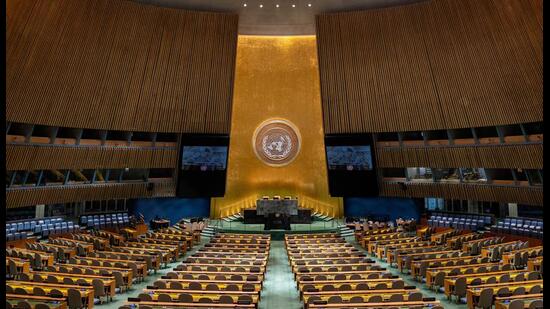
The selection process itself involves multiple steps: First, the UN General Assembly (UNGA) and the UN Security Council (UNSC) — comprising 15 member-States, including the permanent five (P-5) who have veto powers — issue a joint call to UNGA member-States for nominations. These nominees must submit their CVs and a vision statement, participate in formal and informal dialogues within and outside the UNGA, and campaign for the post. The UNSC then conducts straw polls in which members “encourage”, “discourage” or offer “no opinion” on each candidature. In later straw-poll rounds, a veto by a single P-5 member can end a candidature. Finally, UNGA confirms, via a simple-majority vote, a candidate who earlier received nine out of 15 votes in the UNSC, without a single P-5 veto.
In 2025, the UNGA president asked member-States to nominate candidates, allowing joint nominations including non-nationals for the first time. Curiously, two candidates from Ecuador were nominated, but neither nomination came from Quito. Candidates were also asked to resign from any UN jobs they held and reveal their funding sources. The UN has never had a woman secretary-general, and this time, the nomination of women candidates was expressly encouraged. The 1 for 8 Billion coalition even asked UNGA member-States to refrain from proposing male candidates.
{{/usCountry}}In 2025, the UNGA president asked member-States to nominate candidates, allowing joint nominations including non-nationals for the first time. Curiously, two candidates from Ecuador were nominated, but neither nomination came from Quito. Candidates were also asked to resign from any UN jobs they held and reveal their funding sources. The UN has never had a woman secretary-general, and this time, the nomination of women candidates was expressly encouraged. The 1 for 8 Billion coalition even asked UNGA member-States to refrain from proposing male candidates.
{{/usCountry}}Conventionally, the post of secretary-general rotates among regional groups, and this time, Latin America is the regional priority. It has had only one secretary-general so far: Javier Perez de Cuellar, from Peru. The front-runners in the race for Guterres’s were two competent women: Rebeca Grynspan of Costa Rica and Carolyn Rodrigues-Birkett of Guyana.
However, two men in two capitals decided to disrupt what could otherwise have been a smooth ascension for either of these two women candidates. Both Grynspan and Rodrigues-Birkett were vetoed by two P-5 members in the sixth straw poll of the UNSC, held on October 15. Technically, we don’t know which two of the P-5 derailed both women’s candidatures — while the veto power itself is a singular dysfunction of the UN system, it is exacerbated by secret voting — but looking at the worst disruptors and aggressors in the world today, it is easy to guess who. This has not only stymied the UN system but also humiliated Latin America and all women across the world.
The current deadlock is far from unique: Several appointments in the past — Dag Hammarskjold, Javier Perez de Cuellar, Kofi Annan, Ban Ki-Moon — came after protracted drama, divided opinions, and last-minute quick fixes, including questionable bargains struck for support. The selection of the next secretary-general seems set for heavy compromise. There are three options now: First, new candidates are nominated. But such candidates will have to answer difficult questions: why they did not join the race earlier, over the past 10 months, and why they avoided the open and transparent process that all other candidates went through. It’s uncertain whether any new candidate, given the circumstances, will receive the supportive votes needed from the UNSC. Even less certain is whether the P-5 can agree on a newcomer.
The second, almost entirely unlikely option, is that the two P-5 members who opposed the original front-runners change their minds; their ambassadors abstain from the next poll and let either Grynspan or Rodrigues-Birkett lead the UN for the next five years. There are precedents of this: China allowed Waldheim’s selection for his first and second terms after vetoing him initially. France did the same for Annan.
The third option, if the first two fail and the UNSC is unable to make a recommendation, is that the UNGA extends the term of the current secretary-general by two to three years. This happened in 1950 with Trygve Lie. If Guterres declines, his deputy, Amina Mohammad, can lead the UN; this happened in 1961, when Hammarskjold died in an air crash, and the three under-secretaries assumed charge until U Thant was appointed.
The present deadlock should trigger a strong call for reforming the UN process and system, moving selection of the secretary-general from the influence of the P-5-dominated UNSC to the control of the globally representative UNGA.
In 1946, UNGA adopted Resolution 11 in a rush; the resolution specified that the “first Secretary-General shall be appointed for five years, the appointment being open at the end of that period for a further five-year term”. It also said that it “would be desirable for the Security Council to proffer one candidate only for the consideration of the General Assembly and for debate on the nomination in the General Assembly to be avoided.” There was no time for long debates right after World War II; the UN had to start operating immediately, and member-States wanted to proceed quickly on the first selection.
The language of Resolution 11 clearly recommends applying this to the “first appointment”. The use of the word “desirable” suggests nothing mandatory, especially a provision that carries on endlessly. Eighty years later, the UN should not apply an obsolete procedure, adopted “for the first selection” only and based on what was “desirable” in 1946.
UNGA can adopt a resolution with a simple majority, and, irrespective of how the P-5 vote, request the nomination of more than one candidate for the post. This way, the ultimate choice will lie with UNGA, not the UNSC. Even better, UNGA can decide to regard the straw polls of the UNSC as an adequate set of “recommendations” and choose from the top two or three candidates. This would entirely be within the letter and the spirit of Article 97 of the UN Charter. It won’t require any legislative change, nor will it require permission from any capital.
If all fails, instead of relying on member-States head-hunting for Guterres’s successor, the task of listing out eligible candidates can be delegated to an independent panel. The UN has often sought out independent expert bodies or created high-level panels for specific, complicated tasks, after all.
Vesselin Popovski is professor and vice-dean, OP Jindal Global University. The views expressed are personal