The election of Joe Biden as the United States (US) President in 2021 brought the climate crisis to the top of the global agenda (his predecessor, Donald Trump’s actions resembled those of a climate-sceptic) and pushed the Democratic Party’s campaign promise of leading a “major diplomatic push” for global climate ambition.
Interestingly, but not surprisingly, the US effort doesn’t stride back to President Barack Obama’s signature achievement of the Paris Climate Agreement with its voluntary commitments and recognition of equity
The election of Joe Biden as the United States (US) President in 2021 brought the climate crisis to the top of the global agenda (his predecessor, Donald Trump’s actions resembled those of a climate-sceptic) and pushed the Democratic Party’s campaign promise of leading a “major diplomatic push” for global climate ambition.
Interestingly, but not surprisingly, the US effort doesn’t stride back to President Barack Obama’s signature achievement of the Paris Climate Agreement with its voluntary commitments and recognition of equity as a guiding principle. Instead, the effort is closer to the George W Bush days of focusing on major emitters, an expression that, in the parlance of the developed world, only accounts for current emissions and not cumulative emissions over time. While differentiation appears to have no place in this discourse, neither does the level of development. The effort, in reality, seeks a split within the developing countries in the negotiations and forces significant mitigation efforts by large developing countries. With its huge population and development imperatives, India is in the crosshairs of such a discourse despite its small per capita carbon footprint.
Adding to the challenges is the distinct possibility of the European Union (EU) imposing carbon border levies on those who don’t take on high carbon cut-down targets. While this may appear violative of present World Trade Organization rules, such action cannot be ruled out, especially if many developing countries also support such a levy.
The most recent efforts on the climate crisis took place at Sharm el-Sheikh (Egypt) at the 27th edition of the Conference of the Parties (COP27), where the key outcome was the “The Sharm el-Sheikh Plan of Implementation”. Catastrophic climate events across the globe, including the unprecedented scale of flooding in Pakistan, drought in Africa and heat waves and flooding in Europe, made compensation for “loss and damage” (from climate change) a political imperative, even though it wasn’t on the COP27 agenda. This was more so with the COP27 being held in Africa. So, rightly, all have hailed the decision to establish a loss and damage fund.
The agreement is only an in-principle one, and decisions need to be made on who will be eligible for loss and damage funding, who will contribute and, indeed, how the fund will operate. The developed world sees this as funding support for the most vulnerable countries, not people, which appears to rule out India receiving any funding for loss and damage. On the other hand, we may be pushed to become mandatory or an assessed contributor.
Gaston Browne, the prime minister (PM) of Antigua and Barbuda and the chair of the Alliance of Small Island States, said so in unambiguous terms in an interview to The Independent: “We all know that India and China — are major polluters and polluters must pay”, adding that there can’t be any free pass for any country. Furthermore, speaking to Christiane Amanpour on CNN, Frans Timmermans, vice-president of the European Commission, couldn’t have been clearer when he said that the COP27 was about major emitters, a phrase that includes China and India.
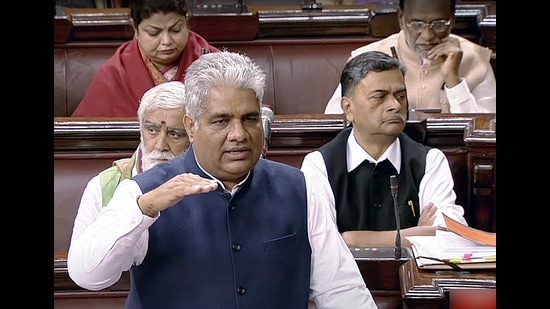
The Indian delegation, led by the Union minister of environment Bhupender Yadav, was strong at countering such a narrative at COP27 and stressing India’s small carbon footprint and huge development imperatives. Pushing back would, however, have to remain a preoccupation for India at the next COP, and after that, along with keeping an eagle eye on attempts at drastically reducing the use of coal and the issue of methane emissions, which are of special relevance to India given our livestock population.
Indeed, while a partnership with China in the BASIC grouping (also Brazil and South Africa) has served well, the idea that there is China-India combine may need dispelling given China’s level of development and emissions, both current and now also in cumulative terms. And, additionally, a Growth with Resilience and Renewal Energy coalition of large developing countries appears needed.
This may suggest a defensive focus for India in future climate negotiations, but its formidable offensive role in adaptation, finance, technology and lifestyles must not be underplayed. Indeed, at Sharm el-Sheikh, India succeeded in the global community recognising the importance of lifestyle change, proposed by Prime Minister Narendra Modi in Glasgow as Lifestyle for the Environment (LiFE). Moreover, India’s commitments to climate action through renewables, especially solar energy, and resilience are sterling.
The next COP will be held in the United Arab Emirates (UAE), and politics is bound to be at the centre stage. There are several reasons for this. The first relates to operationalising the loss and damage fund, including mandatory/assessed contributors and its obvious political overtones and implications. Second is its already agreed agenda. This includes a global stocktake on climate actions, which would give masala for finger-pointing at large developing countries, and the global goal for adaptation wherein, too, the developed world would be unwilling to support any real measures, especially in finance. Moreover, with COP28 being held in a major oil producer, a bye for oil and gas can be expected, thus increasing pressure on coal. In Glasgow, India was finger-pointed for insisting on “phase down” and not “phase out” of coal even though “phase down” was the exact phrase used by China and the US in their bilateral statement issued on the sidelines of the COP26.
And, finally, the elephant in the climate room, the US, is likely to be at its most active in the UAE. While rejoining the Paris Agreement and enacting climate-friendly domestic legislation has been done, a legacy for both President Biden and US climate envoy John Kerry requires a binding commitment by all countries to mitigation action. With elections in the US in 2024, COP28 (November 2023) will be a major staging post. And targeting major emitters will be critical. For India, which will host the G20 summit this year, the climate crisis will require nimble diplomatic handling of its politics.
Manjeev Singh Puri is former ambassador, lead negotiator, UNFCCC, and distinguished fellow, TERIThe views expressed are personal
One Subscription.
Get 360° coverage—from daily headlines
to 100 year archives.
Archives
HT App & Website