With wide ranging international MoUs and targeted policy measures, India has set its priorities clear on securing its critical minerals value chain. The surging importance of critical minerals in energy transition offers a new opportunity for India to start afresh and envision an innovative way to view women employment in the mining sector. The critical mineral sector cannot afford to develop on a segmented and inequitable mining landscape which structurally excludes women from availing mining sector benefits.
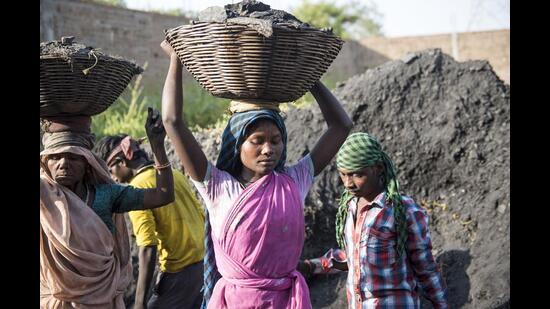
Globally, women make up only around 10 to 15% of the industrial mining workforce. In India, according to Statistics of Mines in India (2015), women account for just about 5% of all workers across the formal, DGMS-regulated mining workforce. The publicly accessible data on gender participation dates back to over a decade ago, underlining an urgent need for data mapping. Also, in a sector employing over one crore workers (directly and indirectly), women’s near-absence reflects its exclusionary scope. It is losing out on employing half of the eligible female worker population. The numbers also are not inclusive of the informal work force nor the participation in artisanal and small-scale mining.
The majority of the women in the mining sector are involved in informal or semi-formal menial jobs such as picking up debris, sieving, grinding, washing and transporting ores. Such activities often go unnoticed in government data, leaving women performing in depleted working conditions and limited pay, which further pushes them into marginalised sections of the society. The gendered participation (formal or informal) is more noticeable in the large-scale operations involving the midstream and downstream value chains, which are heavily male dominated.
The gap stems from three factors: lack of requisite skills, inadequate supportive infrastructure and demand bias. The employment gap is layered. On one hand, a significant number of women formally employed in the mining sector have administrative jobs rather than technical. On the other hand, the gap is also due to limited transition from skilling to gainful employment. While women constitute over 40% of the STEM enrolment in higher education, rough estimates indicate only 18-27% form part of the STEM workforce. This is often caused by lack of supportive infrastructure. Mining operations are usually in isolated locations, which serve as a big barrier for women due to limited transportation facilities and inadequate caring infrastructure.
{{/usCountry}}The gap stems from three factors: lack of requisite skills, inadequate supportive infrastructure and demand bias. The employment gap is layered. On one hand, a significant number of women formally employed in the mining sector have administrative jobs rather than technical. On the other hand, the gap is also due to limited transition from skilling to gainful employment. While women constitute over 40% of the STEM enrolment in higher education, rough estimates indicate only 18-27% form part of the STEM workforce. This is often caused by lack of supportive infrastructure. Mining operations are usually in isolated locations, which serve as a big barrier for women due to limited transportation facilities and inadequate caring infrastructure.
{{/usCountry}}For women to be considered employable, the demand bias also needs to be fixed. The prevailing conception of mining being a male dominated industry still governs the hiring processes in the private sector. According to S&P Global, amongst 2000 publicly traded global mining companies, women hold only 12.3% of board roles, and 14% of all executive positions. In general also, as per World Economic Forum’s Global Gender Gap Report (2025), only 18% of the board memberships are acquired by women. The lack of female representation in corporate boards is counterproductive for mining companies. According to a joint study by PwC and Women in Mining (2013), mining companies with women on their boards report profits that are, on average, 23% higher. This highlights that inclusive hiring is not only beneficial to the society but also to the capital interests of business owners.
India’s recent push towards developing midstream capabilities and achieving circularity to strengthen its critical minerals security offers fresh prospects to improve female workforce participation in the sector. As states aim to extend infrastructural and institutional support to build processing, recycling and extraction potential, there will be an increased demand for skilled professionals, R&D, and technical solutions. This impending demand must be tied to the case for gender equality in the sector. With critical minerals, the national and state governments can power its energy transition justly and more equally. They can design fiscal incentives that prioritise hiring women, mandate minimum female recruitment among empanelled companies under skilling programmes, and offer tax benefits to firms that meet women-employment targets. It can also make women-safe infrastructure such as free transport, hostels near employment centres, and adequate sanitation, a condition of mining leases, alongside developing female-only, industry-relevant skilling programmes and entering bilateral research exchange for female STEM researchers.
There is domestic precedent for what regulatory change alone can do: after the directorate general of mines safety lifted long-standing restrictions on women working in underground and opencast mines, Jharkhand saw the number of women in underground mines rise from 20 to 178, and in opencast mines from 64 to 442, in the years that followed. The ministry of mines has developed skill programs for women to operate heavy mining machineries, invested in skill gap study in mining, and organised “Women in Mining Sector” to initiate discussion on female workforce participation in the sector. At the level of private sector, the recognition is discernible. Hindustan Zinc has achieved 26.3% women workforce, with over 700 women involved in mining and smelting operations, whereas Tata Steel operationalised an all-women shift in an Noamundi iron mine.
India would not be pursuing this alone. Chile’s national mining policy 2050 set an explicit target of 20% female participation in the sector by 2030, backed by industry partnerships such as Women in Mining Chile, which works with companies to expand training and decentralise job access beyond Santiago. Australia’s critical minerals strategy (2023-2030) folds workforce diversification into its skills strategy, while its workplace gender equality agency framework mandates private companies with more than 100 employees to publicly publish their gender pay gaps, and those with 500 or more employees to set gender equality action targets. Similarly, South Africa’s mining charter established gender quotas for mining companies based on the management level.
Through its celebration of women in the mining sector, the ministry of mines has indicated its commitment to make the mining sector inclusive. What is now required is context-driven policy measures that lead to quality employment, upskilling programs, and better working conditions. The aim should now be to make women move away from being raw material collectors to skilled participants in India’s new development journey.
Nikita is consultant, Public Policy and Governance Affairs at Policy and Development Advisory Group. The views expressed are personal
(This is a Hindustan Times digital exclusive)