Every year, as the festival of Diwali approaches, a familiar, toxic ritual plays out across the landscape of northern India. It is not merely the ritual of lighting diyas or exchanging sweets, but a fractious, highly polarised debate that pits religious sentiment against the stark, undeniable reality of an environmental crisis. As the atmospheric quality plummets, turning our cities into vast gas chambers, a crucial question confronts us: do those who oppose a ban on firecrackers during Diwali to prevent
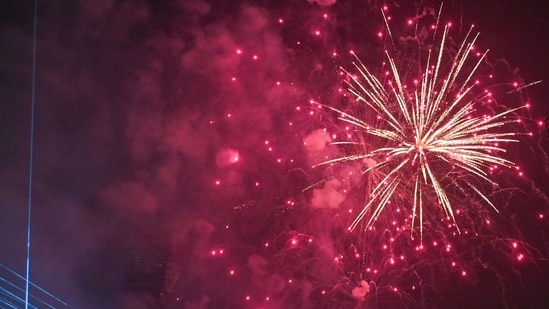
Every year, as the festival of Diwali approaches, a familiar, toxic ritual plays out across the landscape of northern India. It is not merely the ritual of lighting diyas or exchanging sweets, but a fractious, highly polarised debate that pits religious sentiment against the stark, undeniable reality of an environmental crisis. As the atmospheric quality plummets, turning our cities into vast gas chambers, a crucial question confronts us: do those who oppose a ban on firecrackers during Diwali to prevent further pollution have a valid point? Or is their resistance a form of short-sighted obstinacy that ignores a looming public health catastrophe?
There is a legitimate contention that, under Article 25 of the Indian Constitution, citizens have a fundamental right to full freedom of religion, allowing them to practice and celebrate their festivals according to established customs. For decades, the collective memory of Diwali for generations of Indians has been inextricably linked to the traditional explosion of firecrackers. Those who argue against a blanket ban feel aggrieved by what they perceive as a selective targeting of a Hindu festival. They point out, not entirely without merit, that the catastrophic winter pollution is a systemic, year-round crisis driven by industrial emissions, vehicular exhaust, and the seasonal burning of crop stubble. To single out a three-day festival as the primary culprit, they argue, is both structurally unfair and legally questionable.
Yet, while the constitutional right to religious freedom is sacred, it cannot exist in a vacuum, divorced from the right to life itself. Article 21 of the same Constitution guarantees the right to a clean, healthy, and breathable environment. When religious customs begin to threaten public health on a mass scale, we must ask: to what extent do traditional practices need to be moderated by overriding medical emergencies? The hard data cannot be brushed aside under the carpet of sentiment. Pollution is a silent, indiscriminate killer, choking our elderly, triggering acute respiratory distress in children, and filling our hospitals with citizens gasping for breath. Just days before the festival, Delhi’s Air Quality Index (AQI) skyrocketed from a clean 60 to a staggering, hazardous 482. With the baseline air already so toxic, adding the concentrated chemical shock of millions of firecrackers is not just an aesthetic indulgence; it is a collective suicide pact.
This forces us to reflect on the very philosophy of the festival. Is Diwali, a festival of lights, inner reflection, and spiritual triumph, or has it curdled into a display of avoidable, competitive exuberance of noise and toxic smoke? Ancient texts speak of illuminating the darkness with the gentle, ambient glow of earthen lamps. The Skanda Purana and the Padma Purana, which describe the origins of Diwali, associate the festival with the lighting of deepas (earthen lamps) to welcome prosperity, purify the household, and symbolise the victory of sattva (goodness) over tamas (darkness). Nowhere do these ancient shlokas mandate the detonation of heavy chemical explosives—an artificial, modern invention introduced centuries later. By turning a festival of deepa into a festival of noise and smog, we are not preserving antiquity; we are distorting it.
In an attempt to strike a legal compromise, the Supreme Court has permitted the use of certified "green crackers" on specific days like the 7th and 8th of November. But this begs the question: who is there to police the difference between a green and a non-green cracker? The enforcement machinery is notoriously overstretched and ineffective. A local police constable patrolling a crowded neighbourhood cannot distinguish between a certified eco-friendly firework and an illicit, highly toxic alternative simply by looking at it in the dark. Consequently, such conditional orders appear fundamentally unsustainable on the ground.
The harsh reality is that unless there is a total ban on the very production and manufacture of these crackers at the source, no piecemeal regulatory measure can ever succeed. If you allow factories to produce them and shops to distribute them, it is an exercise in futility to expect citizens to abstain from them. But can such a draconian step be executed? A total manufacturing ban immediately collides with another crisis—the economic displacement and loss of livelihood for lakhs of workers employed in firecracker hubs like Sivakasi.
We find ourselves trapped in a tragic, annual paralysis. Every November, the government cuts a helpless figure, issuing cosmetic guidelines. The solution cannot be found in temporary court orders or competitive political grandstanding. It requires a major, multi-pronged initiative involving both the Centre and state governments, which is absent. In the interim, true religious devotion does not demand the poisoning of the air our children breathe. Ultimately, India must learn to decouple the celebration of joy from the generation of toxicity; otherwise, our celebrated festivals will continue to be overshadowed by the very darkness they were meant to dispel.
One Subscription.
Get 360° coverage—from daily headlines
to 100 year archives.
Archives
HT App & Website