The Assam government’s new rule that mandates police scrutiny of all land transfers between people belonging to different religious communities is bad in law and mischievous in intent. It is of a piece with the current polarising political mood in that state and militates against the ethos of the Constitution. Worse, the addition of another layer of bureaucratic red tape will, in the long run, work against Assam’s economic interests. The state government needs to rethink this policy.
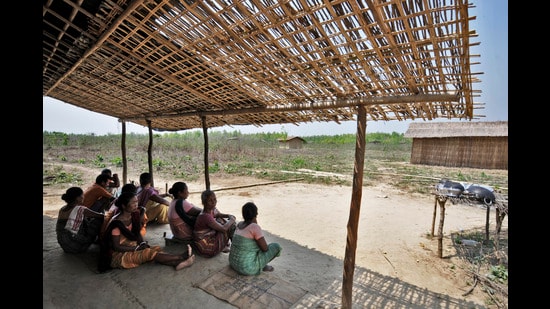
The policy is premised on chief minister Himanta Biswa Sarma’s conviction that the above-mentioned land transfers need to be scrutinised from a “national security angle”, considering the “sensitive nature of the state”. In practice, the new rule will make land transactions tedious and complicated and facilitate rent-seeking. The policy risks the threat of being weaponised by a bullying bureaucracy and has the potential to empower local politicians and turn them into deal-makers or deal-breakers. If the aim is to regulate the state’s demography or local culture, traditions or land ownership, there are better ways, for sure. In any case, culture and tradition are not prisoners of religion, but fluid entities often shaped by multi-faith interactions. The right to property is a constitutional right, albeit with reasonable restrictions to protect the interests of vulnerable sections such as the scheduled tribes. The introduction of religion as a new filter hardens identities and can lead to the making of single-faith ghettoes.
The identity question has been central to politics in Assam for some time. There are historical, economic and geographical reasons for this. Political parties have stoked fear and spread insecurity by citing demographic changes that are more a result of colonial labour and settlement policies, climatic factors like floods and river erosions, and poverty than any conscious plot or conspiracy. The fear of cross-border infiltration led to controversial initiatives such as the 1983 Illegal Migrants (Determination by Tribunals) Act and the National Registry of Citizens — steps such as border fencing and patrolling may have had better outcomes in curbing illegal migration — and furthered polarisation in the state. Recent steps by the Sarma government to evict settlers from what is deemed revenue land, and even facilitate arming of a section of the population, have the potential to divide people on religious lines.
{{/usCountry}}The identity question has been central to politics in Assam for some time. There are historical, economic and geographical reasons for this. Political parties have stoked fear and spread insecurity by citing demographic changes that are more a result of colonial labour and settlement policies, climatic factors like floods and river erosions, and poverty than any conscious plot or conspiracy. The fear of cross-border infiltration led to controversial initiatives such as the 1983 Illegal Migrants (Determination by Tribunals) Act and the National Registry of Citizens — steps such as border fencing and patrolling may have had better outcomes in curbing illegal migration — and furthered polarisation in the state. Recent steps by the Sarma government to evict settlers from what is deemed revenue land, and even facilitate arming of a section of the population, have the potential to divide people on religious lines.
{{/usCountry}}Assam, a border state with a 34% Muslim population (as per the 2011 Census), needs to transcend the religious, ethnic and linguistic faultlines and embrace an inclusive vision of development to make the most of its potential as the gateway to East Asia. Less red tape and a non-intrusive State can also ensure that all boats rise despite the ebb and flow in the Brahmaputra.