
 E-Paper



Nations united and divided by the Durand Line
Islamabad’s fraught relations with Kabul will increase Pakistan’s security concerns, destabilise the region further

 Prefer HTon Google


The Pakistani establishment was ecstatic at the Taliban victory in Afghanistan in August 2021. Having backed them for over 25 years, they expected a friendly, if not pliable, regime in Kabul. Prime Minister Imran Khan credited them with having broken the shackles of slavery. Subsequent events have belied the euphoria.
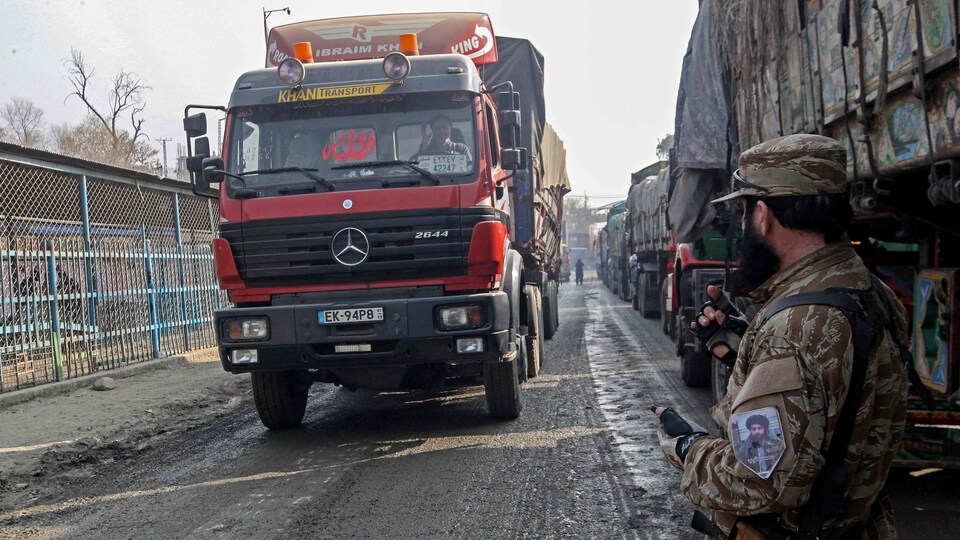
Following the killing of seven army personnel in North Waziristan in a terror attack mounted by Tehreek-e-Taliban Pakistan (TTP) from Afghan soil, Pakistan announced on March 18 that it had carried out “intelligence-based anti-terrorist operations” in the border regions of Afghanistan against a terror group aligned with TTP. The armed forces’ public relations wing accused the Taliban regime of not only arming terrorists but also providing safe haven to those committing terrorism in Pakistan. The Taliban confirmed the killing of eight women and children in two Pakistani airstrikes in the Paktika and Khost provinces. Strongly condemning the attacks as a violation of Afghanistan’s territory, they warned Pakistan of dire consequences. Subsequently, the Taliban defence ministry said that its forces had targeted bases of the Pakistan army “across the artificial Durand Line” with heavy weapons in retaliation. The Pakistani media reported some casualties on their side.
Barring the Pakistani strategists blinded by their India obsession and the urge for strategic depth in Afghanistan, few will be surprised by the turn of events. The Pakistani establishment has brought it upon itself. After all, the Taliban leadership is the product of madrassas in Pakistan and came to rule large parts of Afghanistan for the first time in the late 1990s with Pakistan’s help. Even as Pakistan collaborated under duress with the United States (US))-led North Atlantic Treaty Organization (NATO) forces to oust them from power post 9/11, it provided them sanctuary on its soil and once again helped them to secure their August 2021 victory. Pakistan’s hope of a friendly regime in Kabul was grossly misplaced. Its quest for strategic depth in Afghanistan over the years has alienated the Afghans. Moreover, they are a fiercely independent people and no government in Kabul will play second fiddle to Pakistan.
The ongoing tension between Pakistan and the Afghan Taliban centres on three issues.
First, much to Pakistan’s chagrin, the Taliban government has repeatedly questioned the Durand Line as the border between the two countries. There have been instances of Afghan forces damaging the fence erected by Pakistan along it. Mullah Omar, head of the first Taliban government, is reported to have finessed Pakistan’s request for its recognition by invoking fraternal ties between the people on both sides.
Second, terrorism in Pakistan has spiked sharply since the Taliban takeover in Kabul. Pakistan alleges that 5,000-6,000 TTP militants are sheltered in Afghanistan and the Taliban have failed to keep them subdued despite specific intelligence inputs. It has also alleged that TTP is getting money from India through Afghan proxies. The Taliban have been flatly denying the presence of TTP cadres in Afghanistan and counselling Pakistan to resolve its problems with them through dialogue. They facilitated behind-the-scenes talks between the two sides during Imran Khan’s prime ministership. However, the dialogue approach was discredited in Pakistan as it facilitated the return of several TTP militants to its tribal belt and a further spike in terror incidents. Pakistan blames “certain elements” within the Taliban for fomenting trouble, thus hinting that it is not friendless among them. However, its friends have failed to render any meaningful help so far. The following factors rule out serious action by the Taliban against TTP: One, their ideological affinity and the fact that TTP fought alongside them against the US-NATO forces; and two, the apprehension that strong action against it could push its cadres towards their nemesis, the Islamic State-Khorasan Province.
Frustrated with the Taliban response, Pakistan took some punitive measures towards the end of 2023. It imposed restrictions on Afghan transit trade through its territory — a move strongly opposed by its beneficiaries on both sides. It threatens to introduce visas for Afghans to enter its territory. This too is resented by both sides, especially by the Afghans who reject the Durand Line. Finally, Pakistan expelled around half a million Afghans living illegally on its soil without due process and compensation for their properties and belongings. This move invited strong condemnation by top Taliban functionaries.
This is not the first military action by Pakistan in Afghanistan. It has carried out targeted killings of TTP leaders and mounted airstrikes at least once earlier: In April 2022, it killed over 40 persons. There has been periodic exchange of fire between the forces of the two countries. However, both sides have their limitations. Transit trade through Pakistan is vital for Afghanistan. So is access for Afghan citizens to Pakistan for trade, medical treatment and visiting relations. Pakistan also realises that military means alone cannot resolve its problems with the Taliban. After all, they survived the military might of the US. Pushed into a corner, they could ramp up terror in Pakistan.
Moreover, as Pakistan gets into deeper trouble with the Taliban, they are being courted by major regional countries. Pakistan’s iron brother China recently signalled its intent to engage the Taliban more substantively when President Xi Jinping received the credentials of the Afghan ambassador. Therefore, while an all-out escalation is unlikely, the Pak-Afghan relationship will remain fraught. However, the situation could worsen if an increasingly frustrated Pakistan does what it has done repeatedly in the past — try to destabilise another government in Kabul that refuses to comply with its diktats. Besides intensifying Pakistan’s security challenge, it will also add to regional instability.
Sharat Sabharwal is a former high commissioner to Pakistan and author of India’s Pakistan Conundrum: Managing a Complex Relationship. The views expressed are personal


