
 E-Paper



BMC clears new trenching policy to curb repeated road digging, tighten accountability
The BMC has approved a new trenching policy to reduce repeated road digging, introduce designated trenching windows and make utility agencies more accountable

 Prefer HTon Google


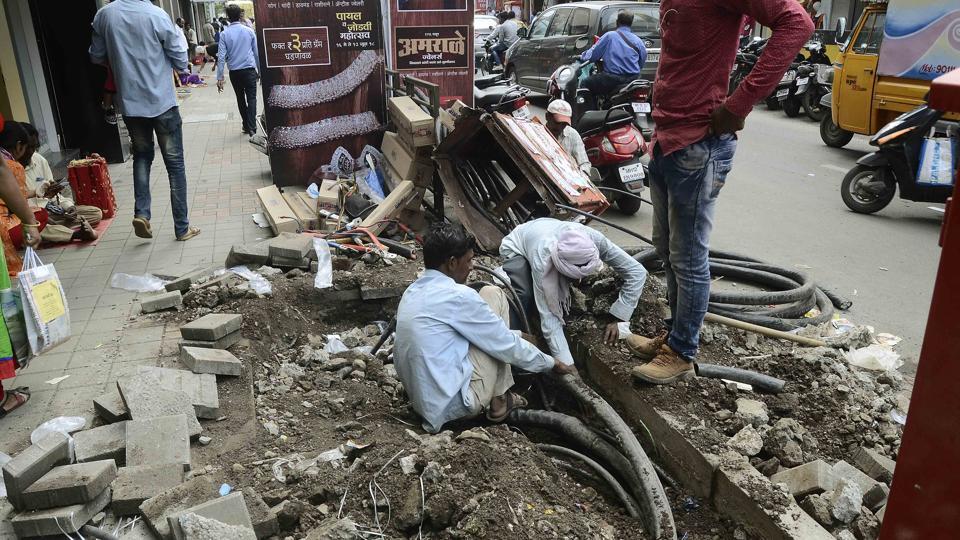
Facing mounting criticism over repeated excavation of roads for laying and repairing utility lines, the BMC has approved a new trenching policy aimed at minimising road digging and making utility agencies more accountable for restoring the roads they dig up. The policy was approved by municipal commissioner Ashwini Bhide this week, and is expected to be placed before the general body in the coming days.
Also read: BMC clears 68 km of footpaths under first phase of ‘Pedestrian First’ campaign
Utility agencies can now restore roads they dig up
A key change is that utility agencies can now opt to reinstate dug-up roads themselves instead of depending on BMC-appointed contractors. The civic body has also developed a single-window system to grant, monitor and manage trench permissions in which trenching will be permitted only during two designated windows a year, and agencies will have to apply sufficiently in advance.
The policy also seeks to reduce repeated excavations by making utility ducts mandatory for certain utilities. Once trenching crosses 50 metres, a utility duct will have to be installed. Telecom lines and low-tension electrical lines below 100 mm will have to be laid through ducts, while MGL’s piped gas and high-tension electrical lines may be permitted separately as they cannot be accommodated in standard ducts.
Also read: BMC approves Century Mills land lease, Mulund land for Dharavi project
Utility agencies to build ducts where needed
Where a duct is not already available, the utility agency will have to build it themself; if they don’t, the BMC will do, a senior official said. Once a duct is installed for the specified utilities, further trenching for the same services will not be permitted.
The policy proposes strict action for defects found in reinstated roads—these will have to be rectified within 48 hours, failing which the BMC may undertake the work itself and possibly blacklist the agency for one year and withhold its pending trench permissions.
Also read: BMC completes repair work on water pipeline in Thane
BMC cuts reinstatement charges, raises penalty for illegal digging
While reinstatement charges have been brought down substantially and will now be closer to those of other municipalities (The reduction is around 65% for cement-concrete (CC) roads and 35% for non-cement roads), the BMC has also proposed stricter action against unauthorised excavation. Illegal trenching will now attract a penalty of five times the applicable charges, compared with two times earlier.
The move to allow private utility agencies to undertake road reinstatement has raised concerns. “The BMC is trying to outsource its work,” said Trivan Kumar Karnani, founder of the Mumbai North Central District Forum. “If the agencies fail to reinstate the road as per the required quality, fixing accountability will be difficult. This policy should have been opened for public consultation before being cleared.”
Also read: Bombay HC quashes FIR over BMC’s Covid drug purchase of ₹5.96 crore
Utility agencies welcome greater accountability
However, a representative of a utility agency which does many trenching works welcomed the policy, saying it would make agencies more directly accountable. “Earlier there used to be buck-passing,” he said. “People used to blame the utility agency for the work and the BMC for not reinstating the road. Now, as the brand value of utility agencies will be at stake, the policy will make us more accountable.”


Stay updated with all the Breaking News and Latest News from Mumbai. Click here for comprehensive coverage of top Cities including Bengaluru, Delhi, Hyderabad, and more across India along with Stay informed on the latest happenings in World News.


