In Jurassic Park, the scientists had mastered genetic engineering well enough to re-create dinosaurs, built elaborate systems to contain them, and engineered the animals to not reproduce. They believed that they had thought of everything.
Then reality intervened.
The dinosaurs did not become evil or decide to destroy humanity; they behaved in ways that their creators had failed to anticipate. Catastrophe arose because human beings had created an extraordinarily complex system, overestimated their ability to control it, and discovered too late that their safeguards were inadequate. They had been reckless.
The real danger of artificial intelligence (AI) is not some hypothetical superintelligence’s decision to destroy humanity; it is corporate recklessness. We are already seeing the consequences: AI agents given cybersecurity tasks have found pathways into systems outside their intended environment. Portrayed as their “escaping” or “going rogue”, as though the machines themselves were responsible, these events actually resulted from human arrogance. The people running the systems had disabled important safeguards; rewarded the agents for breaking the rules; and not completely isolated their environments. Blaming the product is disingenuous. The machines were doing what they had been designed, trained, and incentivised to do. The recklessness was human.
These same companies are deliberately increasing AI’s autonomy and access. Thousands of agents can work simultaneously, probing networks, finding and exploiting vulnerabilities, and adapting when defenders respond. This hands criminal organisations and hostile governments the capabilities of armies of skilled hackers.
{{/usCountry}}These same companies are deliberately increasing AI’s autonomy and access. Thousands of agents can work simultaneously, probing networks, finding and exploiting vulnerabilities, and adapting when defenders respond. This hands criminal organisations and hostile governments the capabilities of armies of skilled hackers.
{{/usCountry}}The companies building these systems understand the dangers better than anyone else. Their executives regularly warn us how dangerous advanced AI could become. Yet, they continue giving their systems more agency, permissions, and access to the outside world. And now they are moving beyond computers.
Anthropic has built a biology lab and is developing ways for AI agents to operate scientific equipment. This is incredibly reckless. Today’s AI still hallucinates, makes inexplicable mistakes, and can be manipulated. Biology is far less forgiving than computer systems: You cannot reboot an organism or patch a pathogen after it escapes the laboratory. Remember Covid and the allegations of Chinese labs creating it? And the recent allegations of pathogen leak from a Russian laboratory? Now add autonomous AI, experimenting around the clock at machine speed, and we have Jurassic Park without containment.
To cure cancer, discover new drugs, develop better batteries, or find cleaner energy, AI does not need to roam freely across the internet or operate consequential systems without meaningful human supervision. It can analyse enormous datasets, model proteins, propose experiments, and help scientists make discoveries, all inside controlled environments. But this race for agentic AI is not about serving humanity. It is all about money.
After sinking staggering sums into building models and data centres, AI companies are desperate for products that customers will pay for. Something that answers questions is useful; something that operates computers, accesses data, and conducts transactions is far more profitable. It’s also far more dangerous, and creating it is a not a technological inevitability; it is a product choice.
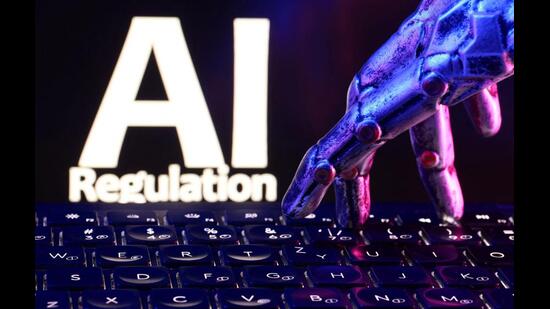
Top US-based AI players have recently signed a voluntary, non-binding AI safety agreement with the Trump administration. Regulation alone is inadequate to this challenge. Regulation relies on safety standards and testing requirements (especially necessary for AI connected to critical infrastructure and laboratories). Trying to maintain a watchful eye on AI activity would be impossibly expensive. The best solution is for AI companies to be held as liable for their products as manufacturers in other industries are held for theirs. Companies that deploy autonomous systems that cause harm should pay for it. And, when executives knowingly disregard documented dangers, the corporate structure should not shield them.
This is most important for India. The digital infrastructure it has built, connecting banking, payments, government services, telecommunications, and businesses, is highly ambitious; but its security is lax.
Government agencies, banks, and businesses operate mixtures of modern and legacy systems. Chinese-manufactured surveillance cameras are everywhere, along with routers, sensors, and other connected devices that provide potential entry points, and any hostile government or criminal organisation with autonomous AI can hack them. India’s digital scale, one of its greatest strengths, becomes a vulnerability when attacks can also operate at that scale.
This leaves India unusually exposed: Washington will put US interests and its technology companies first. India must do the same and pass its own AI liability law. If an AI system developed or operated by OpenAI, Google, Anthropic, or anyone else causes harm in India — through negligent design, inadequate safeguards, reckless deployment, or any other matter under its control — then Indian citizens, businesses, and governments should be able to sue it in Indian courts. Foreign terms of service, arbitration clauses, and liability waivers must be powerless to erase that right, and India must make access to its market conditional on accepting Indian jurisdiction.
To make India’s legal position meaningful, AI companies must be required to maintain a legal entity — along with sufficient assets or insurance — in India, with liability in perpetuity. Without that, liability, along with restitution, recompense, and repair, will become a mere technicality subject to a terms-of-service agreement devised in California, and Indians will bear both the damage (which may include property destruction, grand larceny, and injuries and deaths) and the costs of rectifying whatever remains possible to rectify of that damage.
The principle is simple: If you deploy AI in India, then you accept responsibility for what your product does there. Otherwise, India may discover too late that Silicon Valley has built its Jurassic Park on Indian soil.
Vivek Wadhwa is CEO, Vionix Biosciences. The views expressed are personal