India’s Self-Help Group (SHG) movement is among the country’s most successful experiments in community-led development. The Deendayal Antyodaya Yojana-National Rural Livelihoods Mission (DAY-NRLM) has brought more than 100 million rural women into approximately 9.2 million SHGs, enabling saving, formal credit, livelihoods and participation in household and community decisions. The Lakhpati Didi initiative represents an important evolution of this movement. Success should be measured not just by participation, savings or credit, but by sustained improvements in incomes and economic opportunities. It offers lessons in public leadership: translating a national aspiration into operational plans and mobilising institutions towards new objectives.
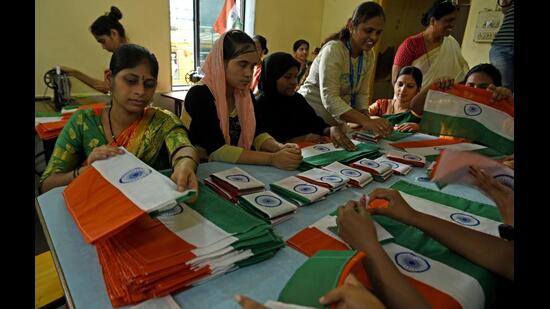
On Independence Day in August 2023, the Prime Minister announced the objective of creating 20 million Lakhpati Didis, women from SHG households achieving an annual household income of at least ₹1 lakh. The target was subsequently raised to 30 million and, in February 2026, to 60 million by March 2029. This gave measurable direction to an existing programme and emphasised women-led development. The PM’s formulation of “Sabka Saath, Sabka Vikas, Sabka Vishwas, Sabka Prayas” finds practical expression in this approach: inclusive development, institutional trust, and collective effort for tangible outcomes.
The ministry of rural development faced the challenge of converting an ambitious target into millions of viable household livelihood plans across states with differing economic conditions and institutional capacities. The approach strengthened the DAY-NRLM architecture rather than establishing a parallel structure. SHGs, village organisations, cluster-level federations and community resource persons became the principal institutional channels. The strategy brought together five enablers: productive assets, skills, finance, markets and technology, supported by convergence across departments.
A national mission of this scale cannot succeed through central direction alone. State Rural Livelihood Missions adapt the approach to local circumstances, identify livelihood opportunities and coordinate departments. District administrations connect livelihood planning with agriculture, animal husbandry, banking, skills and markets. At the community level, community resource persons identify potential Lakhpati Didis, assess livelihoods, prepare plans and connect women with support. SHG federations provide platforms for enterprise development and market engagement. Women exercise leadership through their own economic choices by starting enterprises, diversifying livelihoods, managing credit, negotiating with buyers and sharing knowledge.
{{/usCountry}}A national mission of this scale cannot succeed through central direction alone. State Rural Livelihood Missions adapt the approach to local circumstances, identify livelihood opportunities and coordinate departments. District administrations connect livelihood planning with agriculture, animal husbandry, banking, skills and markets. At the community level, community resource persons identify potential Lakhpati Didis, assess livelihoods, prepare plans and connect women with support. SHG federations provide platforms for enterprise development and market engagement. Women exercise leadership through their own economic choices by starting enterprises, diversifying livelihoods, managing credit, negotiating with buyers and sharing knowledge.
{{/usCountry}}By February 2026, the 30 million Lakhpati Didi milestone had been achieved. An impact assessment by IIM Ahmedabad, conducted between November 2025 and March 2026 across 17 states and Union territories and covering approximately 6,500 respondents, reported improvements in household incomes, savings, livelihood diversification and women’s participation in decision-making.
Sustaining economic gains remains a challenge. Farm incomes fluctuate, small enterprises face uncertain markets, and access to credit does not automatically ensure profitability. Reliable assessment of household income is also difficult when earnings arise from multiple seasonal and informal activities.
The next phase must, therefore, place greater emphasis on income sustainability, enterprise viability, producer collectives, market linkages and continued support for households requiring additional assistance. It must also focus on the durability and quality of women’s economic advancement: livelihoods capable of generating dependable incomes through stronger markets, higher productivity, appropriate technology, viable financing and institutional support. A woman who manages capital, develops an enterprise, negotiates in the marketplace or mentors another entrepreneur acquires capabilities beyond income. These strengthen her confidence, independence and participation in decision-making.
The experience of Lakhpati Didi suggests that transformative programmes depend on leadership at many levels: setting national direction, building workable systems, adapting to local conditions and enabling citizens to own their progress. Women emerging as producers, entrepreneurs and economic decision-makers would mark a deeper transition towards sustained economic agency and development shaped by citizens’ capabilities and aspirations.
Shailesh Kumar Singh is former secretary, rural development, Government of India. The views expressed are personal