Ask most people what they think of when they eat, and genetics is not likely to be the first answer. Well, there is a record of human diets in our DNA.
To enjoy food, we have to digest it. Digestion consists of mechanically breaking down food and then chemically taking it apart with enzymes inside the body so that it can be used. In the case of carbohydrates, they are broken down so they can pass through the intestinal wall
Ask most people what they think of when they eat, and genetics is not likely to be the first answer. Well, there is a record of human diets in our DNA.
To enjoy food, we have to digest it. Digestion consists of mechanically breaking down food and then chemically taking it apart with enzymes inside the body so that it can be used. In the case of carbohydrates, they are broken down so they can pass through the intestinal wall and be used for energy.
What does genetics have to do with carbohydrate digestion? Quite a bit.
First, as our ancestors developed a taste for starch (a complex carbohydrate), the gene that gives rise to the enzyme that breaks starch down was duplicated in their genomes. A genome is a complete set of genetic material. We inherited starch-digesting genes from our starch-loving ancestors and more of these genes makes it easier for us to digest starchy food.
Second, for those of us who can digest milk into adulthood, we can thank inheriting a genetic switch that keeps lactase enzyme production on past childhood. This is a rare variation that only some people (and no other adult mammals) possess.
And third, humans have acquired certain genes over time that help us to eat carbohydrates that our own bodies cannot digest. An assortment of genes from beneficial bacteria that colonise our intestines helps us to get energy from indigestible fibre.
Let’s look at starch. It is incredibly important to our diets. A prevailing myth is that our Paleolithic ancestors did not eat grains or other starchy foods. In fact, starch was part of the diet of humans who lived in the Sahara when it was green, over 120,000 years ago. It turns out that the “paleo diet”, which promotes grain abstinence is a misnomer.
Amylase is the enzyme that helps us to split starch into simpler sugars. Because we have amylase in our saliva (in addition to the amylase made by the pancreas), we can break down starchy food in our mouth into sweet sugars. Modern humans have up to 20 copies of the gene for it, while other types of humans (like Neanderthals) and apes had only a few.
Bread, potatoes, pasta, and rice are important culturally and as a source of nutrition. Populations that have more amylase genes copies, and consequently, more amylase in their saliva are inclined to eat more starchy food.
Even animals that are in close proximity to humans have been influenced by our diets. Many of them contain multiple copies of the amylase gene because they’ve survived on our scraps. Dogs have more copies than wolves, domesticated pigs more than boars, and street mice more than wild deer mice.
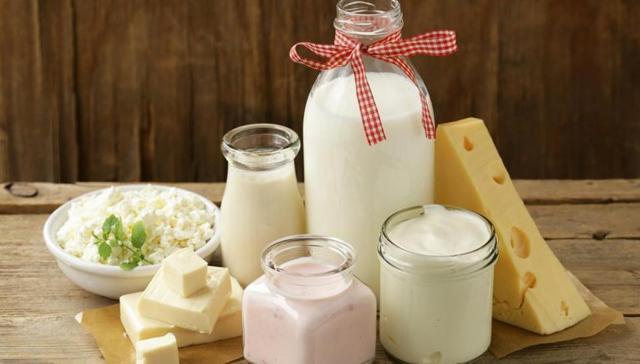
Now, consider milk. Like other infant mammals, nearly all humans can digest milk as babies. But most adults cannot. This is because most of us stop making lactase the enzyme that breaks down lactose, which is a sugar in milk. Only around one-third of adults globally can digest lactose because they can make the lactase enzyme. Those of us who can’t digest large amounts of lactose in milk are lactose intolerant.
Modern humans have been around for approximately 200,000 years. Most of this time our ancestors were hunter-gatherers. Then 10,000 years ago, our ancestors started to grow crops, domesticate animals, and settle down. Cows were important to certain farmers and pastoralists.
We can conceive of a scenario in which being lactose persistent was beneficial to some people roughly 9,000 years ago. Imagine that normal crops failed locally, and a community faced starvation. Those who survived on cow’s milk were able to weather famine better. They passed on this feature to their descendants.
Lactase persistence varies from region to region and has arisen independently in Europe and Africa. The mutation that keeps the lactase gene turned on into adulthood is different in African and European populations. As humans spread around the globe, they carried these genetic variations.
But it simply isn’t enough to consider the human genome and our own genes when we talk of digestion. You and I also have a versatile set of many genomes in our bodies in microbes that colonise the gut. In fact, just one kind of bacteria might have over 250 enzymes that break down carbohydrates compared to less than a hundred from all of our own human cells. And there are thousands of different kinds of microbes in the gut that give us digestive firepower.
Nearly all of us eat plants. Much of plant material cannot be digested by our own cells. This includes carbohydrates such as fibre. Scientists have found that eating fibre helps prevent obesity, type 2 diabetes, and heart disease. Most of us can digest fibre through enzymes produced by gut microbes.
Certain microbes in the intestine ferment indigestible carbohydrates to short-chain fatty acids. These chemicals make us feel full and provide energy to our bodies. In fact, there are estimated to be more than 16,000 carbohydrate-digesting enzymes in the gut that come from microbes.
Finding food and eating was a challenge throughout most of our history. Now, the problem for many of us is that we eat too much. What is clear, however, is that we benefit from eating fruits, whole grains, legumes, and vegetables. Or summed up in author Michael Pollan’s pithy words — “Eat food. Not too much. Mostly plants.”
Anirban Mahapatra, a scientist by training, is the author of COVID-19: Separating Fact From Fiction
The views expressed are personal
One Subscription.
Get 360° coverage—from daily headlines
to 100 year archives.
Archives
HT App & Website