
The Congress plans to hold a nationwide rally to ‘Save the Constitution’ on November 26. The Grand Old Party believes the Constitution is under threat and finds it apt to launch its protest on this particular date because on this day in 1949, the Constituent Assembly adopted the Constitution. The irony is hard to miss. During Congress rule, the then Opposition — which is now in power — harboured the exact same apprehension. Why does this cycle of protests persist?
Even before the Constitution came into force in 1950, sharp fault lines had emerged over several core issues: Uniform Civil Code (UCC), national language, the tilt toward a strong Centre within a federal structure, freedom of speech, and the contours of reservation in government jobs. Seven decades later, these debates, in one form or the other, continue to keep India’s politics on the boil. Following Uttarakhand and Goa, BJP-ruled states across the country are now gearing up to implement the UCC. Consider this: If Opposition parties sweep back to power in BJP-ruled states someday, wouldn’t they move to undo these changes and restore the status quo? This tug-of-war over constitutional provisions is hardly unique to India. Democracies across the globe are caught in a similar churn, sparking deep anxiety among defenders of democratic norms. Let’s discuss these norms a bit.
On November 19, 1863, in his historic Gettysburg Address, US President Abraham Lincoln offered the world a definitive articulation of democracy: Government of the people, by the people, for the people. Cut to the present, and look at how President Donald Trump is governing that very nation. He signed 225 executive orders in 2025, followed by another 67 in 2026. Executive orders were designed to allow presidents to act swiftly during genuine crises. Did the US really face 292 emergencies over a span of 22 months?
{{/usCountry}}On November 19, 1863, in his historic Gettysburg Address, US President Abraham Lincoln offered the world a definitive articulation of democracy: Government of the people, by the people, for the people. Cut to the present, and look at how President Donald Trump is governing that very nation. He signed 225 executive orders in 2025, followed by another 67 in 2026. Executive orders were designed to allow presidents to act swiftly during genuine crises. Did the US really face 292 emergencies over a span of 22 months?
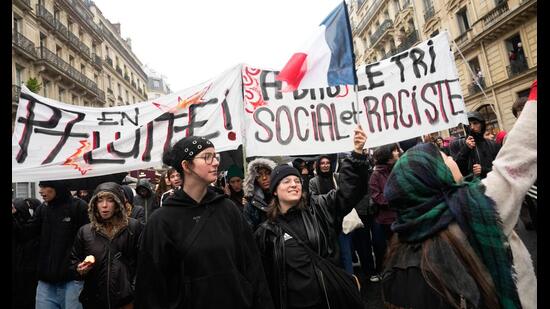
{{/usCountry}}The French Revolution began in July 1789 with the storming of the Bastille. Yet, despite its storied democratic legacy, contemporary France is simmering with internal unrest. Citizens are out on the streets protesting inflation, joblessness, and rising poverty.
The tightening grip of billionaires over democratic institutions is fuelling public anger in affluent western democracies. Trump faces persistent allegations of conflating national policy with his family’s business interests; a billionaire himself, his inner circle is drawn from the same elite. Similarly, across Europe and the developing world, essential public utilities — once treated as instruments of social welfare — are increasingly concentrated in the hands of a few business conglomerates.
Across nations, drinking water, electricity, transport, telecom, education, and healthcare are being handed over to private corporations. The corporate playbook is simple: Charge a fee for every service and ensure profits rise year after year. That is where the friction begins. While the cost of living climbs steadily, average incomes fail to keep pace.
Perhaps the most troubling trend is how contemporary leaders weaponise nationalism to erect walls of religion, language, and geography. As democracies run on majorities, traditional social fissures are deliberately widened over each election cycle to consolidate votes. Retaining power through polarisation has become a global template — one favoured by leaders who refuse to accept defeat even when voted out.
Donald Trump offers a textbook case. When he lost the 2020 election, observers warned that while Trump was out of office, Trumpism was here to stay. At its core, Trumpism meant stoking racial and religious grievances under the banner of American nationalism — a sentiment so volatile that his supporters stormed Capitol Hill for hours following his defeat. Riding that very wave, Trump returned to the White House in January 2025, and the consequences are visible to everyone.
Do such leaders not mock the founding visionaries who anchored democracy and national unity in enduring ideals? It was the blood of French citizens that gave the world the principles of liberty, equality, and fraternity — ideals that dismantled monarchies and inspired colonised nations to fight for freedom.
Since this reflection on historical parallels began with a milestone in November, let us close the discussion with another. On November 9, 1799, when Napoleon Bonaparte seized power to “rescue” France from anarchy, it was seen as a body blow to the revolution. Yet France endured, and since 1870, its democracy has continuously evolved.
Today, as the alliance of unbridled political ambition and oligarchic wealth shakes the foundations of popular will, a question looms large: Despite these body blows, will the caravan of democracy keep moving forward? Democracy lovers feel this system will prevail in spite of acid tests.
Shashi Shekhar is editor-in-chief, Hindustan. The views expressed are personal