It is ironic that for a government that celebrates the heritage of the country as a badge of its identity, the imperatives of conserving ancient monuments should be considered a ‘problem’. What else is one to make of the recent proposal to amend the Ancient Monuments and Archaeological Sites and Remains (Amendment and Validation) Act, 2010 (AMASR Act, 2010) to permit the construction of government-funded infrastructure projects in the proximity of protected monuments? The Act is for the protection of monuments, but the intent of the amendments is to facilitate new infrastructure projects in the proximity of monuments. How has this egregious reversal of priorities come about?
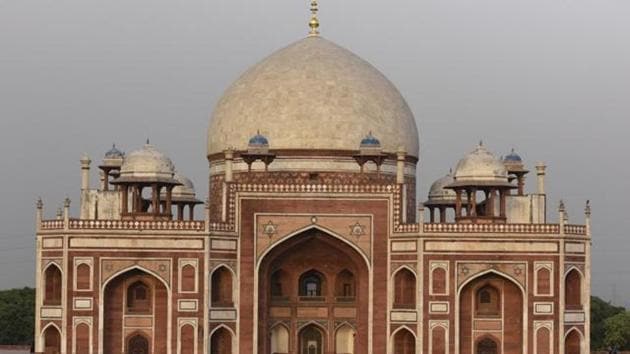
The original legislation to protect monuments was the AMASR Act, 1958. Over the years, it was perceived to be inadequate to protect monuments in the face of the rapid development taking place in the country. As an antidote, the AMASR Act, 2010, was promulgated, which prescribed that an area of 100 meters around protected monuments would be declared as ‘prohibited area’, where no new development would be permitted, and a further 200 meters area would be ‘regulated area’. Though it appeared a draconian initiative, the Act also set up the National Monument Authority (NMA) to draft by-laws for each monument to administer its provisions. The Indian National Trust for Art and Cultural Heritage (INTACH), and other agencies to be identified, were to help the NMA and the Archaeological Survey of India (ASI) to draft the by-laws envisaged in the Act.
On the face of it, the legislation was a genuine response to a real problem. The requirement for context-specific by-laws for each monument was also an intelligent strategy to deal with the variety of problems that the implementation of the Act would entail. But events did not unfold as envisaged in the Act. In spite of concerted efforts by INTACH to set up a mechanism to draft the by-laws, neither the NMA nor ASI responded positively. Consequently, ad hocism triumphed and status quo prevailed. Development projects struck a wall when they were planned in the proximity of monuments: The planners did not know the rules they had to follow and the regulatory authority, NMA, in the absence of by-laws, found it difficult to accord permissions to projects. Not surprisingly, the resulting frustrations the delays generated developed into virulent antipathy towards AMASR Act, 2010. Instead of trying to understand the genesis of the problems with the Act and remedy its shortcomings, the government is throwing the baby with the bath water by succumbing to the pressures of developers. This will compromise the cause of heritage protection. Let us not mistake the consequences of the proposed new legislation: It will ring the death knell for many of the country’s treasured monuments.
{{/usCountry}}On the face of it, the legislation was a genuine response to a real problem. The requirement for context-specific by-laws for each monument was also an intelligent strategy to deal with the variety of problems that the implementation of the Act would entail. But events did not unfold as envisaged in the Act. In spite of concerted efforts by INTACH to set up a mechanism to draft the by-laws, neither the NMA nor ASI responded positively. Consequently, ad hocism triumphed and status quo prevailed. Development projects struck a wall when they were planned in the proximity of monuments: The planners did not know the rules they had to follow and the regulatory authority, NMA, in the absence of by-laws, found it difficult to accord permissions to projects. Not surprisingly, the resulting frustrations the delays generated developed into virulent antipathy towards AMASR Act, 2010. Instead of trying to understand the genesis of the problems with the Act and remedy its shortcomings, the government is throwing the baby with the bath water by succumbing to the pressures of developers. This will compromise the cause of heritage protection. Let us not mistake the consequences of the proposed new legislation: It will ring the death knell for many of the country’s treasured monuments.
{{/usCountry}}In India, conservation of heritage has always been a contentious issue. The situation has become more pronounced with the present government. It clearly sees conservation and development as antithetical to each other. In 2015, for example, it withdrew the nomination of Delhi to the list of Unesco World Heritage Cities on the specious grounds that it would impede ‘development’. And more recently, it purposefully demolished the iconic Hall of Nations in Pragati Maidan, New Delhi, to make way for a ‘world-class’ convention centre, again on the specious grounds that the new convention centre could not be constructed otherwise. The fact is that anywhere else in the world, the imperatives of conservation and development would both have been intelligently accommodated to add to the richness of the city’s heritage assets. One suspects that in both cases the real motives were political in nature: Citing the problems of development was a red herring.
One can easily read the political intent of the government’s decisions if one knows that similar rationalisations favouring development were also used in other countries for political ends. During the post-war urban renewal boom in the US and Britain, for instance, the neighbourhoods of the ‘other’ (blacks, ethnic minorities and the poor) were routinely targeted for demolition in the name of development and to permit developers access to prime real estate. Activists like Jane Jacobs, author of The Death and Life of Great American Cities, however compellingly exposed the underlying nexus between political intent and capital intensive infrastructure ‘solutions’ to urban problems. She advocated the efficacy of more culture-sensitive approaches to meet habitat needs of society, which have lessons for us in India.
The intended beneficiaries of the proposed amendments to the AMASR Act, 2010, are the developers of the infrastructure projects and not the monuments. What is needed are strategies to strengthen heritage protection by drafting the monument-specific byelaws as the Act intended. There are many development options and compromising the integrity of the monument, as the proposed amendment permits, should not be one of them. This is why the amendments to the AMASR Act, 2010 must be opposed.
AG Krishna Menon is an architect and urban planner
The views expressed are personal