India’s 3000m runner Avinash Sable showed his potential and fighting spirit in the first round of the world athletics championships in Doha. Tripped by Takele Nigate, and then blocked by the struggling Ethiopian at the first water hurdle, he still ran a national record race.
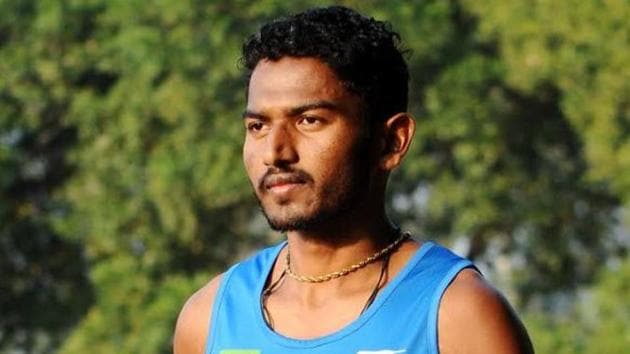
Handed a spot in the final on India’s protest after failing to clinch an automatic qualifying spot, Sable lowered the national record to a creditable 8:21.37, qualifying for the Olympics. He came only 13th among the 15 finishers, but wasn’t overwhelmed by the hot pace and achieved his main target—a berth to Tokyo.
However, the army man from Beed, Maharashtra will have to surmount a few more hurdles if he is to be ready to make a fist of the race when runners line up for the first round in Tokyo on July 31. The Athletics Federation of India (AFI) has chalked out a plan, with the first goal being breaking the 8:20 mark.
Sable will run four to six high-level races in Europe in April-May. Ahead of Doha, he had competed in just one international race, which was seen as one of the reasons for the first-lap accident. “We also plan to enter him in flat races over 3000m and 5000m. High-level competitions will help him understand the level of challenge he will face in Japan,” says AFI’s German high performance director, Volker Herrmann.
Sable has proved a rare talent in an event that makes demand on one’s skill in clearing the hurdles and water jumps. Since September, 2018, he has improved his best four times. At the April Asian meet in Doha, his first international race, he won silver at 8:30.19 secs. By September, he had clipped nine seconds.
{{/usCountry}}Sable has proved a rare talent in an event that makes demand on one’s skill in clearing the hurdles and water jumps. Since September, 2018, he has improved his best four times. At the April Asian meet in Doha, his first international race, he won silver at 8:30.19 secs. By September, he had clipped nine seconds.
{{/usCountry}}Says coach Amrish Kumar: “Being a technical event, to make further progress, he needs to improve speed endurance and hurdling. Breaking 8:20 would be one step closer to achieving the goal of running 8:10.”
At Doha, the top eight finishers ran under 8:10. At the 2016 Rio Games, Kenya’s Conseslus Kipruto won at 8:03.28, ahead of Evan Jager of USA—8:04.28—with Kenya’s Ezekiel Kemoi taking bronze at 8:08.47 secs. “The times give a fair idea of how much Sable has to improve to stay in contention for podium,” says Kumar.
Herrmann says smooth obstacle clearance alone will help Sable clip 3-4 secs. “Biomechanically he loses 10m to 15m in a race. Good clearance with either leg won’t break the rhythm and will cut down that gap. Sable is good at hurdles with the leading leg (right),” says Herrmann.
However, the plan had to be reworked. Initially, Sable was due to travel to Colorado Springs, USA for high altitude (6000ft) training from November. But sub zero winter temperatures forced AFI to cancel the trip. “He also has a language problem and there was no provision to send an interpreter,” says AFI president Adille Sumariwalla.
Currenly, he is training alone at the National Institute of Sports, Patiala. He will shift to Ooty in January for altitude work, says Herrmann. “We plan to have a group of runners to train with him. Training for distance running, it is always good in a group. European exposure in the summer should help overcome his shortcomings.”
Bereft of experience at world level, and after being hampered by Nigate in the preliminary round, Sable finished 20th overall. He was given a spot in the final after organisers upheld India’s protest. “I didn’t have the experience of running top level competitions, otherwise I could have done better,” Sable said after coming 13th in the final.
Speed endurance is another focus area. Sable holds the national record for 25km—1:15.17. He races 21km in the off-season (Oct to Jan) with his best a creditable one hour, four minutes. “But his system must get use to blistering early pace. The opening 1000m is often run fast. Training has to be structured in a way he should be able to sustain his effort over the next 2000m too,” says Herrmann.