
 E-Paper



Photos | Earthen diyas: From clods of clay to Diwali centrepiece
Diyas, the earthen lamps, have remained an inseparable part of Diwali celebrations. HT’s Yogendra Kumar visited Sarhol, Badshahpur, Dhankot and Kasan villages iin Gurgaon where potters have been busy churning out these wonderful earthy creations on their wheels. Kumar captures the journey of a diya from the fields to your house. Fighting stiff competition from Chinese counters, the earthen diya still stands its ground.
Updated on: Nov 03, 2018 11:10 AM IST

Share via


Copy link

1/8
 View Photos in a new improved layout
Updated on Nov 03, 2018 11:10 AM
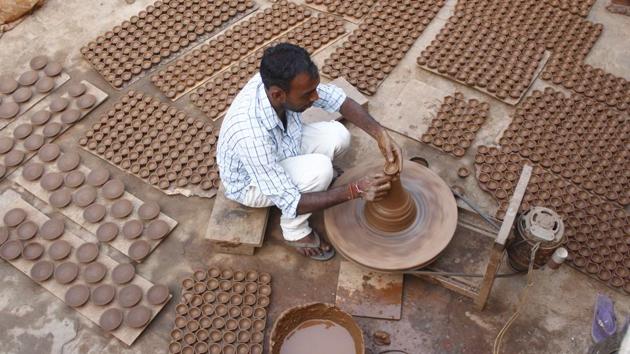
A potter works away, surrounded by diyas fresh off the wheel. The most important part is to get the clay right. A trolley full of clay costs a potter about ₹7,000. It’s spread on the ground, beaten with sticks and stones to remove hard impurities. It is then passed through a sieve to further purify the clay. (Yogendra Kumar / HT Photo)
2/8
 View Photos in a new improved layout
Updated on Nov 03, 2018 11:10 AM
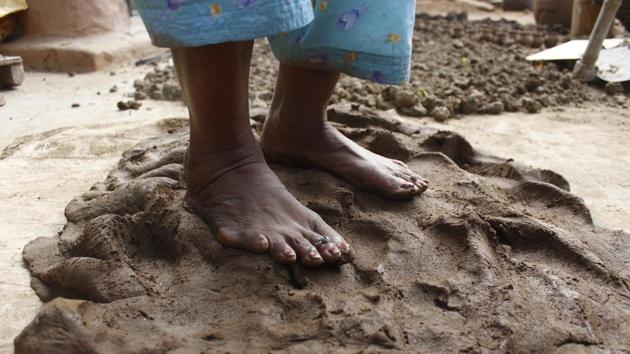
Mixed with water, the clay is kneaded with hands and feet to get an even dough. The right consistency is the key. Too hard, it won’t take shape, too soft it would break on the wheel. (Yogendra Kumar / HT Photo)
3/8
 View Photos in a new improved layout
Updated on Nov 03, 2018 11:10 AM
Women play an important role in the entire process. They are the ones who prepare the right clay mixture before it is put on the wheel. There are no measurements, no beakers, no jars, just experience, which has been passed from generations. (Yogendra Kumar / HT Photo)
4/8
 View Photos in a new improved layout
Updated on Nov 03, 2018 11:10 AM
A mound of earth is spun on the potter’s wheel and hands glide over it, birthing varied shapes. A small metal object is used to create those fine lines. Earlier, potters would spin the wheel with a stick manually. These days, electric motors hum away. Once a diya takes shape, the potter uses a thread to free it off the wheel. (Yogendra Kumar / HT Photo)
5/8
 View Photos in a new improved layout
Updated on Nov 03, 2018 11:10 AM
Fresh off the potter’s wheel, the diyas are immediately spread out to let them dry under the sun so that they harden and get ready for the next phase in their evolution — the fire test. (Yogendra Kumar / HT Photo)
6/8
 View Photos in a new improved layout
Updated on Nov 03, 2018 11:10 AM
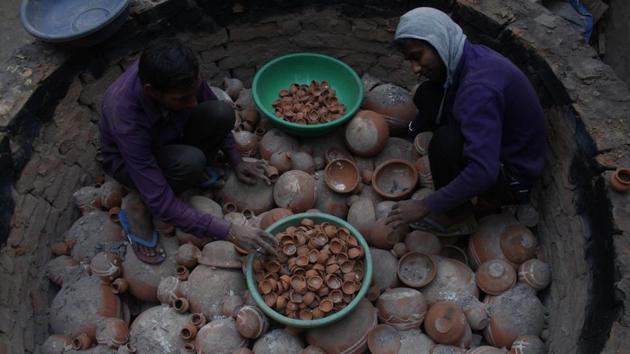
The dried diyas are then put in a brick-lined furnace. Ash is spread on the bottom of the furnace and diyas are then placed in it. The ash keeps them from overheating and ensures an even bake. The oven, covered with cow dung cakes is set on fire. An overnight simmer provides an even heat, gently baking the diyas. (Yogendra Kumar / HT Photo)
7/8
 View Photos in a new improved layout
Updated on Nov 03, 2018 11:10 AM
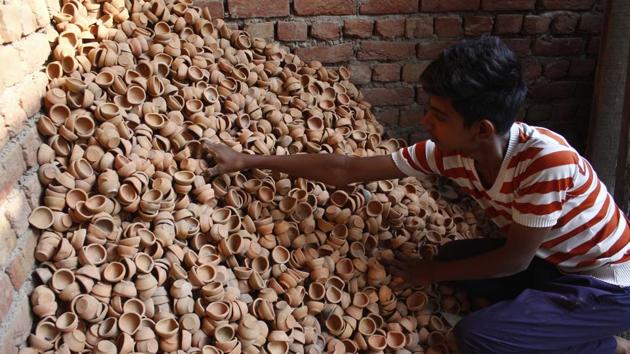
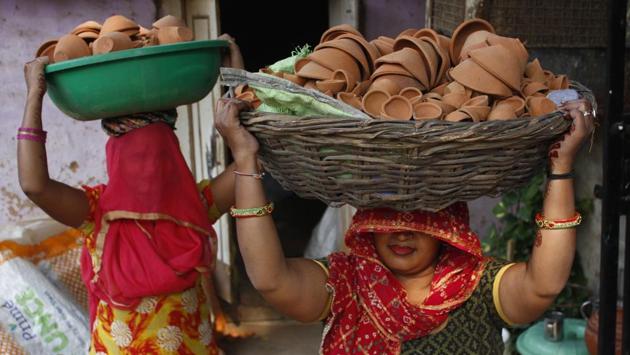
Once baked, the diyas are taken out and cleaned. Every step of production is organic, human. Very little technology or machines go into making these wonderful items. When it comes to storage, they don’t need special warehouses. An empty terrace corner is usually enough. (Yogendra Kumar / HT Photo)
8/8
 View Photos in a new improved layout
Updated on Nov 03, 2018 11:10 AM


