
 E-Paper



Photos: A day in the life of the migrant caravan headed to the US
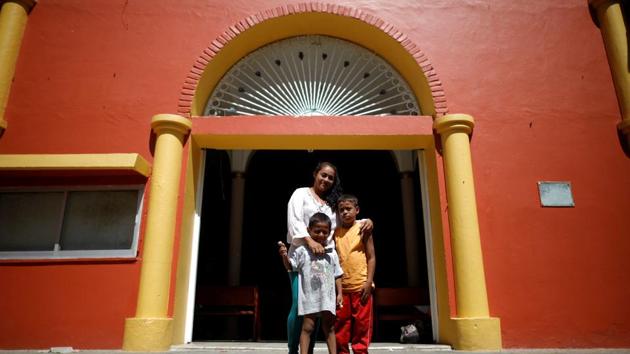
They walked straight, without hesitation. Few spoke much. Their compass point was north, towards the United States. Among them were Glenda Escobar, 33, and her two sons. Their goal for the day was Pijijiapan. The town, 30 miles away, was the next stop on a trek by thousands in a caravan that has so enraged US President Donald Trump he has threatened to close the US-Mexico border and slash aid to Central America. Her ultimate destination: Los Angeles, a city where she knows no one. "It's because in my dreams, God told me that's where he's sending me," she said.
Updated on: Oct 31, 2018 11:58 AM IST

Share via


Copy link

1/13
 View Photos in a new improved layout
Updated on Oct 31, 2018 11:58 AM
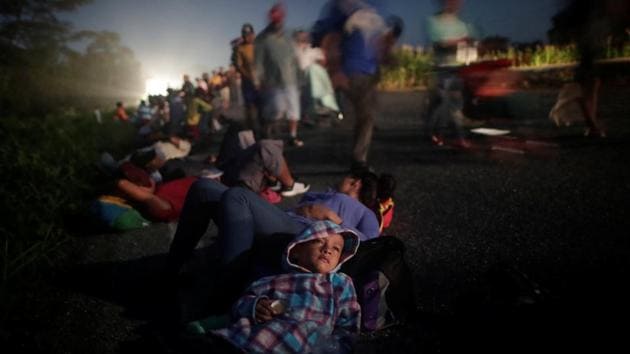
Just past 4am, under a star-streaked sky, the Central American migrants shouldered their bags and picked over broken sidewalks, - first as a trickle, then as a flood - to the edge of a Mexican town. They walked straight, without hesitation. Few spoke much. Their compass point was north, towards the United States. (Ueslei Marcelino / REUTERS)
2/13
 View Photos in a new improved layout
Updated on Oct 31, 2018 11:58 AM
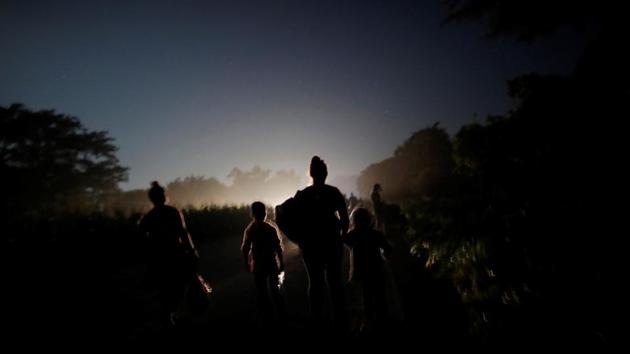
Their goal for the day was Pijijiapan. The town, next on a trek by thousands in a caravan that has so enraged US President Donald Trump he threatened to close the US-Mexico border and slash aid to Central America. Honduran boys Adonai, 5, and Denzel, 8, set off from Mapastepec still fogged with sleep. Their mother, Glenda Escobar, 33, clutched her youngest’s hand. Her friend, Maria, held onto Denzel’s T-shirt. (Ueslei Marcelino / REUTERS)
3/13
 View Photos in a new improved layout
Updated on Oct 31, 2018 11:58 AM
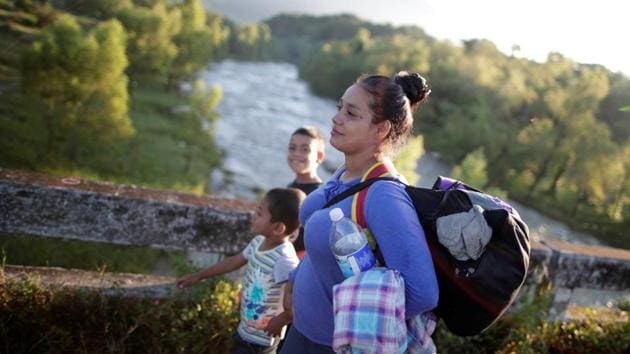
No-one had a torch. Only the floodlights of the odd truck in the opposite lane of the highway helped them see a few feet at a time. Within minutes, a young man lay on his back, hugging his knee to his chest. He’d smashed his ankle on a rock and was in too much pain to stand. The single mother and her boys strode past, keeping pace with the long train of people. (Ueslei Marcelino / REUTERS)
4/13
 View Photos in a new improved layout
Updated on Oct 31, 2018 11:58 AM
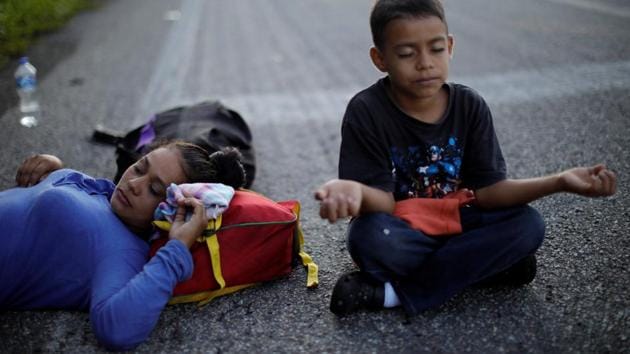
Glenda’s ultimate destination: Los Angeles, a city where she knows no one. “It’s because in my dreams, God told me that’s where he’s sending me,” she said. Estimates on the size of the caravan vary from around 3,500 to more than double that. Some migrants have abandoned the journey, deterred by the hardships or the possibility of making a new life in Mexico. Others joined it in southern Mexico. (Ueslei Marcelino / REUTERS)
5/13
 View Photos in a new improved layout
Updated on Oct 31, 2018 11:58 AM
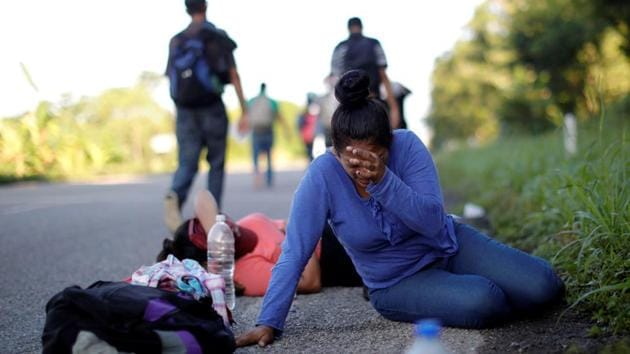
Escobar kneaded her shin. Agile and slight, she used to exercise regularly back home in the crime-wracked city of San Pedro Sula. But even the hardiest would have struggled to cover about 30 miles every day since she joined the caravan on October 14. If they were lucky, a passing car or minivan would give them a ride before the sun turned the day from sticky warm to sticky hot. (Ueslei Marcelino / REUTERS)
6/13
 View Photos in a new improved layout
Updated on Oct 31, 2018 11:58 AM
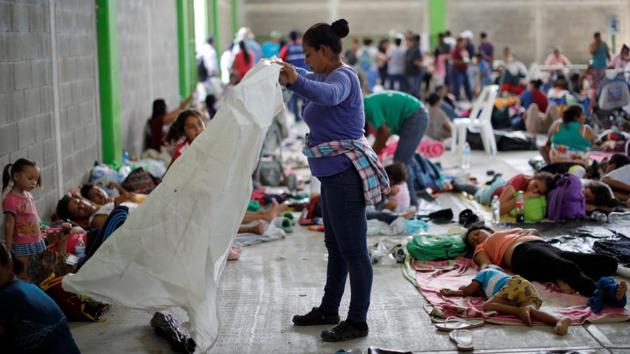
Escobar’s family had had no food or water since residents of Mapastepec provided them a dinner of rice, beans, and eggs about 12 hours earlier. That morning, there had been nothing to eat at the school where they slept on a three-foot square patch of floor, squeezed among dozens of parents with small children. (Ueslei Marcelino / REUTERS)
7/13
 View Photos in a new improved layout
Updated on Oct 31, 2018 11:58 AM
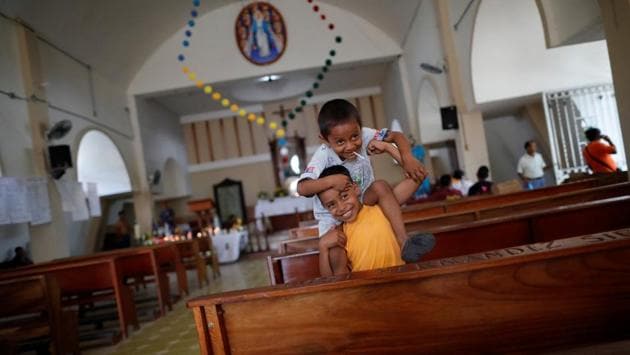
A shifting committee of self-appointed representatives in green jackets decide when to rise, move or sweep the streets they borrow for a night. The caravan follows like clockwork. Through Guatemala to southern Mexico, private citizens, church groups and local organizations offered help at almost every stop and on the walks in between. (Ueslei Marcelino / REUTERS)
8/13
 View Photos in a new improved layout
Updated on Oct 31, 2018 11:58 AM
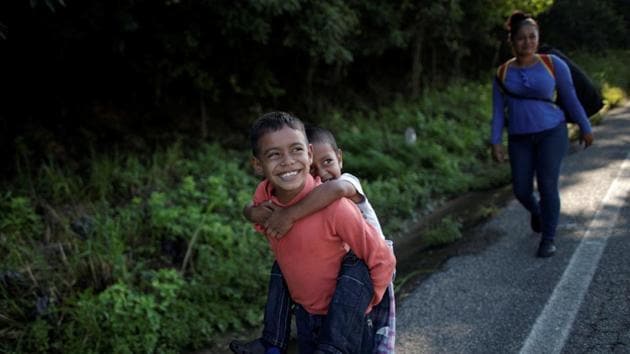
By 9am, two hours past sunrise, the first hitchhikers reached Pijijiapan. Far behind, the Escobars walked, paused, zig-zagged into the bushes, walked, and stopped again. “We’ve been going so many days,” Escobar said, watching her sons flag, then suddenly leap to life and give each other piggy backs. “Should we rest here a bit?” (Ueslei Marcelino / REUTERS)
9/13
 View Photos in a new improved layout
Updated on Oct 31, 2018 11:58 AM
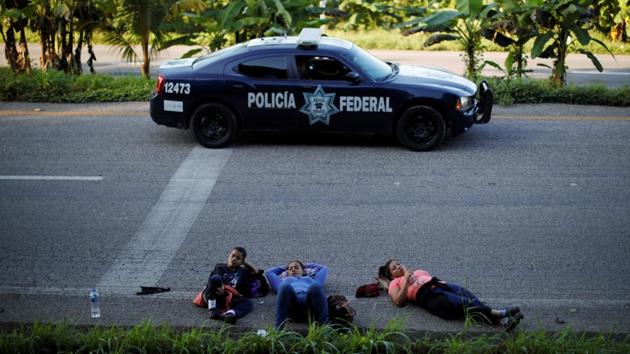
The boys dropped down and started wrestling, which did nothing to stir Maria, who fell asleep in seconds on her backpack. Escobar, splayed on her back, stared at the sky, relating the many reasons that led to her journey. Life spiraled down at 18, she said, when on her way to work, a man kidnapped her. She escaped but was pregnant with the child of her rapist. (Ueslei Marcelino / REUTERS)
10/13
 View Photos in a new improved layout
Updated on Oct 31, 2018 11:58 AM
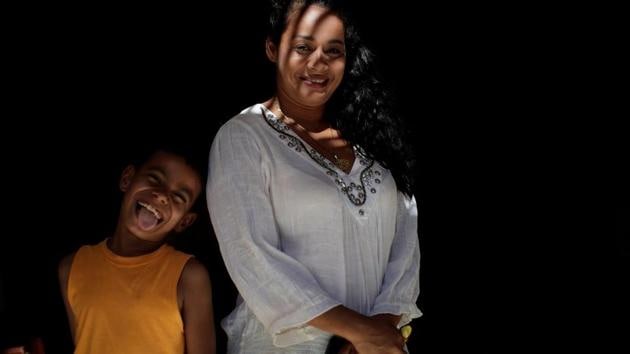
Finally, she fell for a mototaxi driver, who fathered Denzel and Adonai. But he began to abuse her and the boys. He forced her out of the house she had paid for with money saved from years working as a cook and a seamstress, she said. When a neighbour told her about the caravan, she packed fast, leaving her two eldest with family, hoping to fetch them later. (Ueslei Marcelino / REUTERS)
11/13
 View Photos in a new improved layout
Updated on Oct 31, 2018 11:58 AM
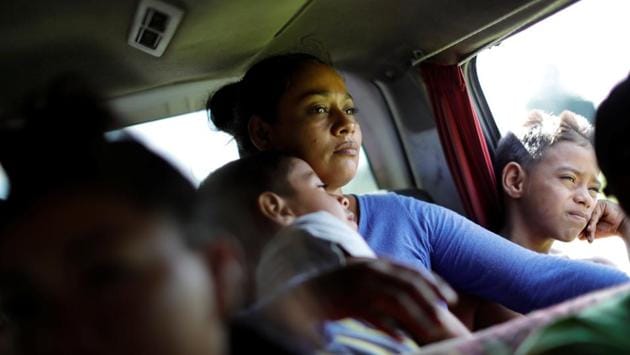
After six hours, Escobar started hitchhiking. Just ahead, Captain Aispuro of the Mexican federal police was flagging down rides for women and children. With no orders to stop the band of travellers, Aispuro said he felt a duty to help. That day, he had found around 10 rides for mothers with children, he said. (Ueslei Marcelino / REUTERS)
12/13
 View Photos in a new improved layout
Updated on Oct 31, 2018 11:58 AM
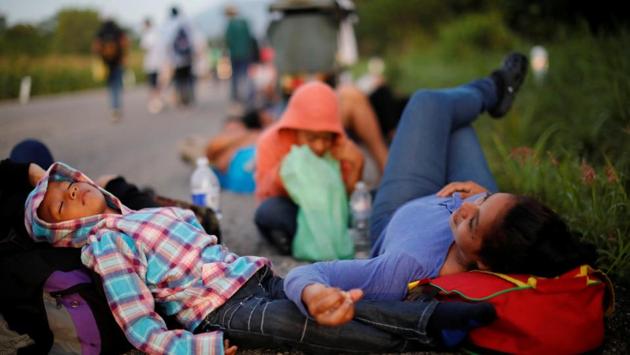
In Pijijiapan, hundreds turned the main square into a mix of carnival and refugee camp. The family headed for a warehouse-sized shelter reserved for anyone with children. In mid-afternoon, the warehouse was stifling with the crush of bodies. Escobar searched outside and set her plastic tarp under a tree. Two more stops and they would board a northbound freight train known as ‘La Bestia’ (the Beast), she said. (Ueslei Marcelino / REUTERS)
13/13
 View Photos in a new improved layout
Updated on Oct 31, 2018 11:58 AM


