
 E-Paper



Photos: Dynamite fishing and drugs threaten Myanmar’s ‘sea gypsies’
Myanmar's Moken, traditional sea gypsies living in and feeding off the Myeik archipelago now face a radical change to their lifestyle with the coming in of commercial trawlers that employ dynamite instead of the Moken way of spearfishing. The stress of the change is also driving some among the Moken to substance abuse as a means of coping.
Updated on: Jul 04, 2017 9:52 AM IST

Share via


Copy link

1/10
 View Photos in a new improved layout
Updated on Jul 04, 2017 9:52 AM
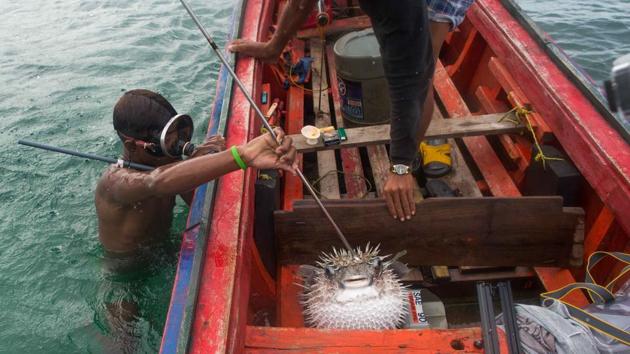
Thiha Thway, a Moken fisherman resurfaces to his boat after spearing a pufferfish from the sea in Myeik Archipelago. Until recently the sea provided the Moken, Myanmar’s sea-faring nomads with all they needed: a base for their boats, pristine waters to fish for food and trade and bounty such as pearls to trade with islanders for fuel and rice. This idyllic lifestyle has now had to adjust to the advent of commercial trawlers that rely on dynamite and in turn affect the marine biosphere. The decline in returns for the Moken fishermen, combined with a methamphetamine dependence among many to deal with the stress has their traditional lifestyles at a crossroads. (Ye Aung THU / AFP)
2/10
 View Photos in a new improved layout
Updated on Jul 04, 2017 9:52 AM
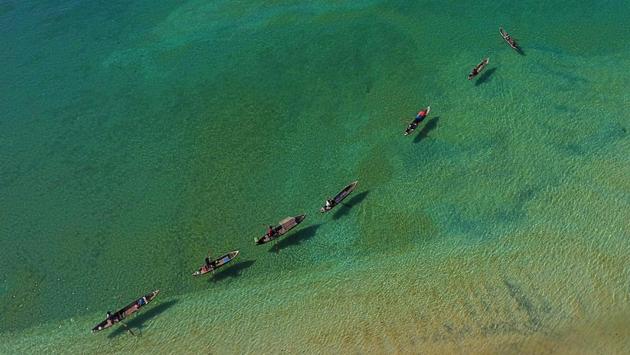
Fishing boats believed to be from neighbouring Thailand use dynamite and trawlers to sweep the seabed, thus destroying the marine life. (Ye Aung THU / AFP)
3/10
 View Photos in a new improved layout
Updated on Jul 04, 2017 9:52 AM
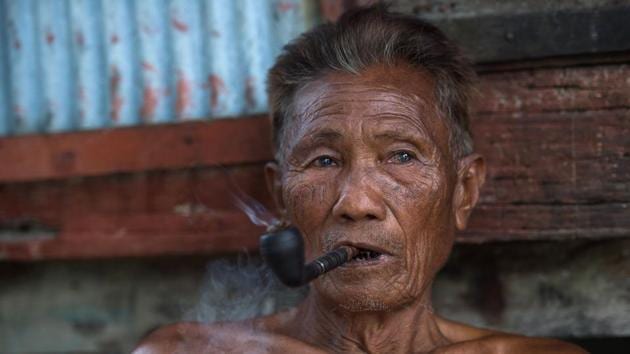
Kar Shar, a Moken leader smoking his pipe as he sits in front of his home in Makyone Galet village in the Myeik Archipelago. ‘When we were young, a husband could easily support his family,’ recalls Kar Shar. (Ye Aung THU / AFP)
4/10
 View Photos in a new improved layout
Updated on Jul 04, 2017 9:52 AM
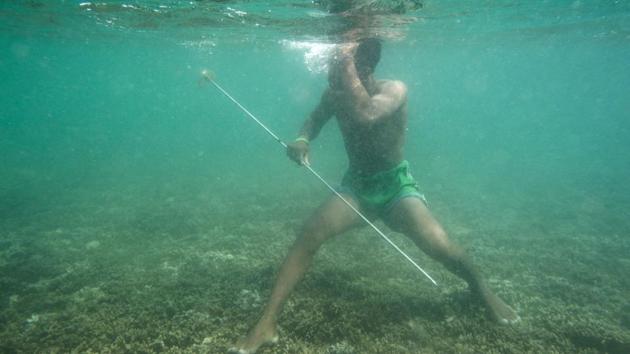
Impoverished, stateless and with restricted working rights, some Moken began diving for fishing crews in the early 90s and continued after the former military government forced many to live on the islands. (Ye Aung THU / AFP)
5/10
 View Photos in a new improved layout
Updated on Jul 04, 2017 9:52 AM
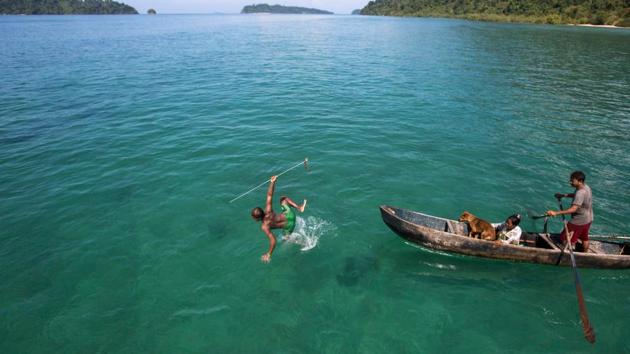
A Moken fisherman jumps from a boat as he holds a spear to hunt for fish. The fishermen travel to the deserted outer islands where they are less likely to be caught. (Ye Aung THU / AFP)
6/10
 View Photos in a new improved layout
Updated on Jul 04, 2017 9:52 AM
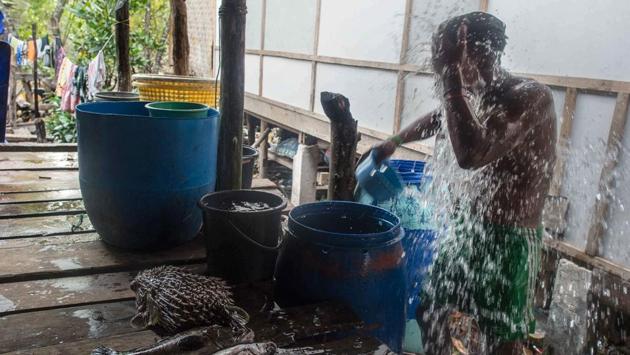
A fisherman bathes with fresh water after returning home from hunting for fish in Nyaung Wee village. (Ye Aung THU / AFP)
7/10
 View Photos in a new improved layout
Updated on Jul 04, 2017 9:52 AM
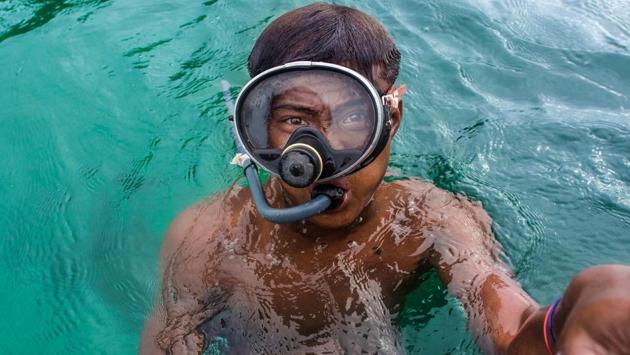
Some of them breathe through thin plastic tubes hooked up to compressors, while others use no equipment. Many suffer decompression sickness, which can leave them crippled and unable to walk. (Ye Aung THU / AFP)
8/10
 View Photos in a new improved layout
Updated on Jul 04, 2017 9:52 AM
For many the potential profits make the dangers worth it. Divers can earn more than $100 in a night compared to an average wage of $3 a day on the islands. (Ye Aung THU / AFP)
9/10
 View Photos in a new improved layout
Updated on Jul 04, 2017 9:52 AM
Most divers are leaving Moken women to marry the local ethnic Karen and Burmese and settling further into a more land-based culture. (Ye Aung THU / AFP)
10/10
 View Photos in a new improved layout
Updated on Jul 04, 2017 9:52 AM


