
 E-Paper



Photos: Pakistan’s bid to keep the ancient sport of tent-pegging alive
Tent-pegging competitions have been held in the subcontinent for centuries but now are largely reduced to the odd festival where turbaned riders mounted on horseback and armed with lances aim at tiny wooden blocks in shows of precision. Aficionados in Pakistan however, are still optimistic about the future of this equestrian sport.
Updated on: Dec 07, 2017 2:01 PM IST

Share via


Copy link

1/9
 View Photos in a new improved layout
Updated on Dec 07, 2017 2:01 PM
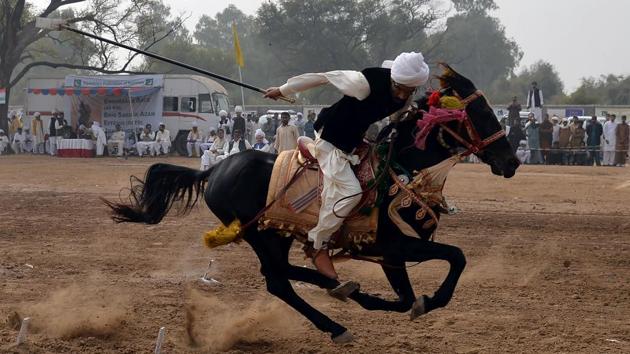
A Pakistani rider charges across a course holding a lance to pick up pegs at a tent-pegging competition during an annual festival at the village of Kot Fateh Khan in Attock, Punjab province. Festooned with garlands and colourful bridles, turbaned riders mounted on horseback gallop, aiming at tiny wooden blocks keeping alive a centuries-old tradition of tent-pegging in Pakistan. (Aamir Qureshi / AFP)
2/9
 View Photos in a new improved layout
Updated on Dec 07, 2017 2:01 PM
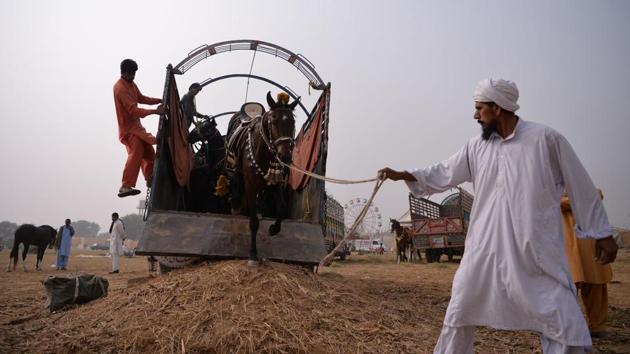
A man unloads a horse from a truck at the tent-pegging competition at the village of Kot Fateh Khan. Tent-pegging competitions have been held in the subcontinent for hundreds of years but have now been largely reduced to the odd festival, with Pakistan’s most populous Punjab province hosting the majority of such events. (Aamir Qureshi / AFP)
3/9
 View Photos in a new improved layout
Updated on Dec 07, 2017 2:01 PM
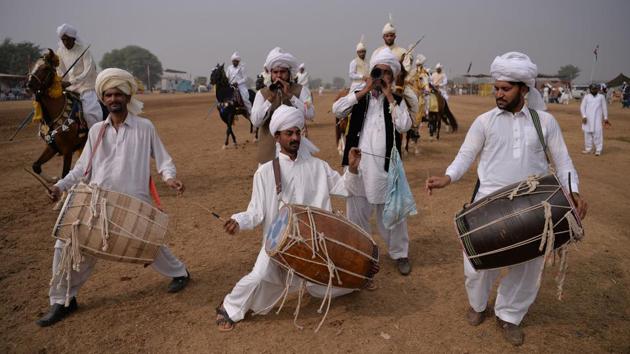
Traditional drummers perform at the tent-pegging competition at the village of Kot Fateh Khan. Less than a two-hour drive from the capital Islamabad, thousands gathered at the freshly ploughed grounds to watch the equine festival that can see riders tossed from their mounts, breaking bones or worse during the dangerous spectacle. (Aamir Qureshi / AFP)
4/9
 View Photos in a new improved layout
Updated on Dec 07, 2017 2:01 PM
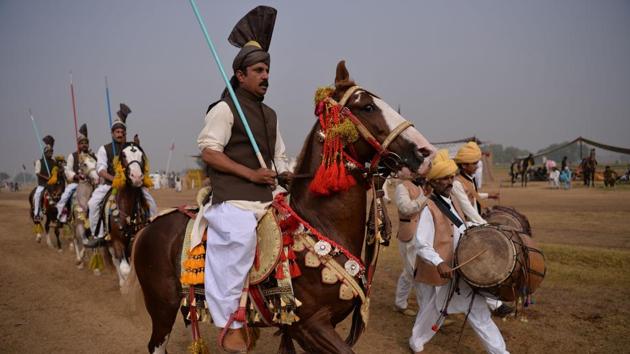
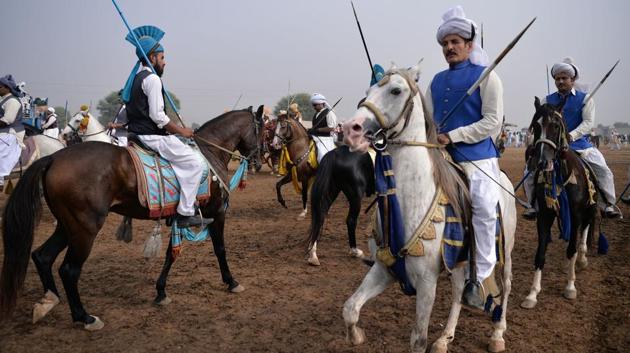
Horse riders holding lances used to pick up pegs prepare for a round of tent-pegging. Diehard fans of the cavalry sport worry that the tradition is on its last legs, in the absence of official support and a lack of popularity among the young, urban Pakistani masses. (Aamir Qureshi / AFP)
5/9
 View Photos in a new improved layout
Updated on Dec 07, 2017 2:01 PM
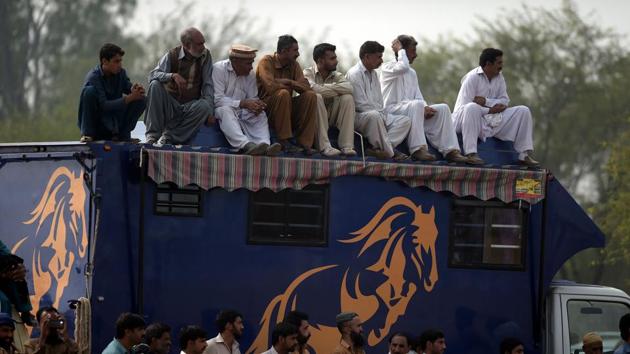
But in northern Punjab’s Kot Fateh Khan, fans showed up in droves to cheer on the brazen riders, decked out in pristine white tunics and multi-coloured waistcoats on freshly polished saddles. (Aamir Qureshi / AFP)
6/9
 View Photos in a new improved layout
Updated on Dec 07, 2017 2:01 PM
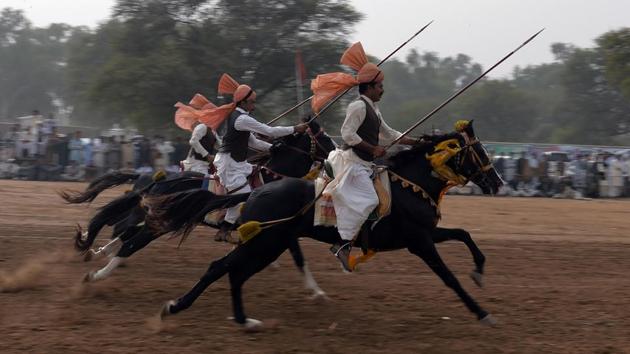
As announcers wail into microphones, riders with lances spur their steeds into a sprint toward small wooden blocks wedged in the earth, aiming to pierce the targets with their jousts. Malik Atta Muhammad Khan, a participant estimated over one thousand horses participated at this week-long festival, speaking to AFP. (Aamir Qureshi / AFP)
7/9
 View Photos in a new improved layout
Updated on Dec 07, 2017 2:01 PM
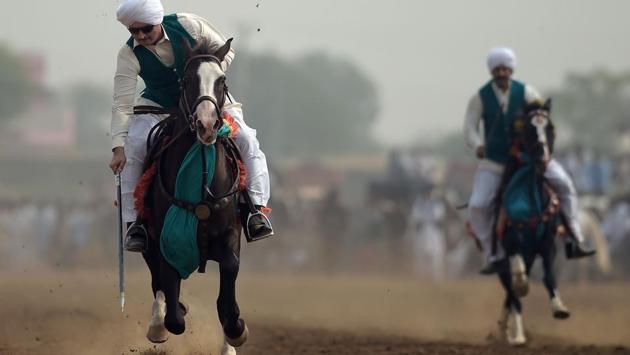
Despite the abundance of horses, participants fear their beloved sport is in dire need of fresh blood, as the number of breeders and riders continues to wane nationwide. “The love of breeding horses has been... reduced to a few families,” said Haroon Bandial, a World Cup gold medallist, citing the enormous cost of raising horses as a barrier to entry. (Aamir Qureshi / AFP)
8/9
 View Photos in a new improved layout
Updated on Dec 07, 2017 2:01 PM
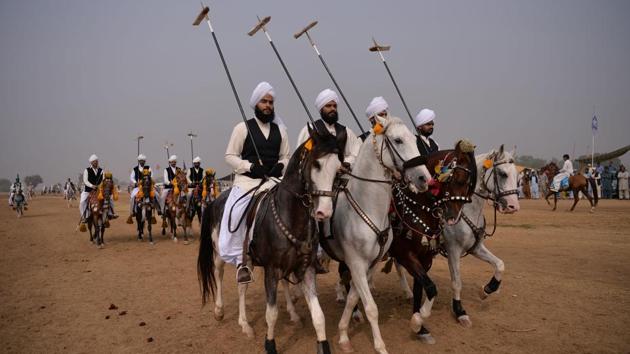
Aficionados of the sport say they begin training the horses at 16 months of age, a process which can take over two years to complete, while riders need at least three years on the saddle to qualify. (Aamir Qureshi / AFP)
9/9
 View Photos in a new improved layout
Updated on Dec 07, 2017 2:01 PM


