
 E-Paper



Photos: The Japanese town trying to recycle 100% of its waste
Plastic, paper, metal? In Japan's Kamikatsu, sorting rubbish isn't that simple. Residents face a mind-boggling 45 separate categories for their garbage as the town aims to be "zero-waste" by 2020. And that's not all: there isn't even trash collection. The 1,500 residents of the town in western Japan have to transport their waste themselves to a local facility.
Updated on: Jun 18, 2019 12:06 PM IST

Share via


Copy link

1/12
 View Photos in a new improved layout
Updated on Jun 18, 2019 12:06 PM
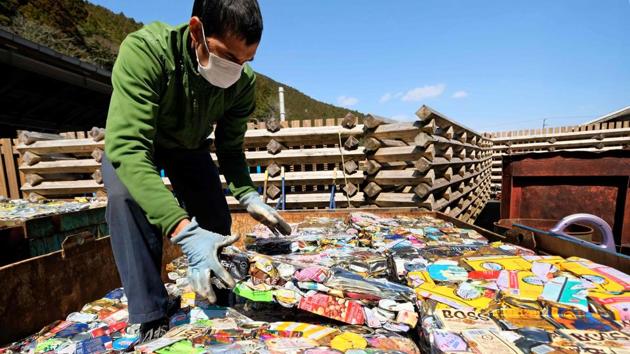
A worker stacks sheets of compacted aluminium cans at a waste centre in the town of Kamikatsu, Tokushima prefecture. “Yes, it’s complicated,” said Naoko Yokoyama, a 39-year-old resident who had brought her trash to the waste centre. “But I have become more environmentally conscious since I moved here a year ago,” she told AFP. (Kazuhiro Nogi / AFP)
2/12
 View Photos in a new improved layout
Updated on Jun 18, 2019 12:06 PM
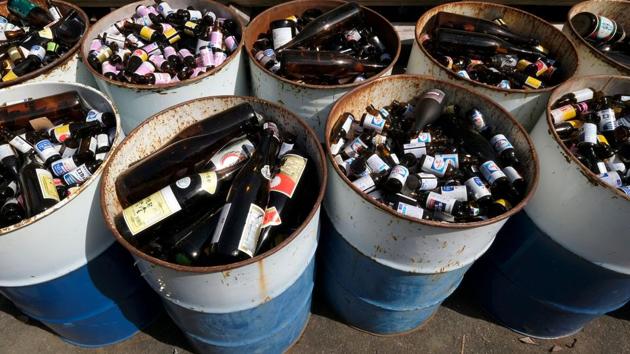
Bottles separated into drums at the waste centre in Kamikatsu. The categories cover everything from pillows to toothbrushes as the town aims to recycle all its waste, sending nothing to incinerators, by next year. The process can be onerous -- not only are there dozens of separate categories, but items like plastic bags and bottles must be washed and dried to facilitate recycling. (Kazuhiro Nogi / AFP)
3/12
 View Photos in a new improved layout
Updated on Jun 18, 2019 12:06 PM
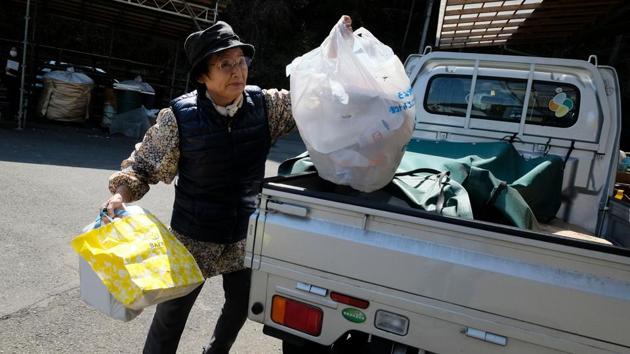
An elderly woman bringing trash to the waste centre in the town of Kamikatsu. At the town’s waste facility, there are dozens of different boxes for each category. If the parts of an item fall into different categories for recycling, residents are expected to take them apart and send each bit to the right container. (Kazuhiro Nogi / AFP)
4/12
 View Photos in a new improved layout
Updated on Jun 18, 2019 12:06 PM
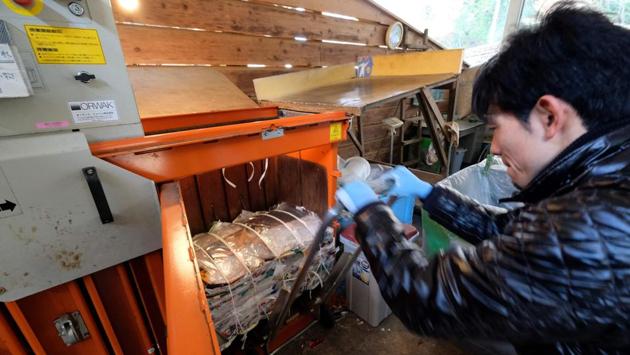
Kazuyuki Kiyohara, the waste centre manager, takes plastics from a compacting machine. Kamikatsu wasn’t much different until an ultimatum: in 2000, the town was ordered to shut down one of its incinerators because it no longer met emissions standards. That left the town with just one incinerator and there wasn’t enough money for a new one or to pay a neighbouring town to use theirs. (Kazuhiro Nogi / AFP)
5/12
 View Photos in a new improved layout
Updated on Jun 18, 2019 12:06 PM
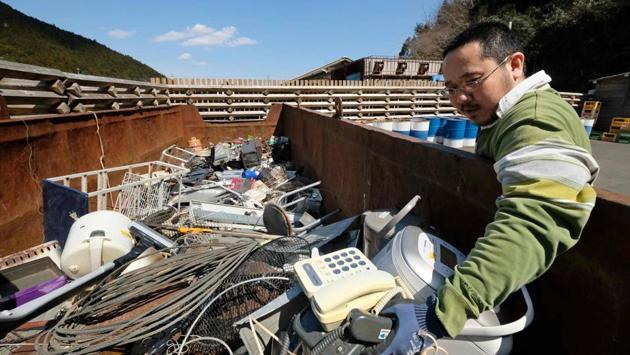
A resident brings in disused household goods. “We thought, ‘If we can’t burn waste in the town, then let’s recycle.’ It’s cheaper to recycle waste than burn it,” said town official Midori Suga. Kamikatsu is already close to achieving its goal, recycling about 80% of the 286 tonnes of waste it produced in 2017, far more than the national average of 20%. (Kazuhiro Nogi / AFP)
6/12
 View Photos in a new improved layout
Updated on Jun 18, 2019 12:06 PM
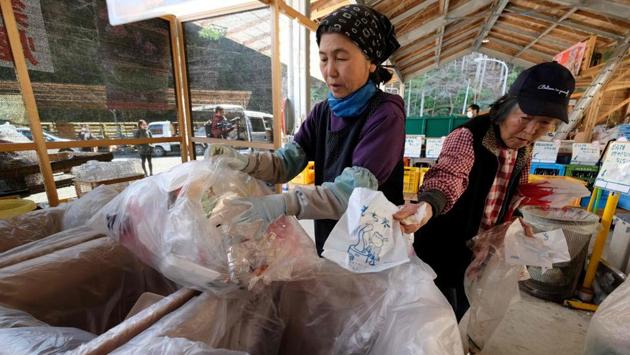
Workers sort plastic waste Kamikatsu. The remainder, like most waste in Japan, is incinerated, as the country’s mountainous terrain considered unsuitable for landfills. The nation produces less general waste per person than most developed countries, but it generates more plastic waste per capita than anywhere except the United States. (Kazuhiro Nogi / AFP)
7/12
 View Photos in a new improved layout
Updated on Jun 18, 2019 12:06 PM
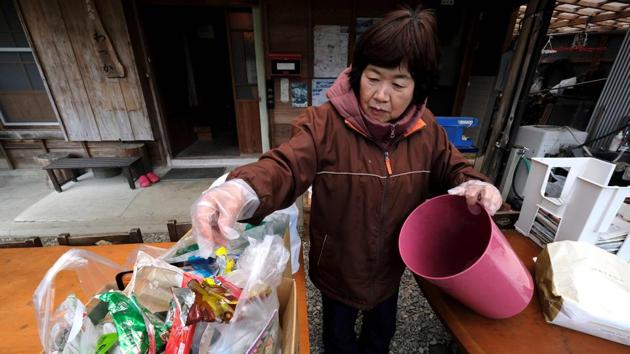
Resident Saeko Takahashi sorts trash into a box at her home. In the past, some plastic was exported for recycling, particularly to China, but a ban by Beijing on imports has left plastic recyclables piling up in parts of Japan. Still, not all residents think the initiative could work elsewhere. “It works because we’re only 1,500 people here,” said Yokoyama, who moved from Kyoto. (Kazuhiro Nogi / AFP)
8/12
 View Photos in a new improved layout
Updated on Jun 18, 2019 12:06 PM
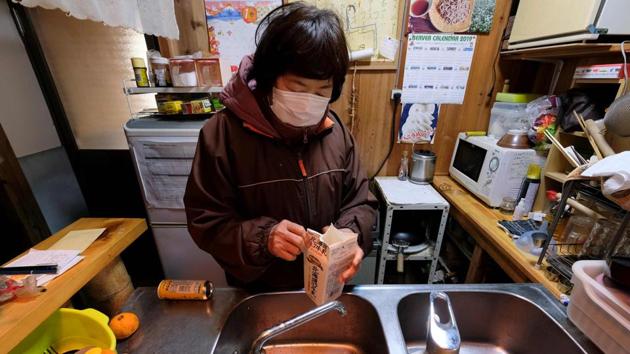
Other residents say the policy is just common sense. “I understand it’s convenient to just burn waste,” said 71-year-old local Saeko Takahashi, as she washed milk cartons and tied newspapers together. “It’s better to recycle, it’s such a waste otherwise,” she explained. (Kazuhiro Nogi / AFP)
9/12
 View Photos in a new improved layout
Updated on Jun 18, 2019 12:06 PM
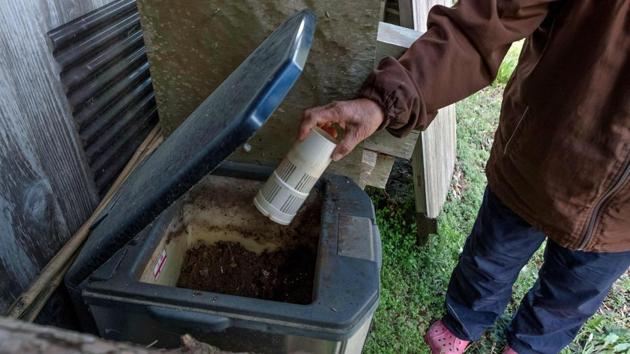
Saeko Takahashi places raw garbage into the compost container at her home. She uses a compost bin for food waste such as fish and meat and throws vegetable waste directly into her garden. “Food lasts longer when it’s shipped in plastic packaging. So it’s not all bad, but multiple layers of plastic aren’t necessary,” added Takahashi. (Kazuhiro Nogi / AFP)
10/12
 View Photos in a new improved layout
Updated on Jun 18, 2019 12:06 PM
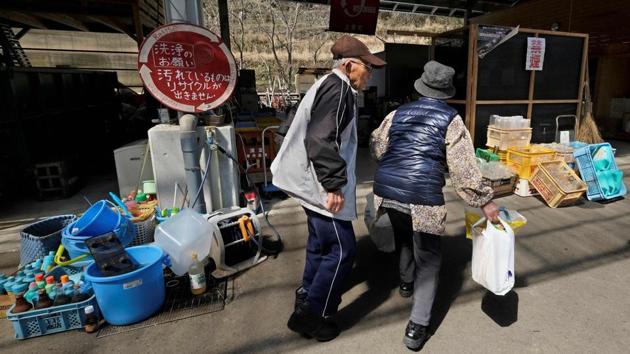
An elderly couple brings in trash. Kazuyuki Kiyohara said plastic makes up the majority of the residents’ waste -- and despite the scheme there has been little reduction in consumption. “Our lifestyle depends mainly on plastic,” the 38-year-old said, adding: “Consumers can reduce plastic waste to a certain extent, but we’ll still have waste if producers keep making plastic products.” (Kazuhiro Nogi / AFP)
11/12
 View Photos in a new improved layout
Updated on Jun 18, 2019 12:06 PM
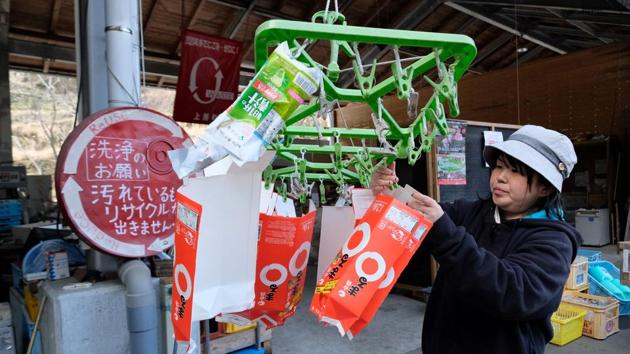
In 2018, Japan unveiled a proposal to tackle plastic waste, with the goal of reducing the 9.4 million tonnes produced each year by a quarter by 2030. The plan proposes that retailers charge for plastic bags -- a measure widely adopted around the world -- but that isn’t expected to come into effect before 2020 and other types of plastic packaging won’t be covered. (Kazuhiro Nogi / AFP)
12/12
 View Photos in a new improved layout
Updated on Jun 18, 2019 12:06 PM


