
 E-Paper



Asia-Pacific’s first post uterus transplant baby birth took place in Pune
With the first uterine transplant birth in India now recorded, Dr Puntambekar reports at least 600 female patients who have registered with the hospital for a uterus transplant.

 Prefer HTon Google


Meenakshi Valand, a 27-year-old woman from Gujarat, became the first woman in India to give birth to a baby, via C-section, from a uterus that was transplanted within her. The baby girl was delivered on Thursday, October 18 at 12.12 am, at Galaxy Care hospital, owned by Dr Shailesh Puntambekar.
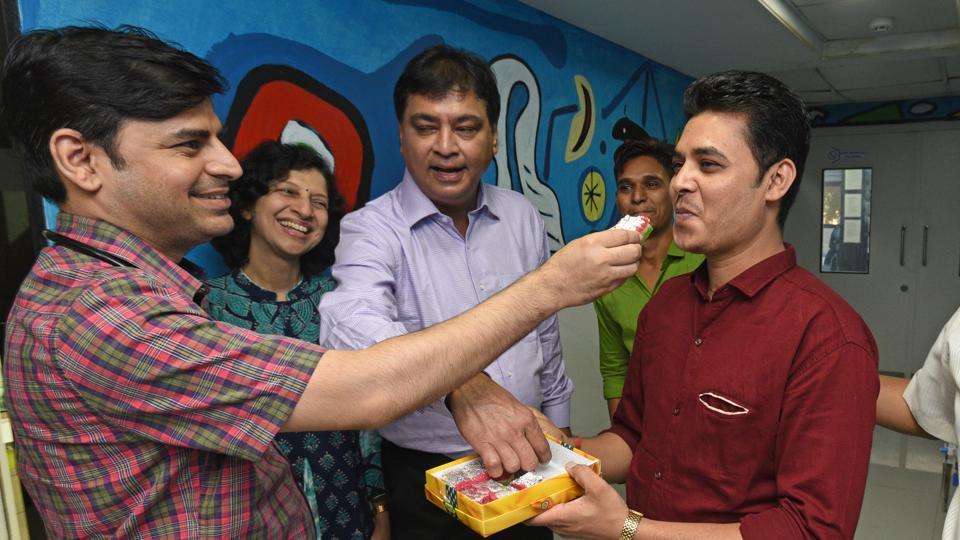
Susheela ben Valand, Meenakshi’s 48-year-old mother, donated her uterus to her daughter in 2017, the transplant of which was also performed at Galaxy Care hospital. Meenakshi’s father is Jayesh bhai Valand and her husband Hitesh Valand owns a parlour. The family has yet to decide on the name of the newborn.
According to the Valand family, they had to pay only ₹ 1 lakh as deposit to the hospital as it was the country’s first such treatment and operation.
Five other women have also undergone the same procedure, and post the successful transplant, have started their menses.
With the first uterine transplant birth in India now recorded, Dr Puntambekar reports at least 600 female patients who have registered with the hospital for a uterus transplant.
Dr Puntambekar, who operates as director of the hospital, said, “Of these 600 females who have registered with us for a uterus transplant, 50 per cent are suffering from a syndrome known as mayer rokitansky küster hauser (MKRH), a congenital disorder; 30 per cent from a small uterus or anomaly of the uterus; and 20 per cent from removal of the uterus due to heavy of severe bleeding, post C-section or cancer.”
MKRH syndrome is a congenital disorder in which the reproductive system is affected. In this, external genitalia is normal, but the uterus is absent and the female suffering from it can only conceive via a uterus transplant, Dr Puntambekar explained.
Of the 600 registered patients on the waiting list, 90 per cent are from India and 10 per cent are from different parts of the globe, including Pakistan.
“Most are in the 25 to 30 age group,” Dr Puntambekar said.
Women from the other countries include Ireland, Palestine, Dubai, Oman, UK, Brazil, Argentina and Bangladesh.
“Six are from Pakistan and two are from Bangladesh,” Dr Puntambekar, who is also past president the National body of society of endoscopist and laparoscopic surgeons of India and is on the board of the American association of gynaec laparoscopy, said.
12 ‘uterus transplant’ babies in the world
Dr Shailesh Puntambekar of Galaxy Care hospital said, “In the world, 12 babies have been born so far out of a uterus transplant, of which nine are from Sweden. The baby that took birth in Pune at our hospital is the 12th in the world and first in the Asia Pacific region.
Now after the first uterus transplant of India, Dr Puntambekar has performed a total of six such transplants of which not a single transplant has failed or was rejected by the recipient. He said, “Chances of rejection in uterus transplants are extremely high as women are prone to infections given their anatomic structure, but not only all survived but all have started their menses as well which shows the success of the transplants.”
“Not only did they get their menses but now of the six, two of them will be getting their embryos transferred this month in the last week,” he said.
Giving a break-up of the six transplants done in India, in Pune alone, Dr Puntambekar said, “Of the six, one was carried out on Meenakshi who already gave birth now, second was carried out in January this year, two more were performed in April and the last one that is sixth on July 15.”
Of the six patients, only one belonged to Maharashtra that is from Solapur and others were from Gujarat, Hyderabad, Bihar and Karnataka, he said.
Success rate in India: 100%
Of the six transplants that were carried out successfully in India in Pune city, five of the patients underwent and opted for the procedure because they suffered from a syndrome known as mayer rokitansky küster hauser (MRKH) syndrome. “It is a congenital disorder where the reproductive system is affected. In this the external genitalia are normal, but the uterus is absent and the female suffering from it can only conceive through uterus transplant, according to Dr Puntambekar.
* Talking about the rejection rate in uterus transplant, Dr Puntambekar said, “Sweden has been carrying out uterus transplants since 2010 and did 14 transplants of which four were rejected; whereas the US performed eight of which six have failed, but we in India carried out six and all have been successful so far. Not only did we perform our first uterus transplant in 2017, but we were successful enough to deliver a healthy baby out of the same transplanted uterus which is a foreign body for the recipient. It is a feat for not only Pune but also for the country.”
Womb of mother, for daughter
On October 18 this year, a baby has been born out of the same womb that carried the newborn’s mother 27 years ago. This is the tale of 27-year-old Meenakshi Valand from Gujarat, who underwent India’s first uterine transplant last year in Pune. Meenakshi then successfully began menstruating and also conceived a baby, a girl, who was born on Thursday (October 18) in Pune.
Meenakshi suffered from Asherman syndrome, a rare condition where the uterus is damaged by continuous curettage and other infections that affect the menstruation cycle and pregnancy.
Dr Shailesh Puntambekar, director, Galaxy Care hospital, who performed what was India’s first uterus transplant on Valand, said, “The patient received the uterus from her own mother who was then 47. To bring out a baby successfully, that too a full-term baby from a transplanted uterus which is that old, was a task. We were sceptical but after we saw the baby come out, we knew, all is normal.”
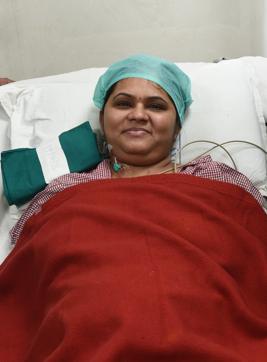
“The baby was born on Thursday at 12.12 am and weighed 1,450 grams at 31 weeks. Everybody in the hospital was cheering the birth of the baby girl. It was a double feat as the baby saw the light of day on the same day when it was not only Dussehra, but also my birthday,” said an ecstatic Dr Puntambekar, adding, “She is Asia Pacific’s first baby to be born successfully through a uterine transplant.”
Dr Puntambekar was supported by a 12-member team, including Dr Pankaj Kulkarni and Dr Nita Varty.
12 such babies in the world
Dr Shailesh Puntambekar, director, Galaxy Care hospital, who performed India’s first uterus transplant, said, “The total cost of the procedure is anywhere around ₹ 15 to ₹ 20 lakh as the treatment is equal to that of a liver transplant, but we have done all the six uterus transplants for free so far. We plan to carry out the procedures for free for Indian patients because these women face a lot of social stigma and suffer at the hands of society due to lack of just one organ that is a womb. After the success of the transplant surgeries and baby being born, we are sure some philanthropist will come forward and fund the transplants in the near future. Till then we plan to perform the surgeries for free.”
Talking about the patients’ profiles in the waiting list, Dr Puntambekar said there are many who belong to middle class families and some are even IIT engineers and bankers. The stigma associated with the condition and non revelation have driven them to us and we will try to bear as much of the expenses as possible, he said, adding that transplant charges will be set for patients from foreign countries but not Indians.


