Rainwater harvesting is mandatory for larger societies in Pune since 2007, yet, statistics from Pune Municipal Corporation’s (PMC) property tax department reveal that the number of properties applying for, and receiving a property tax rebate, have increased by just 194 in 2018-19.
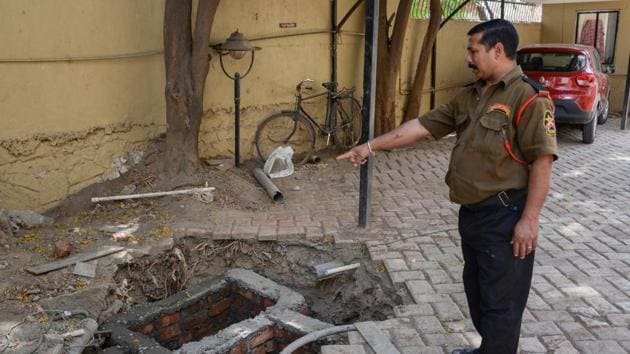
The tax rebate is given to properties with an operable rainwater harvesting system in place - a five per cent rebate in property tax and an additional 5 per cent if societies also have solar energy and vermicompost.
Statistics show that 1,778 properties received a tax rebate for the year 2018- 2019, as compared to 1,584 properties.
Enquiries about rainwater harvesting are many, but actual work is still to catch on in the city.
Col Sashikant Dalvi (retd), national coordinator, water conservation, Climate Reality Project, India; and director, Parjanya: Rainwater Harvesting Consultancy, says, “Various national and international weather agencies are predicting a delayed and deficit monsoon. The four dams Temghar (under repair for the last two years); Varasgaon at 34 % capacity; Panshet at 43 %; and Khadakwasala at 53 %; it will not be a year of sufficient water supply to a city with a population of 40 lakh. Hence, as a water conservation expert, I have been talking about the need for water availability with possible solution of looking at availability of water in all possible reservoirs including rainwater potential.”
Dalvi states desilting of dam reservoirs has resulted in a 30 per cent reduction in water storage capacity, this is besides other reasons like unequal water distribution, leakage in water supply pipes, depleting ground water table, non-implementation of ground water recharge policies and depleting forest cover.
{{/usCountry}}Dalvi states desilting of dam reservoirs has resulted in a 30 per cent reduction in water storage capacity, this is besides other reasons like unequal water distribution, leakage in water supply pipes, depleting ground water table, non-implementation of ground water recharge policies and depleting forest cover.
{{/usCountry}}Rainwater is one of the primary sources of water. The idea of rainwater harvesting is to make optimum usage of the freely-available water. This helps in recharging and maintaining groundwater level and thus minimises the load on the treated water supply.
“In most of the rapidly growing cities, civic authorities are unable to cater to daily water needs of citizens, resulting in less than authorised daily water supply of 135 litres of water per person. In Pune, it varies from 350 litres to 80 litres of water per person,” says Dalvi, explaining the basic water intake and the need for rainwater harvesting.
“My society, Lunkad Green Land 2 in Viman Nagar Pune has nine lakh litres of annual rain water potential. With the implementation of rainwater harvesting in June 2002- 2003, it has raised ground water table of our borewell. Yield of water increased to nine hours a day. Thus rain water potential anywhere in the world is a primary source of water availability,” says Dalvi.