
 E-Paper



Reforms disrupt in short term before things normalise in long run, says Jyoti Chandiramani, director, Symbiosis school of Economics
She insists on a sound syllabus that will make a student fit into any framework when he or she goes out into the job market.


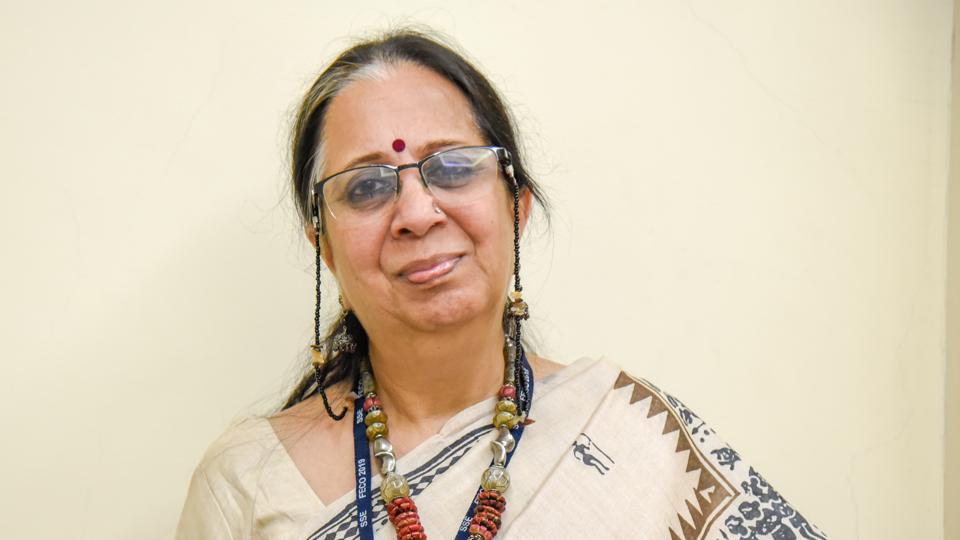
Jyoti Chandiramani, professor and director, Symbiosis School of Economics and dean, Faculty of Humanities and Social Sciences, Symbiosis International (Deemed to be university) speaks on the sidelines of the three-day international conference on ‘Future of Employment: Challenges and Opportunities’ which started on Wednesday. Following are the edited excerpts from the interview:
The theme you have chosen for three-day international conference is very relevant in today’s context. Tell us more about it
Symbiosis School of Economics has completed a decade and as part of our journey, we thought of conducting events. So it’s a biennial event. We thought employment is very important micro economic objective and needs to be addressed.
Being one of the leading universities in the private sector, we thought our institute must address the issue of employment and the nature of human capital that is going to evolve. The conference has seven tracks which include cross country challenges; productivity, technology and innovation; challenges in employment statistics; education skill development and employment spread over three days.
One of the sessions will also be discussing latest NSSO data. How do you see overall economic situation in the country particularly from the employment perspective?
I look at the labour force participation rate. Compared to 61% of Labour Force Participation Rate (LFPR) for 190 countries, India’s LFPR is very low. The NSSO report says the unemployment rate is highest in 40 years. It has touched highest, post demonetisation and GST implementation. These were the reforms that came in and there will be some disruption before things normalise in long run. When we look at global unemployment rate in 2017-18, which is 5.3 while India’s rate is 6.1 per cent. So we seems to be above the global average.
In India, at least 16 states have higher unemployment rates, which is higher than 6.1 per cent while 11 states have less than 6 per cent employment rate. The country has almost 81 per cent unorganised labour market, which is very high. So we have to try to see how to formalise the informal labour force.
Will you also be talking about labour reforms that are required in India?
We have one track on labour reforms and employment and we will be discussing labour reforms required in the country. As an educational institution and university, we will also be looking at steps to generate employment. Also, we will be discussing absence of women in workforce.
One of the reforms that government brought in was GST while other one they couldn’t bring in was related to land acquisition aiming at making it easier for companies to acquire agricultural land. Has this impacted unemployment?
There is an ease of doing business index and India has moved up on this. There has been a dramatic change over the last two years. I won’t say work has not happened. Work is in progress and it had led to pushing some reforms.
Land reform was one that could not happen. Compared to BRICS (Brazil, Russia, India, China and South Africa), India is doing better. There are some parameters in ease of doing business where we are still low.
One of the sessions in the conference is about education and skill development. In India there are multiple private education institutions coming up but due to high fee structure not everyone can afford it and so they are left out of good employment. Your views.
In India 30 per cent of the students are going for higher education. Our gross enrolment ratio has moved up over the years. There is room for more universities. It is true that higher education is getting privatised and therefore becoming costlier, thus excluding the poor. What we need is sound syllabus that will make student fit into any framework when he or she goes out into the job market.
The two issues India is facing are poverty and inequality. While two are different, how is India doing in eradicating poverty and reducing inequality?
In my view India has done well on the poverty front. There are 17 sustainable goals out of which we have improved on some, post 1990 which is reflecting in reduction of poverty.
There are number of state and central schemes that are looking towards addressing the issue of poverty. What is sad is the malnutrition is still there. As far as inequality is concerned, it exist in all economies. You will always have relative poverty which indicates inequality.


