The drive launched against drugs by Punjab’s Congress government has had visible effect at least on one count — the black economy of chitta (white powder/heroin). Bulk market rates of the deadly intoxicant have nearly doubled from Rs 10 lakh a kg to Rs 19 lakh, say ground reports from the Special Task Force (STF) of the police formed by chief minister Capt Amarinder Singh to curb the menace. And that’s not all.
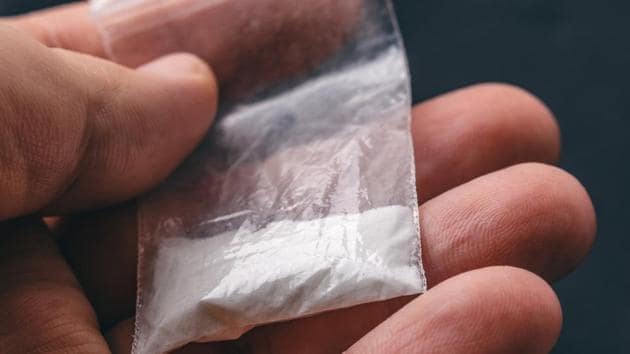
Addicts in Amritsar — where the rates are usually the lowest due to proximity to smuggling routes from the border — are getting the dose for up to Rs 3,600 a gram, which is also double the earlier rate. In Ludhiana, too, the retail rates have doubled since February, to Rs 4,500-5,500 a gram. In other places such as Ferozepur, Mansa, Bathinda and Barnala, rates range from Rs 2,000 to Rs 5,000 a gram.
A usual addict consumes about half a gram in a day, generally divided into in three doses, say de-addiction experts. But chronic addicts consume up to a gram a day.
Information with the Border Security Force (BSF) says rates in Pakistan, from where much of it is smuggled into the Indian Punjab, remain at Rs 8-10 lakh per kg. But, because the suppliers here are reluctant to receive the consignments now, big suppliers are now selling their current lot at higher prices.
“Drug dealers active in the border area have, for the time being, only kept their fingers crossed. That’s why they are not hyperactive on the borders as they were earlier,” added a senior BSF official posted at Punjab Frontier headquarters in Jalandhar, who did not want to be named for not being authorised to speak to the media on the matter.
{{/usCountry}}“Drug dealers active in the border area have, for the time being, only kept their fingers crossed. That’s why they are not hyperactive on the borders as they were earlier,” added a senior BSF official posted at Punjab Frontier headquarters in Jalandhar, who did not want to be named for not being authorised to speak to the media on the matter.
{{/usCountry}}HT talked to various other sources too in the know of the trade, in Bathinda, Mansa, Patiala and Kapurthala, who underlined the rate hike.
A superintendent of police (SP) posted in the counter-intelligence wing in a border region said, “In many cases, older customers are being given the dose on a comparatively lower rate, but the newer ones are charged the current retail rate.”
The STF in-charge, additional director general of police (ADGP) Harpreet Singh Sidhu, sees this as the first positive sign in the fight against drugs. “In coming days, the drive will be given more momentum, and we are sure the prices will further soar, making drug availability more difficult for addicts,” he said.
But is it all that simple? Dr Sandeep Bhola, a psychiatrist and de-addiction expert at the civil hospital in Kapurthala, said the price hike could be a good sign “only if the family or someone else motivates the addict to now quit the habit by joining a de-addiction centre”. “Otherwise, if addicts are unable to afford their dose, they might start using cheaper injections or even indulge in criminal activities to get quick money,” he said.
The STF head acknowledged this: “The strategy of the government is aimed at de-addiction as well as prevention of more people becoming addicts. Reduction in availability, coupled with the steps that the government is taking in the near future, will encourage addicts to go for de-addiction.”