
 E-Paper



Udta Punjab: Facts, figures and falsehoods of state’s drug problem
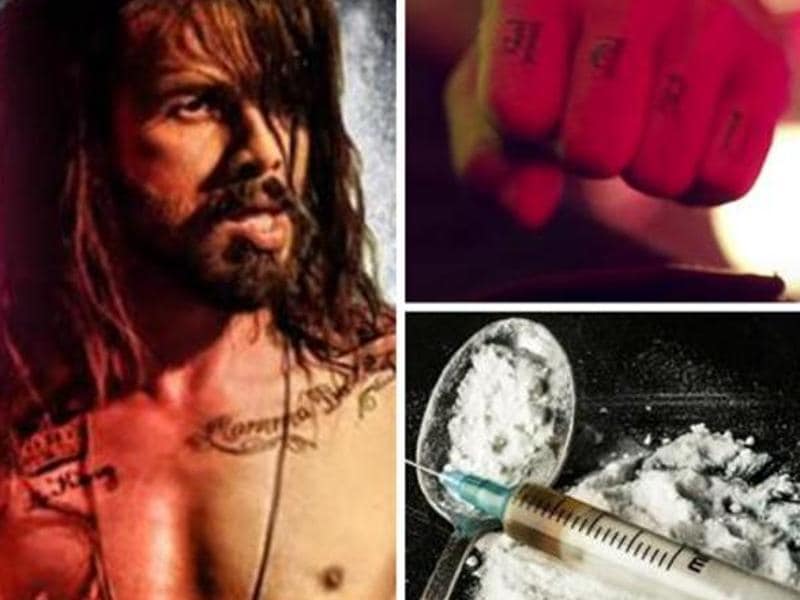
As Udta Punjab, the movie about the drug problem in Punjab, faces the dreadful situation of having to delete all mentions of ‘Punjab’ — or even reshoot the movie to place it in a ‘fictitious location’ — the censor board would do well to first look at the social reality that the movie aims to underline. It is a reality that the state government too has repeatedly tried to hide at best, deny at worst.

 Prefer HTon Google


As Udta Punjab, the movie about the drug problem in Punjab, faces the dreadful situation of having to delete all mentions of ‘Punjab’ — or even reshoot the movie to place it in a ‘fictitious location’ — the censor board would do well to first look at the social reality that the movie aims to underline. It is a reality that the state government too has repeatedly tried to hide at best and at worst, deny.
1. False claim
Punjab deputy chief minister Sukhbir Singh Badal, who is also president of the Shiromani Akali Dal (SAD) that has issued statements against the movie, had in February claimed at a rally in Jalandhar: “Out of the total 2.77 crore population in the state, only 0.06% were found using opium-based drugs.” He claimed to have based his assertion on a study conducted by the All India Institute of Medical Sciences (AIIMS), New Delhi. In essence, that means only about 16,000 people in Punjab are hooked to drugs. He is wrong. The AIIMS report puts the figures much higher. Read on for more on that.
Read more: Chitta ve? Study shows Punjabi songs driving youth towards drugs
2. The ‘70%’ mistake
Ironically, Sukhbir mentioned how Congress vice-president Rahul Gandhi had “maligned” the state by claiming 70% drug addiction in Punjab in 2012. Rahul’s comment, too, was a misreading of an earlier survey in his overblown hurry to earn political brownie points. The trailer of ‘Udta Punjab’ has a voiceover purportedly reading a news report about ‘70% youth addicted to drugs’. Many media outlets had got it wrong too at the time.

Read: Anurag Kashyap compares India with North Korea
3. Back to Sukhbir
Let’s go back to what the deputy CM said in Jalandhar. The AIIMS study he cited is the Punjab Opioid Dependence Survey (PODS), commissioned by the Centre and conducted in February-April 2015 by the NGO Society for Promotion of Youth and Masses (SPYM) and AIIMS experts. It says there are 2.32 lakh opioid-drug dependents (addicts) in Punjab. This, by basic math, means 0.84% of the state’s total population. That is 14 times higher than what Sukhbir claimed. It is worse, in fact. However, the study does not cover marijuana, or the synthetic drugs and prescription drugs that are a significant part of the problem.
4. Worse
Principal investigator Dr Atul Ambekar of AIIMS said the study considered only adults. Punjab, as per the census, has nearly 1.9 crore persons aged 18 or above. By that logic, 2.32 lakh out of 1.9 crore is 1.2% of the adult population addicted to drugs. The world average is 0.2%, based on UN figures as published in a study in ‘Addiction’, the world’s top journal in the field. It considers people aged 15-64. Punjab’s population in that bracket is 1.8 crore. If, therefore, you divide the number of addicts with that, the opioid-drug addiction rate alone in Punjab again comes out to be 1.2%. That is six times the world average. The figure for India is 0.7%, which means Punjab’s drug abuse figure for opioid- based drugs alone is nearly twice the national number.
Read: All Punjab references to be dropped from Udta Punjab?
5. Only male, hence double the number
And cited above are just the number of ‘addicts’. As for ‘users’, the AIIMS survey estimates the number to be 8.6 lakh — which is 4.5% of all of Punjab’s adult population has at least ‘used’ opioid- based drugs, including smack and heroin. “These are dangerous figures,” Dr Ambekar says. He adds perspective: “Our study, in fact, found that 99% of the addicts are male. If one were to consider the survey total by that logic, the figures are double of what they appear to be!”
Watch Shahid Kapoor in a song from Udta Punjab
HT busted the 70% myth
Sukhbir has done a Rahul, only the other way around! While Sukhbir Badal is now misreading a survey to downplay the problem, the 70% figure about addiction extent in Punjab was also a hyperbolic misreading of a 2006 survey by Rahul Gandhi. The writer of that report, Amritsar-based sociologist Ranwinder Singh Sandhu, had told HT that his 2006 study had been misinterpreted: “I didn’t study the general population, but a scientific sample of 600 drug addicts from four districts — Amritsar, Jalandhar, Patiala and Bathinda. The aim was to understand the trend within the addiction circles, and we found that 73.5% of the drug addicts belong to 16-40 age group. That’s the ‘7/10’ that people cite.” That’s all. Simply put, 73.5% of the drug addicts are youth; not that “70% of youth are drug addicts”.
“Irrespective of my report, the drug problem must be acknowledged first. They (government) don’t think it’s a problem. Why has there never been a survey to determine the extent?” he had remarked when HT wrote a detailed report on the issue four years ago. Not much has changed since, except that Bollywood is now interested in telling the story, and the politicians remain addicted to denial or hyperbole.


