
 E-Paper



Trump calls it the ‘biggest oil deal in world’s history’. Can Venezuela's 65 billion barrels actually be delivered?
The pact would give the US 55% of a joint venture over 17 Venezuelan oilfields for 100 years. But legal, political and infrastructure risks cloud its future.

 Prefer HTon Google


US President Donald Trump announced on Friday that the US would take majority control of more than 65 billion barrels of Venezuelan oil reserves through a partnership with private business, in a pact he called "the biggest oil deal in world history".
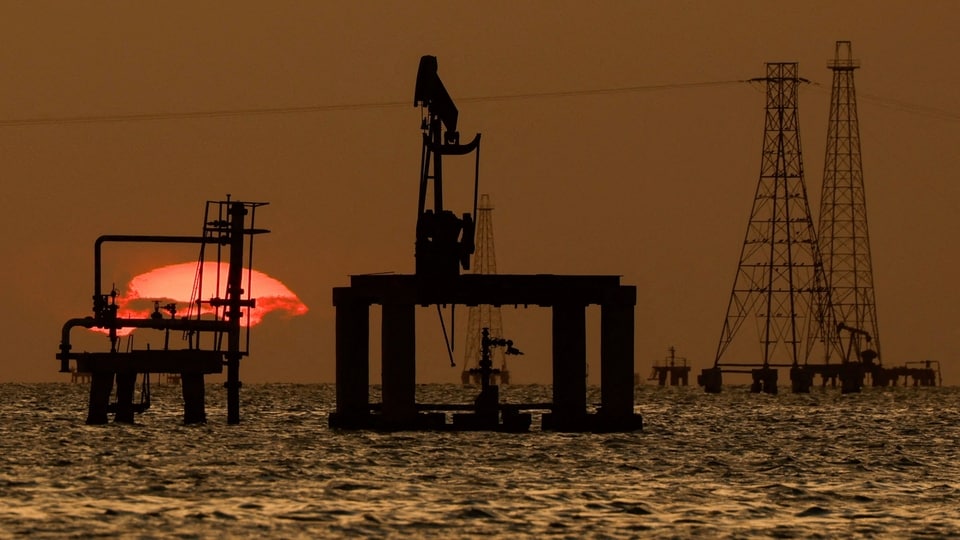
The deal covers roughly a fifth of Venezuela's total proven reserves. It hands Washington an ownership stake and the right to buy oil at cost from a joint venture that will hold 100-year concessions over 17 fields in the Orinoco Belt and Lake Maracaibo, according to US officials. The announcement also comes nearly nine months after US forces captured Venezuela president Nicolas Maduro in January and allowed his deputy Delcy Rodriguez to take charge.
What we know about the agreement
Under the announced structure, the US will control 55% of the effective output of a new joint venture with an as-yet-unnamed private operator in Venezuela, a US official told AP and Bloomberg. The venture would become the world's second-largest corporate holder of reserves after Saudi Aramco, Bloomberg reported. Oil will be sold to the US at cost and routed into the country's Strategic Petroleum Reserve, its emergency stockpile, and to military use, the official said.
Rodriguez, confirming the agreement on Telegram, said it covered 17 strategic fields holding about 65 billion barrels of reserves. The deal would draw more than $100 billion in investment, and would yield $209 billion in tax revenue for the Venezuelan state, she said, calling the pact "historic" and one that would have "a significant impact on the rebirth of our nation".
The announcement followed Rodriguez's move to sign a law opening Venezuela's oil sector to privatisation. The move reversed a defining plank of the so-called socialist movement that had governed the country for more than two decades. Venezuelan officials are preparing to sign fresh exploration and production agreements next week, particularly with US firms, Reuters reported.
US secretary of state Marco Rubio said on X that the arrangement was a "win" for both sides. It would bring "nearly $100 billion in private investment" to Venezuela and support "thousands of high-paying jobs", he claimed.
Also read: After swipes at Canada, Trump eyes Venezuela as 51st state of US in new post
What we don't know
Trump's Truth Social post gave no detail on the fields, companies or mechanics involved. Neither Washington nor Caracas has published any official documents.
Reuters reported that a lease model was under consideration, with fields potentially auctioned to US producers, but noted that the arrangement could face legal and constitutional challenges in Venezuela, where the state retains formal control over core oil industry activities.
The financial architecture is still opaque.
Jorge Pinon, senior researcher at the Energy Institute at the University of Texas at Austin, told AFP the mechanism for handing over the assets was unusual. "We don't know how the transfer would take place. Is it a sale? Is it a title transfer? Is it only transferred once the reserves are actually produced?" he said.
David Goldwyn, president of energy consultancy firm Goldwyn Global Strategies, told Reuters it was unclear whether a US government lease would have a legal basis under Venezuela's constitution and the country's new hydrocarbons law, which Rodriguez signed after taking office to open the oil sector to private capital.
There was, he said, "no precedent for having the US government enter into a lease to operate oil fields".
Also read: America really might restore democracy to Venezuela
Why now
The agreement comes at a time when the US-Israel war on Iran, which touched its six-month mark this week, has sharply slowed Gulf oil moving through the Strait of Hormuz, the narrow waterway that used to carry about 20% of world's oil before the conflict.
Washington has drawn heavily on its Strategic Petroleum Reserve, which fell below 300 million barrels in early August, down by more than 100 million barrels since the start of 2026, the Associated Press reported.
The US produces large volumes of crude domestically, but global oil price shocks, such as the one triggered by the Hormuz disruption, feed into American pump prices. Releasing oil from the emergency stockpile allows the government to add supply to the market and try to blunt those spikes.
AFP, citing Axios, said the US stockpile was at a 40-year low.
Petrol at the pump has also become a political problem for the White House. The average price of US gasoline was $4.09 a gallon on Friday, up from $3.21 a year earlier, according to American Automobile Association (AAA) data.
Simultaneously, Trump's approval ratings have slid ahead of November's midterm elections.
It is likely in this context that Rubio, in his post on the deal on X, said the Venezuela agreement was "President Trump's bold foreign policy… driving America First wins: securing stable reserves and low-cost oil in our Hemisphere and lowering gas prices here at home".
The deal also fits what has been called “Donroe Doctrine” — a term applied to Trump’s revival of the 1823 Monroe Doctrine, which asserted US primacy over the Western hemisphere. Trump's use of this term coincides with America's coming to terms with, and also competing with, economic inroads made by China in recent decades.
The President has previously called Venezuela the 51st US state.
The deal also extends a broader second-term pattern in which his administration has taken federal government stakes in commercial ventures tied to strategic supply chains, including in semiconductors, critical minerals and batteries.
Historical echoes and the criticism
The announcement has few modern parallels. Bloomberg compared it to the British hold on Iran's oil fields and the division of Iraqi oil assets among the US and European powers a century ago.
Alejandro Velasco, associate professor at New York University, said the pact was "completely unprecedented" and warned that Venezuela "risks becoming a playground of US capitalism".
The announcement also attracted backlash from Venezuelan people, with social media users accusing Rodriguez of "giving away" the country's oil and questioning the absence of any commitment to a democratic transition or election timetable.
The paradox of Venezuela
Venezuela holds an estimated 303 billion barrels of proven oil reserves — about 17% of the world's supply and the largest such stock anywhere, according to the US Energy Information Administration. The reserves are already mapped, which means that geologists and companies do not need to go searching for the oil, a process that is often fraught with risks and is heavily capital intensive.
Yet Venezuela accounts for only about 1% of global crude output. Its output in July was 1.16 million barrels a day, an improvement from Maduro's time, but still less than half the level seen a decade earlier.
The collapse has been attributed to the exodus of Western energy companies, and to years of underinvestment and corruption.
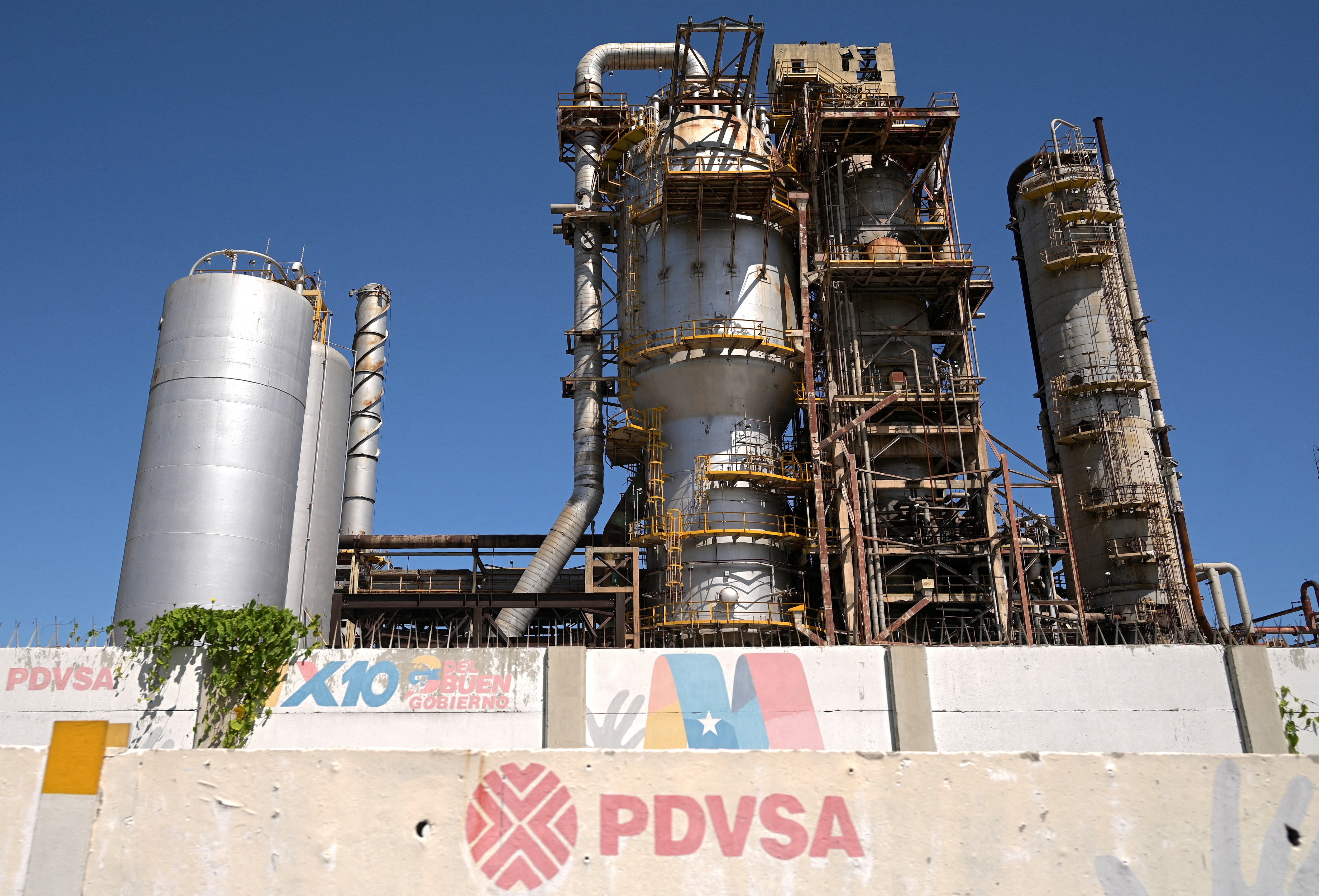
The industry has also been under government hands since Venezuela nationalised it in the 1970s and placed state-owned Petróleos de Venezuela, S.A. (PDVSA) at its centre. Under former president Hugo Chavez, Caracas tightened control further, pushing foreign producers into state-led joint ventures and expropriating assets, including projects operated by ExxonMobil and ConocoPhillips. Output fell further under Maduro, whose regime was heavily sanctioned by the US and allies.
Another obstacle may be Venezuela's oil-type. Much of what remains in the ground in the country is ultra-heavy crude, an oil type that is dense, viscous and rich in sulphur, and which cannot be refined without specialised "upgrader" units that cost billions of dollars to build.
Clay Seigle, a senior nonresident scholar at the Center for Strategic and International Studies (CSIS), told Bloomberg that "a credible road map to durable political stability is needed to convince oil majors to invest tens of billions, particularly to build expensive upgrader units needed to process ultra-heavy Venezuelan oil."
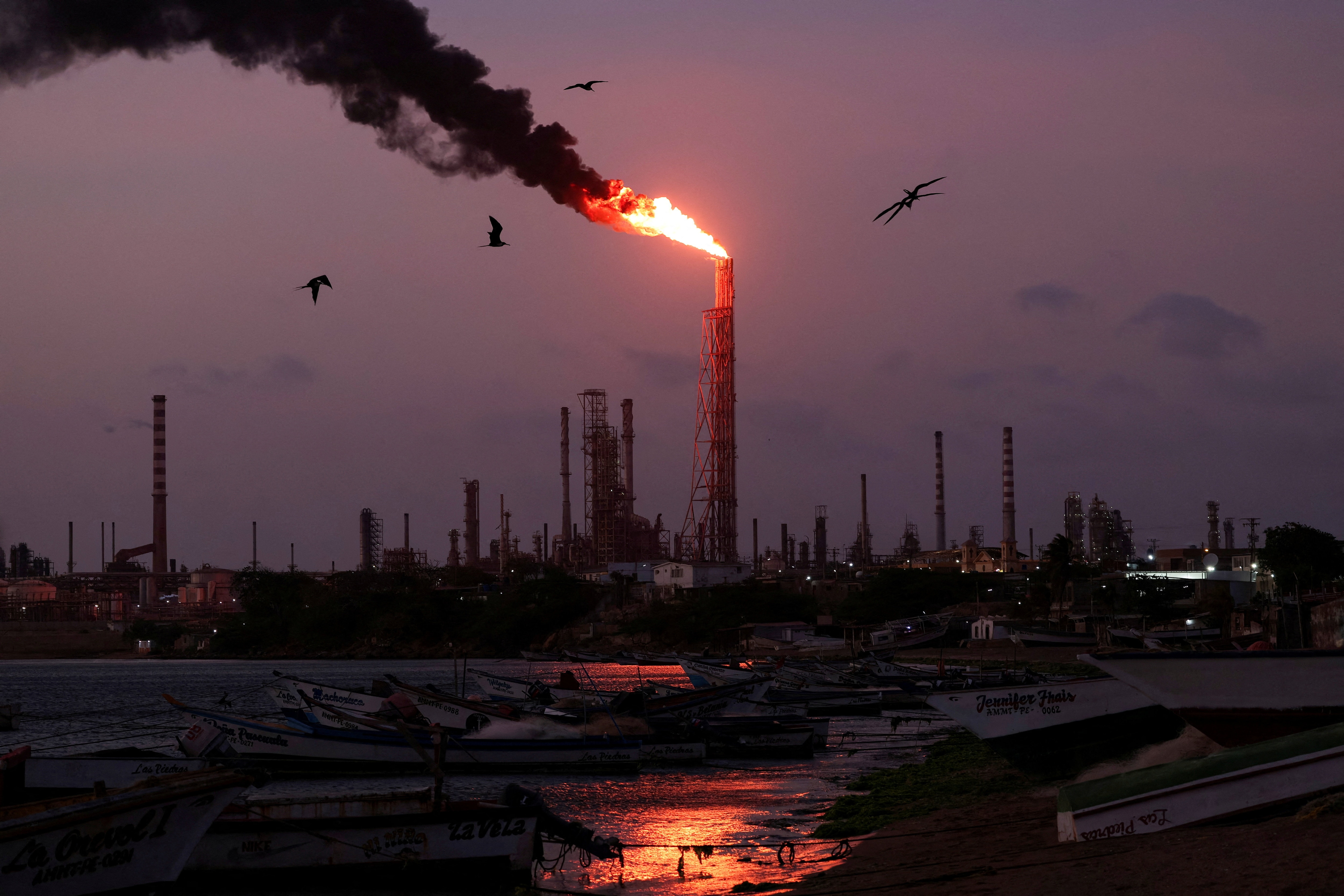
Rebuilding the infrastructure — pipelines, wells, refineries and export terminals — needed to move Venezuelan crude at scale would take years and billions of dollars, analysts said.
Any impact on US pump prices is therefore unlikely to be immediate, regardless of how the majority-control arrangement is ultimately structured.
Also read: Shipping traffic via Strait of Hormuz slips below 10-day average, data shows
Is it realistic?
There are still several questions on the long-term survival of such an agreement.
Rodriguez's approval ratings have been slipping in domestic polls, and the criticism could deepen political vulnerabilities in Venezuela.
Chris Kennedy, economic statecraft lead at Bloomberg Economics, wrote in a client note that the arrangement was "likely to be counterproductive to long-term investment in the industry, primarily because of the political risk it introduces".
Kennedy pointed out that few companies are "likely to be willing to make major greenfield investments given the risk that a post-Trump US administration would abandon this effort, or that a new, democratically-elected Venezuelan government wouldn't honour such a deal".
Goldwyn said the announcement does not address key obstacles that had kept investors away from tapping into Venezuela oil for years, including political uncertainty, an inadequate power grid, limited export capacity and government discretion over the industry "It is hard to see how this kind of arrangement would accelerate investment at any material scale," he said.
John Kilduff, an energy analyst at Again Capital, told AFP the biggest problem for companies operating in Venezuela was "the safety and security of your investment". He said the deal's logic appeared to be to establish "a sort of state zone where US companies can go in, operate, and not be impacted".
Darren Woods, the ExxonMobil chief executive, had described Venezuela as "un-investable" at a White House meeting Trump convened days after Maduro's ouster, AP had reported.
Oil companies have not publicly reacted to the announcement so far.


