
 E-Paper



Growing dangers in the Himalayas
Hazard identification has to move beyond lakes to systematically inventory hanging-glacier and slope-instability risk across the Indian Himalayan arc

 Prefer HTon Google


In 2023, the South Lhonak glacier disaster in Sikkim, forced India to build a systematic response to Himalayan cryospheric hazards. Some 195 high-altitude lakes across six Himalayan states and Union Territories are now identified and classified by vulnerability, with some level of monthly monitoring in place. This monitoring has centred on glacial lakes — high-altitude water bodies dammed by natural ridges of rock and debris left by retreating glaciers. The August 26 flash flood in Nepal, though, has now brought to the fore a mechanically different threat altogether: hanging glaciers, a mountain-side mass of ice, perched on a slope, collapsing and triggering catastrophic floods.
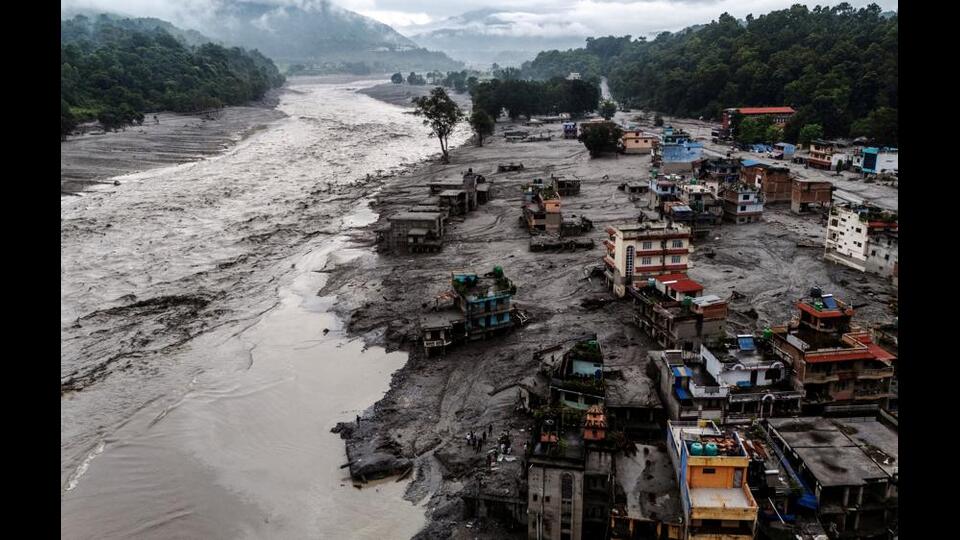
Research in the months before the Nepal flood found exactly this class of failure. It mapped 219 hanging glaciers in Uttarakhand’s Alaknanda basin alone; its simulations projected flow heights of 40 to 51 metres at Badrinath and Hanuman Chatti. The risk of hanging glaciers’ collapse is increasing. Another study on the Nepali catchment, immediately south of the Rasuwa collapse, found that warming rate of glacierised areas above 4,000 metres is five times the global average. The dangers in the Himalayas are expanding at both ends: more ice is at risk of failure, and this risk is travelling up.
The response must now widen along two axes at once. Hazard identification has to move beyond lakes to systematically inventory hanging-glacier and slope-instability risk across the Indian Himalayan arc. And mitigation has to account for events that current techniques such as reducing the volume of water in glacial lakes cannot prevent. Early-warning capacity and evacuation infrastructure, not only source-side intervention, may not be imperative. Activists and experts have already flagged construction, settlement expansion and pilgrim throughput in high-risk zones as unsustainable. The recent tragedies force a harder look at what we have made of the Himalayas.


