E-Paper



Credai Bengaluru president advocates for Mumbai-style redevelopment to tackle land challenges
Credai Bengaluru president Zayd Noaman said that, like Mumbai, Bengaluru has numerous 30–50-year-old buildings that can be redeveloped to unlock valuable land

 Prefer HTon Google


Amid rising land prices and difficulties in acquiring land in the city centre, Bengaluru could benefit from redevelopment policies similar to those in Mumbai. Credai is actively collaborating with policymakers and legislators to advocate for a redevelopment framework tailored to the IT capital, Zayd Noaman, president of Credai Bengaluru, said in an interview with HT.com.
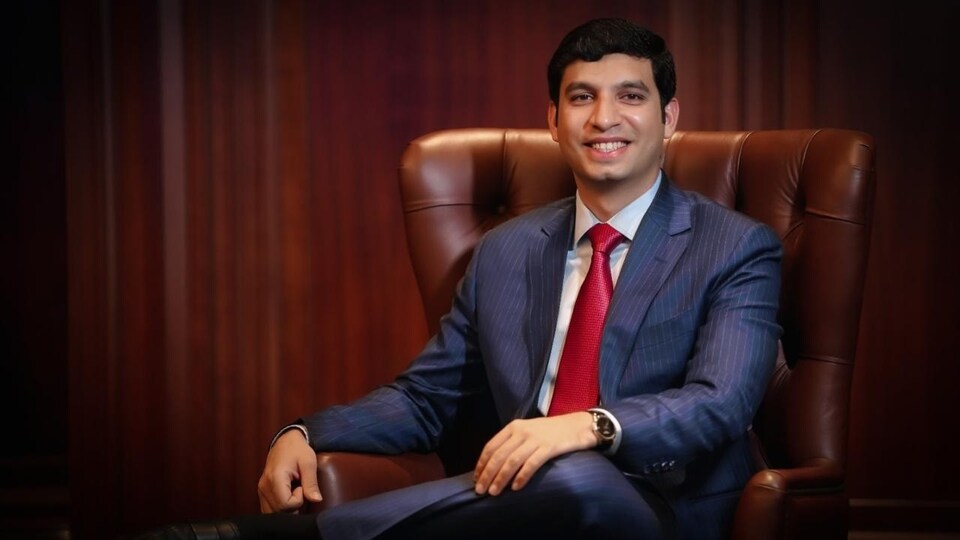
"If Mumbai can successfully implement redevelopment, there's no reason Bengaluru can't follow suit," he said.
Credai is actively engaging with policymakers and legislators to advocate for a redevelopment framework tailored to Bengaluru. "The process will take time, as it involves creating new laws and building public consensus, said Noaman.
Also Read: Bengaluru's property registrations dip 21% amid E-khata implementation woes
"Redevelopment can be a game-changer. Like Mumbai, Bengaluru has many 30–50-year-old buildings that can be redeveloped to unlock valuable land. This benefits not only developers and buyers but also the government by generating significant revenue," Noaman said.
Most of the developable land in Bengaluru's city centre is either saturated or extremely expensive. “Residential development here is challenging due to high land costs, and going forward, we expect more commercial or office projects in these areas,” he said.
For residential projects in prime zones to make economic sense, Noaman said the development has to be of a special grade to justify the rent or sale price.
"But if we don’t begin now, we’ll miss the opportunity for years to come. Our view is that if a city like Mumbai can implement redevelopment successfully, there is no reason Bengaluru can’t follow suit," Noaman said.
CREDAI working with the government to expedite e-khatas
Noaman said that currently, CREDAI has over 230 members in the Bengaluru chapter, and all stakeholders are actively investing in platforms and technologies that improve transparency and accessibility.
"We're working to streamline land records, encourage blockchain adoption, and improve processes like e-Khata and title verification. Our goal is to promote sustainable, organised development—unplanned growth stresses urban infrastructure and hampers livability," he said.
Noaman said that Credai Bengaluru is collaborating with the city's local municipal corporation, Bruhat Bengaluru Mahanagara Palike (BBMP), to streamline the e-khata system, particularly for large developers who need to process bulk applications.
"This process goes beyond individual plot owners—it’s about ensuring the timely issuance of e-khatas so that they can be seamlessly transferred to homebuyers during registration. To make this possible, we're closely collaborating with government departments to streamline the process. Our focus is also on simplifying RTC (Record of Rights, Tenancy, and Crops) and mutation procedures. Digitising these records will bring greater transparency and efficiency to the revenue system," he said.
RTC is an official document that provides details about land ownership and tenancy.
Noaman said that, being a complex undertaking, there will be disruptions in the beginning; however, the e-khata system is seeing steady progress.
Bengaluru's infrastructure will determine the real estate outlook
Noaman said that Credai Bengaluru is in discussions with the Bangalore Water Supply and Sewerage Board (BWSSB) to improve water usage efficiency during construction and in residential societies.
"One of our proposals involves installing digital water meters in every apartment to help residents monitor their consumption. We also emphasize flood-resilient planning—developments must respect buffer zones and maintain stormwater drains. For example, Prestige has been working on upgrading the nalas to enhance water flow and reduce flood risk," he said.
Speaking about real estate potential in the city, he pointed out that Bengaluru is a radial city with ample agricultural land in the peripheries.
"While central areas are saturated with limited and expensive land parcels, outer zones still offer opportunities for large-scale development, provided infrastructure is in place. We need better metro and road connectivity to make these regions more livable," he said.