As India’s tech capital navigates a wave of market uncertainty and muted hiring, discussions around a potential softening in Bengaluru’s rental housing sector are starting to emerge, particularly in IT hubs like Whitefield.
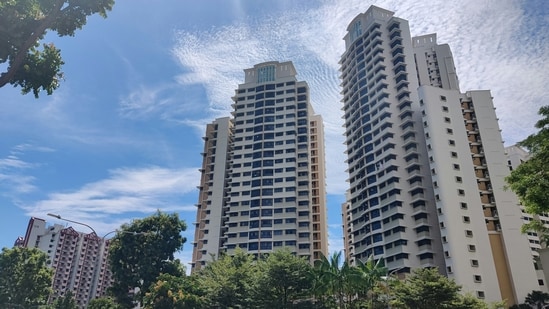
A Reddit post from a user revisiting 2BHK rental listings in Whitefield sparked a larger discussion. The user noted that just 4–5 months ago, gated apartments under ₹40,000 monthly rentals were scarce, but now, the same search yields far more results. “Is my observation wrong, or is this just a change in timing?” the user asked, pointing at the shifting rental demand close to the IT corridor in Bengaluru.
This shift in rental availability comes at a time when job market concerns are beginning to weigh on housing demand near tech hubs. Recently, Tata Consultancy Services (TCS) announced plans to trim its workforce by 2% in the 2026 financial year, translating to over 12,000 job cuts.
Since early 2024, several global giants, including Intel, Microsoft, and Tesla, have undertaken significant workforce reductions as part of broader cost-cutting and operational streamlining efforts. At the same time, the growing adoption of automation and artificial intelligence is transforming the IT job landscape, leading to a shift in demand for specific skill sets. While this is creating fresh opportunities in emerging tech domains, it has also contributed to slower job growth in traditional IT roles, according to industry experts.Also Read: Is Bengaluru’s luxury housing market softening amid job losses and economic uncertainty? Experts weigh in
Rental demand shows early signs of slowdown in IT corridors amid cautious market optimism
Real estate brokers say the number of rental queries from tech professionals in the city’s outskirts has dipped by 15–20% since last year, hinting at a temporary correction in areas once buzzing with demand.
{{/usCountry}}Real estate brokers say the number of rental queries from tech professionals in the city’s outskirts has dipped by 15–20% since last year, hinting at a temporary correction in areas once buzzing with demand.
{{/usCountry}}"Earlier, I used to get a lot of calls for affordable rentals in the outskirts of Whitefield and Marathahalli. Now those calls have dropped by at least 15–20%," said Kiran Kumar, vice president at Hanu Reddy Realty. "Most of these queries were from techies looking for budget-friendly options near their offices in prime areas like Whitefield."
While demand in core neighbourhoods like Indiranagar and Koramangala remains high, driven by proximity to central business zones, the sentiment in outer IT zones has noticeably softened, they said.
Investors are now reconsidering where to bet on rental income
This dip in rental demand has also made some property investors more cautious. Kumar noted that several clients who were previously eyeing the IT corridor to purchase properties for rental income are now pausing to reassess. “Most buyers who were investing in apartments to lease out to tech employees are now in the decision-making phase. They’re increasingly considering non-IT crowd areas for better rental security,” he said.
Investors are likely to adopt a wait-and-watch approach in the current market environment, especially given the uncertainties surrounding job stability and demand in the tech-driven housing segments, said Vivek Rathi, head of research at Knight Frank India. “This cautious sentiment may lead to a longer decision-making cycle, as buyers and investors take more time to assess risks and returns before committing to new purchases," he said.Also Read: TCS layoffs: Will job cuts in the tech sector trigger a real estate downturn in Bengaluru?
Rent correction may have begun, but selectively
In 2023, rental rates in Bengaluru’s key neighbourhoods, Koramangala, Sarjapur Road, and Bellandur, saw sharp increases, with some areas recording annual hikes of up to 30–35%. The surge was driven by a post-pandemic rebound and the wave of return-to-office mandates that reignited demand for homes near tech hubs. But that momentum may now be cooling off.
“We’re seeing early signs of correction, with rents softening by about 3–5% in areas like Whitefield, Koramangala, and HSR Layout,” said Manjesh S Rao, Chief Real Estate Officer at BrokerInBlue.
One of the Redditors pointed out that the most intense period of post-pandemic rental demand has now cooled. “Rental demand spiked once everyone who had to return to the office found homes. Now, with fewer people moving into the city and tech jobs saturating, we may start seeing a broader impact,” another user noted.
“The full impact may be visible during the December shutdown,” one user said, indicating the year-end period when relocations, layoffs, and lease decisions often take place.
Even so, landlords are unlikely to slash rents drastically. “It will not go below a 30% cut in most cases. Beyond that, landlords may prefer to hold rather than lease at steep discounts,” a Redditor commented. “The madness is cooling off. It might not crash, but it’s no longer on fire.”