A woman in China who bought 196 parking spaces for around ₹20 crore and won a legal battle against residents who accused her of monopolising parking facilities for profit has raised an interesting question for Indian real estate investors: Can parking spaces be bought, rented out and sold for a profit, much like residential flats, offices and shops?
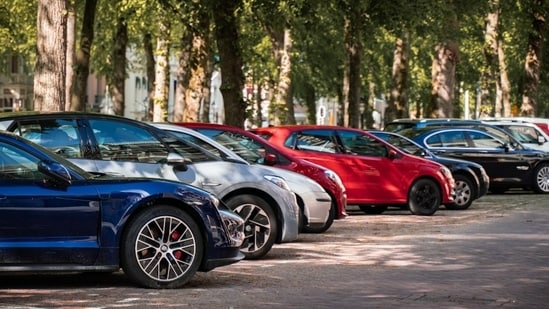
According to a report by the South China Morning Post, a court in Changsha, Hunan province, ruled in favour of the woman, surnamed Wu, in February 2024, holding that her bulk purchase of parking spaces was legal.
The residential project was completed and launched to market in 2018. At the time, demand for homes and parking spaces was weak because the neighbourhood lacked essential amenities such as shops, schools and public transport, the report said, citing Hunan TV.
Wu bought the parking spaces when demand was low, betting that the area would develop. Her investment paid off as the neighbourhood grew, homes sold and demand for parking increased.
To protect her investment, Wu installed parking locks to prevent unauthorised use. She began renting out some spaces for 500 yuan (about $75) per month, double the developer's original monthly rent in 2018. She declined residents’ requests to reduce the rent to 300 yuan, as per the report.
Wu subsequently offered the spaces for sale at around 100,000 yuan (about $15,000) each, with some priced up to 80% above their original values. Residents struggling to find parking objected to the higher prices and accused her of cornering the supply, according to the media report.
{{/usCountry}}Wu subsequently offered the spaces for sale at around 100,000 yuan (about $15,000) each, with some priced up to 80% above their original values. Residents struggling to find parking objected to the higher prices and accused her of cornering the supply, according to the media report.
{{/usCountry}}The court ruled in Wu’s favour, noting that residents had the opportunity to buy the spaces when the developer first offered them for sale but had chosen not to. Wu, meanwhile, had committed her funds and assumed the risk of investing before demand picked up. The court found no legal restriction on the number of parking spaces one individual could own, the report said.
Can real estate investors in India buy parking spaces in bulk?
While there is no uniform nationwide numerical cap on the number of parking spaces an individual can own. However, this does not mean every parking space can be acquired, transferred or rented out as an independent investment asset, say legal experts.
“The ability to acquire or be allotted such spaces, depends on the aforesaid statutory provisions, which place manifold restrictions that would make commercial exploitation of parking spaces in a real estate project, by a third party, unworkable in most cases,” said Shiraj Shalelkar, Senior Partner, ANB Legal.
In Maharashtra, a builder cannot automatically sell open or stilt parking spaces, such as flats or shops. As per the 2010 ruling in Nahalchand Laloochand Pvt Ltd vs Panchali Cooperative Housing Society, the Supreme Court held that in the context of the Maharashtra Ownership Flats Act, 1963 (“MOFA”), builders cannot sell stilt and open parking spaces separately as independent units. The position continues even after the enactment of the Real Estate (Regulation and Development) Act, 2016 (“RERA”), he explains.
As per the provisions of the Development Control and Promotion Regulations for Greater Mumbai, 2034 (“DCPR”), a builder is required to provide one or more car parking spaces for each flat, in accordance with the flat area, as more particularly provided therein, he explained.
Upon compliance with the provisions of the DCPR, only in case of any excess open car parking spaces (not sold/allotted to a flat purchaser), the builder can allot such open car parking spaces for use (and not sell) for a consideration, he said.
Also Read: Haryana affordable housing policy mandates one car parking: Will it increase apartment prices?
However, a member of the society may sell or license his/her car parking space to any other member of the society, he said.
Parking versus a garage
These restrictions do not apply to garages.
Section 2(y) of RERA defines a ‘garage’ as a place within a project that has a roof and walls on three sides for parking any vehicle. However, the garage will have to be declared as a separate saleable unit under RERA. Hence, there is no restriction on the number of garages that a builder may sell to a purchaser.
Who controls unallotted parking spaces after a housing society is formed?
It should be noted that once the co-operative housing society is registered and the project handed over, the builder loses any legal right to allot or control parking slots. Any excess car parking spaces which have not been allotted to flat purchasers by the builders can thereafter be allotted only by the society's Managing Committee and General Body as per the provisions of the bye-laws of the Society.
As per the model bye-laws governing co-operative housing societies in Maharashtra, no member shall normally be eligible for allotment of more than one parking slot. If any parking spaces remain unallotted, additional parking slots may be allotted to members already having slots in the normal course. Such allotment of additional parking spaces shall be made on a year-to-year basis strictly if extra or unallotted parking slots remain vacant after every other member in the society has received at least one parking space, Shalelkar explains.