E-Paper



Buying an apartment? Don’t ignore the fine print on parking charges
Open and stilt parking are common areas and cannot be sold separately, though their cost may be included in the flat price, say legal experts

 Prefer HTon Google


A Bengaluru-based homebuyer looking to buy an apartment said he was asked to pay an additional ₹2–2.5 lakh for parking over and above the apartment’s base price of about ₹85 lakh. The charge was presented as mandatory despite already paying for common areas, raising concerns over transparency and possible overcharging.
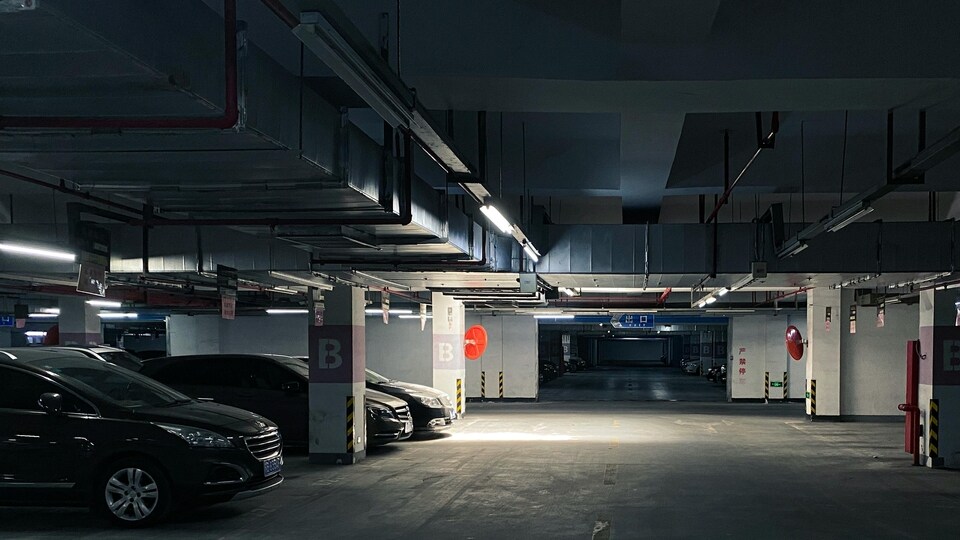
Legal experts point out that developers cannot charge separately for stilt or open parking as independent saleable units, citing the Supreme Court’s ruling in the Nahalchand Laloochand Pvt Ltd vs Panchali Cooperative Housing Society Ltd case, which held that such parking spaces are part of common areas and cannot be sold separately, though their cost may be included in the overall flat price.
“This charge was presented as mandatory despite already paying for common areas, raising concerns about lack of clarity and possible overcharging in apartment transactions,” the buyer told Hindustan Times Real Estate.
Across several housing projects, homebuyers say they are being asked to pay ₹5–10 lakh or more for parking spaces, even though several legal precedents hold that open and stilt parking form part of the common areas and cannot be sold separately.
Legal experts say this practice persists largely due to a lack of awareness and the way agreements are structured.
What the law says on parking sales
Legal experts say that developers cannot charge separately for stilt or open parking as independent saleable units, citing the Supreme Court’s ruling in the Nahalchand Laloochand Pvt Ltd vs Panchali Cooperative Housing Society Ltd case.
Simranjeet Singh, partner at Athena Legal, explained that such parking spaces are classified as part of common areas and facilities, and are neither flats nor garages that can be sold independently.
“While the cost of parking may be included in the flat's composite price, any separate charge or sale of parking is legally impermissible. The apex court in Nahalchand held that such parking forms part of common areas and facilities and is not a ‘flat or garage’ capable of independent sale,” he said.
Singh said that the implications are significant for past transactions as well. “Any prior sale of such parking by developers is legally unenforceable in terms of ownership rights. These areas must eventually vest with the housing society,” he said, noting that buyers may still seek equitable relief such as refunds or preferential usage.
He pointed out that RERA defines ‘common areas’ to include open parking areas, thereby making it clear across India that open parking cannot be sold separately.
“Section 3 (f) (3) of the Karnataka Apartment Ownership Act, 1972, also defines ‘common areas and facilities’ to include parking space,” advocate Chandrachur Bhattacharyya said.
What can homebuyers do?
Legal experts say that despite clear legal backing, buyers often feel compelled to pay these charges. “If the builder is already charging for common areas, then parking, being part of those common areas, is effectively included in that cost. However, many homebuyers are unaware of their rights,” Bhattacharyya said.
He noted that in many cases, parking charges are embedded in agreements, leaving buyers with little immediate choice. “If the charge is part of the agreement, buyers are often forced to pay, as developers may otherwise delay or deny possession,” he said.
According to Singh, homebuyers can approach consumer commissions or RERA authorities to seek refunds, interest and compensation. Once a housing society is formed, it also gains control over common areas, including parking. It can regulate, or even cancel, prior developer allotments that are inconsistent with the law.
Can the housing society cancel existing parking allotments made by the builder?
Legal experts said that once the society is formed and conveyance is completed, it gains full control over common areas, including parking. “It can review, regulate and even cancel prior allotments made by the builder if they are inconsistent with the law,” Singh said, pointing out that such decisions must be fair and in line with established norms.
He explained that housing societies have the authority to reassess parking allocations made earlier by developers. Still, any action must be non-arbitrary, follow by-laws, and be guided by principles of equity and fairness.
(Disclaimer: This report is based on user-generated content from social media. HT.com has not independently verified the claims and does not endorse them.)