India's ageing office buildings could unlock an estimated ₹3.76 lakh crore in incremental value through retrofitting, potentially increasing asset values by 76%, according to Knight Frank India's latest report, Age to Advantage: Retrofitting India's Office Stock.
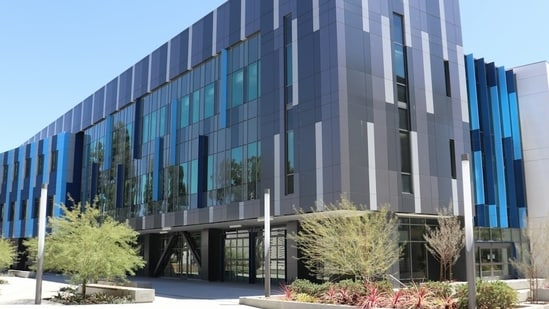
The report estimates that the value of retrofit-eligible office stock across India's top eight cities could increase from ₹4,957 billion to ₹8,716 billion following upgrades. Approximately 301 million sq ft, representing 28% of the total office inventory across these markets, is eligible for retrofitting.
The National Capital Region (NCR) represents India's largest retrofitting opportunity by volume, with 81 million sq ft of office stock, accounting for 39% of its total inventory, eligible for upgrades. Retrofitting this stock could increase its estimated value from ₹1,308 billion to ₹2,376 billion, an appreciation of 82%.
The Mumbai Metropolitan Region (MMR), however, offers the highest potential value appreciation. Its 68 million sq ft of retrofit-eligible office stock, currently valued at ₹1,855 billion, could be worth ₹3,630 billion after upgrades, representing a 96% increase, the report noted.
The scale of the opportunity in both markets reflects the maturity of their office ecosystems and the concentration of ageing commercial assets in established business districts, making them the country's most promising markets for value creation through retrofitting, the company said.
{{/usCountry}}The scale of the opportunity in both markets reflects the maturity of their office ecosystems and the concentration of ageing commercial assets in established business districts, making them the country's most promising markets for value creation through retrofitting, the company said.
{{/usCountry}}India is the world's fourth-largest office market by stock, with an estimated 1,076 million sq ft of office space. However, Grade A assets account for only 56% of this inventory, or approximately 603 million sq ft, highlighting the scope to improve the quality of existing commercial buildings, the report noted.
With around 301 million sq ft identified as eligible for retrofitting, modernising these properties could help bridge the quality gap, improve asset performance and expand the supply of institutional-grade, occupier-ready office space without relying solely on new development, it said.
Bengaluru has lower retrofitting potential; Ahmedabad presents a contrasting picture
The opportunity varies significantly across cities. Bengaluru, India's largest office market by volume, has only 12% of its office stock eligible for retrofitting, reflecting its comparatively lower share of ageing inventory.
Ahmedabad presents a contrasting picture, with more than 60% of its office stock classified as ageing and requiring upgrades. The report attributes this partly to the fact that much of Ahmedabad's office stock is strata-sold and therefore classified as Grade B.
CBDs offer ₹1.45 lakh crore in value creation potential
Across India's top eight cities, retrofitting eligible office stock in Central Business Districts (CBDs) could unlock ₹1,445 billion in incremental value, increasing the combined asset valuation by 70%, from ₹2,052 billion to ₹3,497 billion.
MMR leads in potential valuation appreciation at 97%, while NCR offers the largest opportunity in absolute terms, with approximately ₹690 billion in incremental value. MMR follows with ₹355 billion, while Bengaluru offers an additional ₹149 billion, as per the report.
Among other markets, the potential valuation increase stands at 80% in NCR, 76% in Hyderabad, 57% in Pune, 47% each in Chennai and Kolkata, 42% in Bengaluru and 33% in Ahmedabad, as per the report.
These opportunities are concentrated in established commercial hubs such as Nariman Point and Fort in Mumbai, Connaught Place in NCR and MG Road in Bengaluru, alongside key office districts in other cities.
Secondary business districts offer larger incremental value
The report estimates that retrofitting eligible office stock in Secondary Business Districts (SBDs) across the eight cities could increase its combined valuation by 80%, from ₹2,906 billion to ₹5,219 billion, unlocking ₹2,313 billion in incremental value.
MMR offers the largest opportunity, with a potential valuation increase of 95%, translating into ₹1,420 billion in additional value. NCR follows with an 85% appreciation potential and an incremental value of ₹379 billion.
The potential valuation increase stands at 78% in Hyderabad, 57% in Bengaluru, 50% in Kolkata, 47% each in Pune and Chennai, and 41% in Ahmedabad.
In terms of retrofitting eligibility, Ahmedabad has the highest proportion of its SBD office stock eligible for upgrades at 43%, followed by Pune at 21%. MMR, however, offers the largest overall value opportunity, supported by the scale of its eligible inventory and strong rental differentials.
Commenting on the findings, Shishir Baijal, international partner, chairman and managing director of Knight Frank India, said retrofitting was poised to become an important driver of the country's next phase of office real estate growth.
"With the growing demand for quality, occupier expectations are shifting towards more efficient, sustainable and technology-enabled workspaces. At the same time, a significant share of India's legacy office inventory is located across some of the country's most desirable commercial districts," he said.
Deben Moza, international partner, senior executive director and head of Project Management Services – India and APAC at Knight Frank India, said retrofitting would increasingly become a strategic priority as occupier expectations and building performance standards evolve.
What is retrofitting?
Retrofitting involves upgrading existing buildings with modern systems, technologies and materials to improve performance, safety, sustainability and occupier experience, without the cost, carbon footprint and disruption associated with complete redevelopment.
The interventions typically include upgrades to mechanical, electrical and plumbing (MEP) systems, building façades, elevators, lobbies, parking facilities, fire and life safety systems, digital infrastructure, security, wellness facilities and accessibility features.