
 E-Paper



Chandrayaan 3 gears up for lunar landing, how India's past moon missions fared
On Monday, a two-way communication was established between the Lander Module of Chandrayaan-3 and the Chandrayaan-2 orbiter.

 Prefer HTon Google


The Chandrayaan-3 is the third edition of the Moon mission series, which, if everything goes as planned, will achieve a "soft landing" on the lunar surface's south pole, making India the first country to do so and the fourth country after the US, China, and the former Soviet Union to ever land on the Moon's surface.
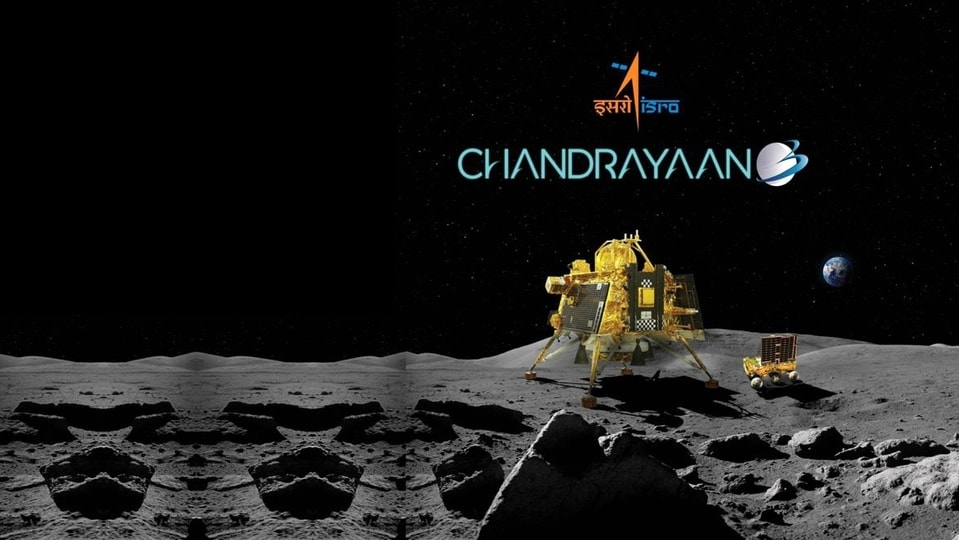
From the day of its launch on July 14, the spacecraft has been successfully carrying out all the steps that will take it closer to the Moon. The bigger step began with entering the Moon's orbit, followed by carrying out manoeuvres and then the separation of the Propulsion Module and Lander Module.
The Lander Module – which is the major part of this lunar mission – later carried out the deboosting process of slowing down to move further closer to the Moon's surface. On Monday, a two-way communication was established between the Lander Module of Chandrayaan-3 and the Chandrayaan-2 orbiter, ISRO said on its official X (formerly Twitter) handle.
With only about 48 hours left for the historic landing, let's take a look at the previous edition of this lunar mission – Chandrayaan.
Chandrayaan-1
India's first mission to the Moon – Chandrayaan-1 – was launched in October 2008 with a planned mission life of two years. The spacecraft carried 11 scientific instruments built in India, the US, the UK, Germany, Sweden, and Bulgaria. It orbited the Moon at a height of 100 km from the lunar surface, conducting chemical, mineralogical, and photo-geologic mapping of the Moon.
In May 2009, it shifted to an orbit 200 km from the Moon after achieving major mission objectives. However, on August 29, 2009, Chandrayaan-1 lost communication.
Chandrayaan-2
It was the second edition of India's mission to the Moon, created and launched with high expectations. The objectives of Chandrayaan-2 were significantly more complex than those of previous space programmes by ISRO. The aim was to explore the uncharted South Pole of the Moon.
The spacecraft, which took off on August 14, 2019, consisted of three main parts: the Orbiter, Lander, and Rover. These were designed to expand our understanding of the Moon's scientific aspects, delving into details like topography, seismography, mineral identification and distribution, and others.
The spacecraft executed successful manoeuvres around Earth before heading to the Moon. It entered the Moon's orbit on August 20, 2019. The lander Vikram separated from the orbiter on September 2, 2019, and carried out de-orbit manoeuvers, coming closer to the Moon in an orbit of 100 km x 35 km. Everything went well until it reached an altitude of 2.1 km, after which it lost communication with ground stations.
While the Orbiter was sent to enhance our understanding of the moon’s evolution and map minerals and water molecules in Polar regions using its eight state-of-the-art scientific instruments, Chandrayaan-3's Lander Module established two-way communication with Chandrayaan-2's Orbiter on Monday.


