Lighting is often one of the last things we think about when decorating a home. We choose the furniture, decide on the wall colours, add rugs and decorative accessories, and then settle for a ceiling light to brighten the space. But a recent visit to Vayu Design for Living's new lighting launch made me look at lamps a little differently. As I walked through the collection, I realised that a lamp can do much more than simply light up a dark room. It can add texture, bring in an interesting design element, create a cosy atmosphere, and even become the focal point of a room.
What caught my attention was how different the lamps felt despite serving a similar purpose. Some had sculptural forms and distinctive materials that made them look like decorative art pieces, while others had softer silhouettes and warm shades that could change the atmosphere of a space. It also got me thinking about how we choose and position lamps at home. If you are planning to refresh your home without changing the furniture or undertaking a major makeover, experimenting with lamps might be a good place to start. Here's how different types of lamps can influence a room and how to pair them.
1. Sculptural table lamps can double up as statement decor
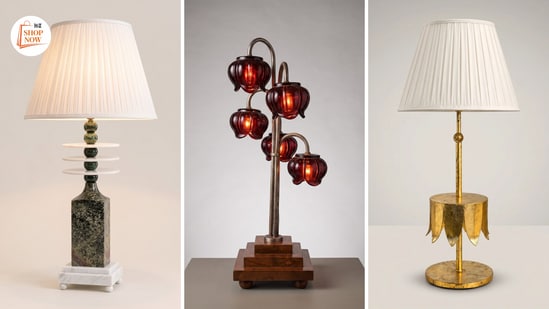
Sculptural table lamps are particularly interesting because their bases, silhouettes and materials can add character even when the light is switched off. One design that caught my attention at the Vayu launch was the Axis lamp. Its stone base, stacked spherical details, and layered circular elements give it a distinctly architectural appearance. The pleated fabric shade gives a softer appeal to room. The overall design creates an interesting contrast between the solid stone structure and the lighter upper half.
How to style it: A sculptural lamp like this can work well on a console table, a sideboard or a spacious bedside table. Let it stand out rather than surrounding it with too many decorative accessories. You can pair it with a small ceramic vase, a stack of books or a simple decorative object to create a balanced arrangement.
2. Glass lamps can introduce warmth and colour
If you want lighting that feels decorative without being too conventional, glass lamps are worth exploring. Unlike fabric-shaded lamps that diffuse light more evenly, coloured or translucent glass can create interesting visual effects when illuminated. The Lilly of the Valley lamp from the Vayu collection stood out for its unusual floral-inspired form. Featuring deep red glass shades, curved metal stems and a wooden base, it has a more artistic appearance than a conventional table lamp. When illuminated, the glass shades bring out a warm reddish glow, making the lamp feel like a decorative centrepiece.
How to style it: Coloured glass lamps can work well against neutral walls, wooden furniture and understated interiors. If you are using a lamp with a strong colour, keep the surrounding accessories relatively simple. You can also pick up a similar shade through cushions, a small artwork or another decorative accent to create visual continuity.
3. Fabric-shaded lamps create a softer, more relaxed atmosphere
There is a reason fabric-shaded lamps remain popular in bedrooms and living rooms. Their appearance is usually softer than that of metal or glass fixtures, and their shades help diffuse light rather than exposing the bulb directly. Pleated, linen and cotton-effect shades can also introduce texture without making the space feel visually busy. Depending on the shape and colour, they can complement traditional, contemporary and even minimalist interiors.
How to style it: Place a fabric-shaded lamp on a bedside table, a reading corner or a console. For a relaxed bedroom atmosphere, choose a warm-toned bulb and pair the lamp with soft furnishings in complementary colours. If your room already has patterned curtains or upholstery, a plain fabric shade can help balance the overall look.
4. Floor lamps can make empty corners more functional
An empty corner does not necessarily need another cabinet, plant or accent chair. Sometimes, a floor lamp is enough to make it feel like a considered part of the room. Floor lamps are particularly useful when you want to introduce lighting without occupying valuable tabletop space. Depending on their design, they can provide ambient illumination, focused reading light or simply act as a decorative feature. For instance, an arched floor lamp can extend over a seating area, while a tripod-style design can add height and structure to an otherwise understated corner.
How to style it: Position a floor lamp beside an armchair, next to a sofa or near a reading nook. Make sure its height and proportions complement the furniture around it. If you have a small living room, choose a slim design with a compact base rather than an oversized fixture that interrupts movement.
5. Pendant lights can create a focal point without occupying floor space
While table and floor lamps are easier to introduce into an existing home, pendant lights can change how an entire area is occupied. Suspended from the ceiling, they draw attention upwards and can help visually define a particular zone. They are commonly used above dining tables, kitchen islands and in double-height spaces. Depending on their design, they can either blend into the interiors or become the main decorative feature.
How to style them: A pendant light above a dining table can help create a more intimate dining setting. In an open-plan home, it can also visually distinguish the dining area from the living room. Consider the size of the fixture, ceiling height and the height at which it hangs before making a choice.
6. Wall lights can add another layer without taking up space
Wall lights are often overlooked when people think about adding decorative lighting. However, they can be particularly useful in homes where floor and tabletop space is limited. They can illuminate darker passages, highlight artwork, add warmth beside a bed or provide a softer alternative to overhead lighting. Unlike a table lamp, they don't require a surface, making them ideal for compact rooms.
How to style them: Use wall sconces on either side of a bed for a balanced arrangement, or position them along a hallway to create a more welcoming atmosphere. If you have artwork or a textured wall, directional wall lighting can also help draw attention to these details.
How to pair different lamps without making your room look cluttered
1. Mix materials but maintain a common colour palette
You can combine a stone table lamp with a glass lamp or a metal floor lamp, provided the overall colour palette feels connected.
2. Combine different heights
Using lamps at different heights creates visual depth. You could place a table lamp on a console, a floor lamp beside the sofa and a wall light slightly above eye level.
3. Balance statement designs with simpler fixtures
If you have a sculptural lamp with a base, make it the main attraction. Pair it with a simpler fabric-shaded lamp or understated wall light. Too many elaborate designs in one small space can make the arrangement feel visually messy.
4. Think about the purpose of each light
Not every lamp needs to illuminate the entire room. A bedside lamp can provide softer light for winding down, a floor lamp can illuminate a reading corner, and a pendant light can define a dining area.
5. Choose the right bulb temperature
The bulb matters just as much as the lamp itself. Warm white lighting creates a cosy atmosphere and works well in bedrooms and living rooms. Cooler lighting is more suitable for areas where visibility is important. Also check the bulb's brightness and whether the fixture supports dimming before purchasing.
- Can you mix different styles of lamps in the same room?
Yes. You can combine contemporary, traditional and sculptural lamps as long as there is some visual connection between them.
- Which lamps are best for a small living room?
Compact table lamps, slim floor lamps and wall sconces are practical options. They provide additional lighting without taking up too much space.
- Should all the lamps in a room have matching shades or finishes?
Not necessarily. Matching lamps can create a symmetrical and coordinated appearance, but mixing different designs can make a room feel more personal.
At Hindustan Times, we help you stay up-to-date with the latest trends and products. Hindustan Times has an affiliate partnership, so we may get a part of the revenue when you make a purchase. We shall not be liable for any claim under applicable laws, including but not limited to the Consumer Protection Act, 2019, with respect to the products. The products listed in this article are in no particular order of priority.