It is time for global badminton to turn its focus on the Asian Games, which opens in Aichi-Nagoya on September 19. For Indian sports fans, the spotlight swings back to PV Sindhu.
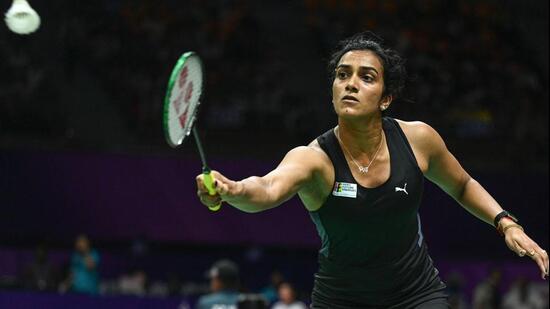
For over a decade, India’s most decorated shuttler has dealt with the pressure of expectation, bearing the weight of a nation’s sporting ambitions whenever she steps on the court. Still, as she heads to her fourth Asian Games, it feels strikingly different.
There is calm assurance, a quiet recalibration which suggests that the two-time Olympic medallist is enjoying a second wave in her illustrious career.
Her history at the continental Games tells a story of constant evolution. A second-round exit as a teenager at Incheon 2014, a historic silver medal at Jakarta 2018 and a quarter-final finish at Hangzhou 2023. Sindhu now appears a player transformed, possessing a top physical level and the tactical wisdom needed to stand on the podium again.
This renewed optimism is because of her sustained high level this season. The defining moment came in July at the Japan Open where Sindhu stormed through a high-calibre field to lift her first BWF World Tour title since December 2024.
The victory silenced doubters and validated what her team had observed in training for months, that her movement, explosive power and endurance were returning to elite standards.
Coach is pleased with her current fitness levels
Rather than pushing herself to chase ranking points after that win, the former world champion and her support staff made a calculated decision to withdraw from the China Masters this month.
“Sindhu will definitely go into the Asian Games with a lot of confidence as physically she is probably in the best shape she has been in a long time,” her strength and conditioning coach Wayne Lombard told HT.
“This (skipping China Masters) was a performance decision, not any red flag to worry about at all. It has already been a long season, so making hard but smart decisions like this, to ensure we prioritised recovery and get in another solid training block in. Pre-Asian Games was important for us in our planning to try and peak at the right time going into Aichi-Nagoya.”
Lombard’s emphasis on load management highlights a fundamental shift in Sindhu’s late career approach to preparation. Historically, Indian athletes across disciplines have struggled with a packed calendar, often ignoring long-term health for short-term participation.
Sindhu’s former coach Anup Sridhar points to this as the cornerstone of her revival, linking it to an unyielding commitment to physical preservation.
“She’s so experienced, successful and has won almost everything there is. However long she ends up playing, the single most important thing is for her to take care of her body, be really careful with her fitness,” said Sridhar.
“What I’ve seen over the last 8-9 months is consistency in her fitness. And the minute you’re able to manage that, consistency in performances will naturally follow.”
A primary factor that plagues Indian sports is overtraining. The women’s singles calendar is so taxing that it’s extremely difficult to get a period of rest and recovery. That is because, for all practical purposes, an off-season doesn’t exist. That is why players create their own off-season by taking time off.
Sindhu has worked those questions and its solutions out. By taking control of her schedule, the 31-year-old has allowed her game to flourish again. Beyond her title in Japan, her performances throughout the year reflect a player consistently operating at the highest level.
The five-time World Championships medallist has routinely featured deep in tournaments, consistently reaching semi-finals. Even at the World Championships here last month, she lost a very close last 16 match against Chinese world No.2 Wang Zhi Yi, who won bronze.
“Her chances are very good (at Asian Games). She’s hit a fairly rich vein of form of late, obviously with that fantastic win in Japan. It’s been coming for a while, the last maybe 9-12 months. She’s always at the semi-final sort of level. She came close to beating a few good players a couple of times and then went all the way in Japan,” said Sridhar.
“There’s no telling how far she would have gone if she had beaten Wang at Worlds because she was looking good. It was so close. With that much experience, the occasion won’t overwhelm her.”
However, winning an Asian Games medal in women’s singles will require navigating one of the most formidable draws in sport. Asia is the epicentre of global badminton, home to the Olympic and world champion (both South Korea’s An Se-young) besides top contenders. An has been the relentless force Sindhu and the others have run into.
Her uncanny defence and endurance level have frustrated traditional attacking powerhouses. If Sindhu has to medal in Japan, she will have to overcome the 24-year-old world No.1, who holds an impeccable 10-0 record against the Indian.
“Obviously, age is on An’s side,” said Sridhar. “Her retrieval ability is probably second to none in the women’s game. She’s able to get almost every shuttle back. She doesn’t play as many attacking strokes as Sindhu, but what she’s able to do is return the shuttle again and again and again.
“For somebody like Sindhu, who hits such steep and powerful smashes and short half smashes, if the shuttle keeps coming back, you feel like you have to try even sharper, harder, with a steeper angle. In doing that, you end up either hitting into the net or wide.”
Sindhu thus must shift from relying on raw power to a more patient, circumspect construction of points.
“You can try an attacking shot, but against her you won’t score from that angle. You have to wait a bit more. It might mean an extra 5-8 shots every rally, but that is what it’s going to take. She’d have to be a bit more patient, play the rally a little more, and use a few more attacking clears, depending on what the drift is like in Japan,” said Sridhar.
“You will see a few more attacking clears, try to get a little bit higher at the net and put a lot of pressure from there. Sindhu’s net pushes, hold, block, and spin are all very effective shots if she’s high up at the net. The minute she goes down a bit, it’s not that effective. So, there has to be a lot of work on getting her high at the net and rely a little less on just smashes.”
A higher seeding in Aichi-Nagoya will ensure world No.11 Sindhu avoids premature landmines in the opening rounds, allowing her to build rhythm before encountering the heavyweights in the quarter-finals and beyond.
Ultimately, what makes Sindhu’s medal quest so compelling is the harmony between her physical readiness and her mental composure. Having already experienced every triumph and setback the sport has to offer, she enters Aichi-Nagoya unburdened by the anxiety that often weighs on younger contenders.
Her physical health is as good as it has been, her tactical awareness is refined, and her scheduling is governed by wisdom. Whether this second wave carries her to the podium in Japan remains to be seen, but Sindhu remains a force no opponent can afford to underestimate.