E-Paper



HT Kick Off: Nothing tops the win against Thailand
In this issue Dhiman explains why that victory for India's women is better than the win against UAE and the draw away to Qatar by the Blue Tigers.

 Prefer HTon Google


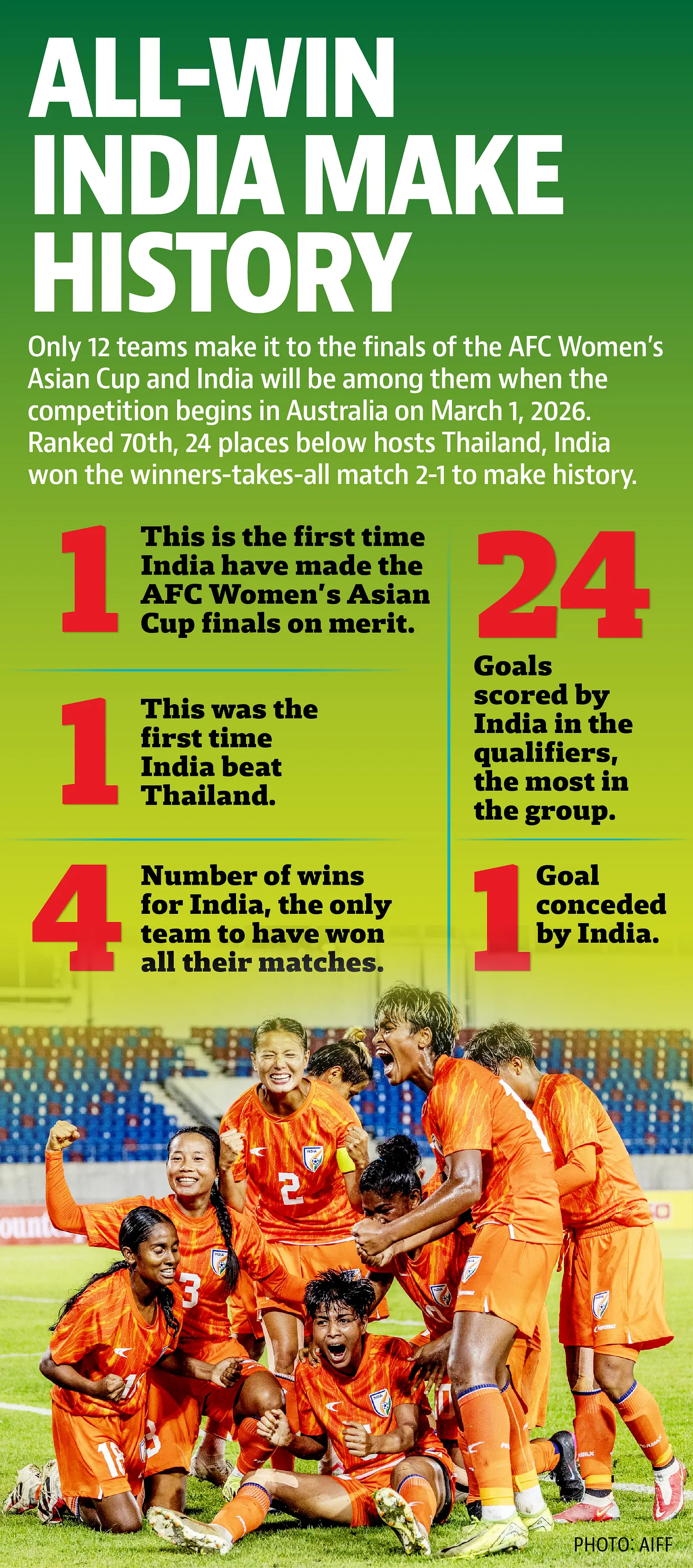
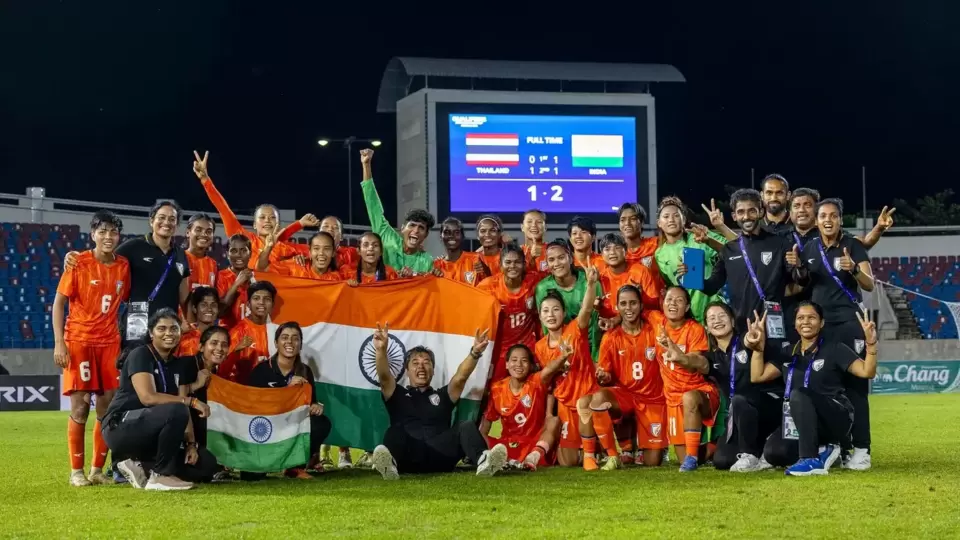
The win against Thailand is India’s greatest football moment this century. Stunning as they were, the men’s team surprising UAE in 2001 and holding Asian champions Qatar to 0-0 away in 2019 will be behind in the pecking order to what the women achieved on Saturday.
All three results were against teams ranked significantly higher. India were 124 when they hosted UAE, who were ranked 64th and coached by Henri Michel, in the 2002 World Cup qualifying campaign. Qatar were 62nd in the FIFA rankings, India 103rd when the teams met in Doha in a 2022 World Cup qualifier. At Chiang Mai’s 700th Anniversary Stadium, the gap between the teams were 24 places but rarely has less felt so much more.
That’s because for all the guts and glory against UAE and Qatar the campaigns ended like every other before and after. The draw in Doha was followed by stalemates against Bangladesh and Afghanistan and if we remember the 2001 campaign it is because India were the closest they have ever been to making the final round of the qualifiers.
The 4-1 win against Thailand in the 2019 Asian Cup finals, India’s first in the competition in 64 years, the Nehru Cup titles and Sunil Chhetri’s hattrick in the AFC Challenge Cup final will figure in the list of honourable mentions. As will the 2002 AFC under-16 (boys) quarter-final berth.
All-or-nothing match
That the win against Thailand bucked the trend of India’s men and women teams being poor travellers, especially in crunch qualifying games, adds to the significance of this win. Thailand have World Cup experience, were in line for the 10th successive AFC Women’s Asian Cup finals berth and were at home. Both had creamed Timor-Leste, Iraq and Mongolia, the other teams in the group, scored the same number of goals while conceding none turning the Saturday evening match into an all-or-nothing encounter.
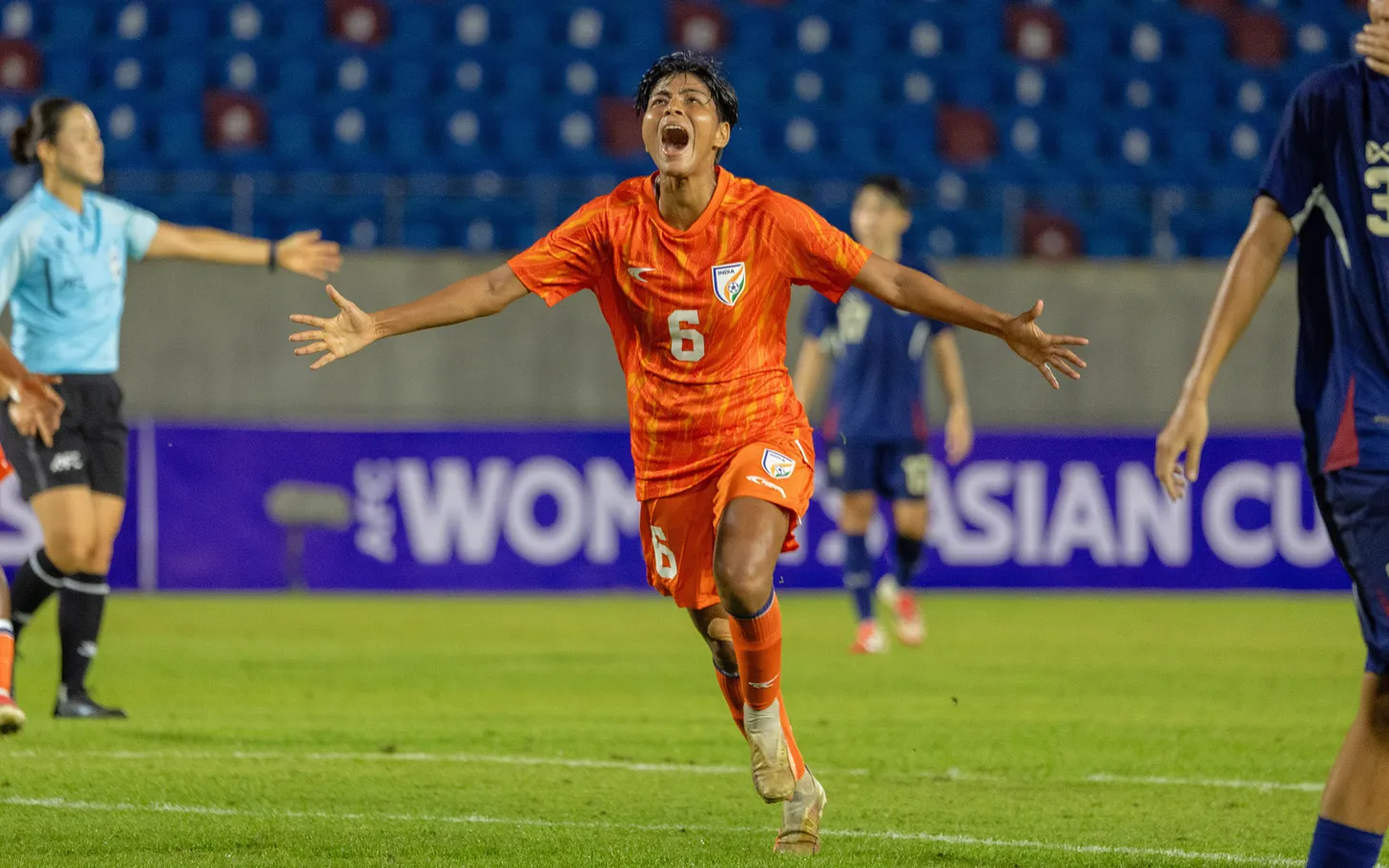
That India had never beaten Thailand didn’t weigh the women down. “Thailand are ranked higher, but it doesn’t mean we can’t beat them,” Sangita Basfore was quoted as saying by the All India Football Federation (AIFF) website. One day later, Basfore walked the talk by scoring twice as India made history.
The announcement of a $50,000 reward was an appropriate step by a federation in the news mostly for the wrong reasons. The agreement with AIFF’s commercial partner ends this year. The men’s team's ranking has slumped to 133, their lowest in nine years, memories of three trophies and a return to the top-100 in 2023 pushed back by defeats, a high turnover of coaches and their less-than-pleasant separation.
The women’s team also had coaches come and go, the job even being handed to a former player with little experience of women’s football. There was the disaster of Covid-19 forcing India out of the 2022 Asian championship finals and then there were defeats to Bangladesh, who have also qualified for the finals in Australia, and Nepal in the SAFF Championship.
Big step forward
Crispin Chhetri took charge of a team in transition, as he explained to HT, but he has shown that if managed properly, change does not need to be messy.
Before the match against Thailand, Chhetri had said: “Qualification right now would be a huge boost for Indian football overall. We’re going through a challenging phase at the moment, and the women’s team qualifying would really provide a ray of hope. It would also help the women’s game grow in India…For those already in the national team, it would be an opportunity to face the best teams in Asia, and possibly the world. So in every way, I believe it would be a big step forward for football in India.”
A big step forward this certainly is. At the end of the interview, Chhetri and I had agreed to speak after India qualify. It is a conversation I am looking forward to.
Now that a seat at the high table of Asian football has been secured, India need a clear plan to get ready for it. Shaji Prabhakaran, AIFF’s former secretary-general and FIFA Development Officer in an earlier life, has made some suggestions. AIFF does not need to accept them (given that they are like opposite-coloured bishops in chess, it is unlikely it will) but has to come up with a plan quickly.
The Marquez question
That is not AIFF’s strongest suit if the Manolo Marquez’ separation saga is any indication. Marquez has told “Marca” that he had wanted out after the draw against Bangladesh. What is not clear is why AIFF persisted with someone who was not keen for two more matches, one of them an Asian Cup qualifier?
Marquez has said he thought players knowing he will not stay affected their performance against Hong Kong. It is not known why AIFF thought otherwise. And even as the hunt for Marquez’s successor began, AIFF has not specified whether the appointment will be a short-term fix or for a longer tenure.
Play of the week