When I look at the specifications of wireless earbuds, noise cancellation is one of the features I tend to notice first. However, there is a small detail that can make a big difference to my listening and calling experience: some earbuds advertise Active Noise Cancellation (ANC), others mention Environmental Noise Cancellation (ENC), while several offer both. Although the two terms sound similar, they serve very different purposes.
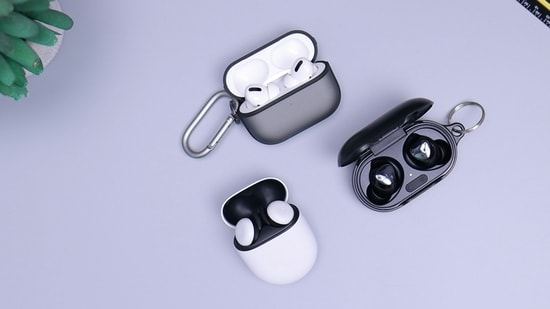
ANC helps reduce the external noise I hear while listening to music, watching videos or travelling. ENC, on the other hand, focuses on reducing background noise picked up by the earbuds' microphones during calls, helping the person on the other end hear my voice more clearly.
So, if I am planning to buy a new pair of wireless earbuds, which of these features should I prioritise? Here is how ANC and ENC work, where they make a difference and which one I would choose depending on my everyday usage.
ANC vs ENC: What is the difference?
The biggest difference between ANC and ENC is the direction in which they work. While ANC reduces the noise reaching my ears, ENC works on the sound captured by the earbuds' microphones and transmitted to the person I am speaking to.
Here is a quick comparison of the two technologies.
| Parameter | ANC | ENC |
| Full form | Active Noise Cancellation | Environmental Noise Cancellation |
| Primary purpose | Reduces external noise I hear | Reduces background noise during calls |
| Who benefits? | The person wearing the earbuds | The person on the other end of the call |
| How it works | Uses microphones and opposing sound waves | Uses microphones and audio-processing algorithms |
| Main use | Music, videos, travel and focused listening | Phone calls and video meetings |
| Most useful for | Flights, trains and noisy commutes | Busy offices, streets and crowded surroundings |
| Impact on music listening | Helps create a quieter listening environment | Does not directly improve music playback |
In simple terms, if I want to reduce the sound of an aircraft engine while listening to music, ANC is the feature I need. However, if I am taking a work call from a busy street and want the other person to hear me clearly, ENC becomes more important.
What is ANC in earbuds and how does it work?
Active Noise Cancellation is a technology designed to reduce unwanted external sounds before they become distracting to the person wearing the earbuds. It uses microphones, audio processing and sound waves to counter certain noises from the surrounding environment.
Best ANC earbuds to consider
How Active Noise Cancellation reduces background noise
ANC-enabled earbuds use external microphones, internal microphones or a combination of both to detect surrounding sounds.
The built-in processor analyses these sounds and generates an opposing sound wave, commonly called anti-noise. When the original sound wave and the opposing wave meet, they can partially cancel each other through a process called destructive interference.
The result is a reduction in the amount of noise I perceive while wearing the earbuds. Depending on the design, earbuds can use feedforward ANC, feedback ANC or hybrid ANC, which combines both approaches.
Which sounds can ANC block effectively?
ANC is particularly useful against continuous, predictable, low-frequency sounds. For instance, when I am travelling by flight, it can help reduce the steady rumbling of the aircraft engine. Similarly, it can make the background hum of an air conditioner, fan, train or traffic less distracting.
However, ANC does not make my surroundings completely silent. Sudden sounds such as honking, people shouting, children playing or someone speaking nearby can still be audible. Its effectiveness also depends on the earbud design, microphone quality, processing capabilities and how well the earbuds fit.
For me, ANC makes the most sense when I want to create a quieter listening environment, especially during travel, work or long music-listening sessions.
What is ENC in earbuds and how does it work?
Environmental Noise Cancellation is designed to improve the audio transmitted from my earbuds during calls. Unlike ANC, which focuses on the noise reaching my ears, ENC works on the microphone input to help reduce unwanted sounds around me.
Best ENC earbuds to buy
How Environmental Noise Cancellation improves call quality
When I take a call using wireless earbuds, their microphones capture my voice along with sounds from the surrounding environment. This could include traffic, conversations, an air conditioner or the general noise of a crowded place.
ENC uses microphone input and audio-processing algorithms to identify and suppress unwanted background sounds while attempting to preserve my voice. The processed audio is then transmitted to the person on the other end of the call.
The objective is to make my voice easier to understand, even when I am not sitting in a completely quiet room.
When does ENC make a difference?
I would find ENC particularly useful when taking work calls from a busy office, attending online meetings from home or speaking to someone while walking outdoors. It can also be helpful when I am travelling and need to make a quick phone call without finding a quiet spot.
However, ENC does not guarantee completely noise-free calls. Loud traffic, strong wind, overlapping conversations and poor microphone placement can still affect voice clarity. In some cases, aggressive noise processing can also make a voice sound unnatural.
It is also worth remembering that ENC is a commonly used manufacturer term rather than a universal performance standard. Different brands may use different microphone arrangements and processing algorithms, so the actual call quality can vary considerably between earbuds.
ANC vs ENC: How do they perform in real-life situations?
Understanding the technical difference between ANC and ENC is useful, but I would rather look at how these features fit into everyday situations. After all, the purpose of buying wireless earbuds is to make listening and communication more convenient.
| Everyday situation | Feature I would prioritise | Why? |
| Listening to music on a flight | ANC | Helps reduce continuous aircraft engine noise |
| Attending a work call from a café | ENC | Helps suppress background sounds in outgoing audio |
| Travelling in a metro | ANC | Helps reduce the rumbling sound of the train |
| Attending online meetings from home | ENC | Helps improve voice clarity for other participants |
| Listening to podcasts in a noisy office | ANC | Reduces distracting environmental sounds |
| Taking calls while walking outdoors | ENC | Helps manage background noise during conversations |
| Listening to music while working | ANC | Creates a quieter listening environment |
| Making calls while travelling | Both | Helps me hear the caller while improving the outgoing audio |
One thing I would keep in mind is that the presence of either feature does not automatically guarantee excellent performance. For instance, an earbud may have ANC but offer only average noise reduction. Similarly, ENC may be advertised as a calling feature, but microphone quality and voice processing ultimately determine how clearly the other person hears me.
This is why I would look beyond the feature names and consider how the earbuds perform in the situations where I am most likely to use them.
Can earbuds have both ANC and ENC? Do I need both?
Yes, wireless earbuds can have both ANC and ENC because the technologies work on different audio paths. ANC focuses on reducing the external noise I hear, while ENC processes the sound captured by the microphones before it is transmitted during a call.
Having both can be useful if I regularly switch between listening to music, watching videos and attending calls. For instance, imagine I am travelling in a metro and need to attend an office meeting. ANC can help reduce the train noise reaching my ears, while ENC can help suppress surrounding sounds in the audio transmitted to the other participants.
However, I would not assume that earbuds offering both technologies will automatically deliver the best listening and calling experience. Their effectiveness depends on the implementation, microphone quality, fit and audio processing.
If my budget allows, I would prefer a pair that offers both features. But I would still consider overall sound quality, comfort, battery life and microphone performance before making a purchase.
ANC vs ENC: Which one should I choose based on my usage?
I would not consider ANC and ENC competing features because they solve two different problems. The right choice depends on how frequently I listen to music, travel or attend calls using my earbuds.
Here is what I would prioritise based on my usage.
| My primary usage | What I would prioritise | Why? |
| Music and video streaming | ANC | Helps reduce external distractions |
| Frequent office calls | ENC and microphone noise reduction | Helps improve outgoing voice clarity |
| Daily metro or bus commute | ANC | Helps reduce continuous travel noise |
| Work from home | ENC and microphone quality | Useful when attending calls around household noise |
| Frequent travel and meetings | Both | Helps with listening and communication |
| Occasional calls and casual listening | Depends on usage | I would prioritise comfort, sound quality and battery life alongside noise cancellation |
- If I spend most of my time listening to music, watching content or travelling, ANC would be higher on my priority list.
- If I frequently attend calls from noisy surroundings, I would pay more attention to ENC and microphone performance.
What else should I check before buying ANC or ENC earbuds?
Earbud fit and passive noise isolation: A snug fit helps physically reduce some external sounds, even without ANC. The right ear-tip size can also help ANC perform more effectively by minimising sound leakage.
Microphone quality and placement: ENC cannot compensate for poor microphone hardware. I would look at the number and positioning of microphones, along with real-world call quality, before choosing a pair.
Battery life with ANC enabled: Using ANC generally consumes additional power. I would check the advertised playback time with ANC switched on rather than relying only on the maximum battery life claimed by the manufacturer.
Transparency or ambient mode: This feature lets external sounds pass through the earbuds, making it easier to hear announcements, conversations and traffic without removing them. I would find it particularly useful while commuting.
Overall sound quality and comfort: Good audio tuning, comfortable ear tips and reliable connectivity matter just as much as noise cancellation. I would not compromise on these aspects simply to get ANC and ENC together.
- Which is better, ANC or ENC in earbuds?
Neither is universally better. ANC reduces external noise I hear while listening to music or travelling, whereas ENC helps reduce background noise picked up by the microphones during calls. The better option depends on how I use my earbuds.
- Can ENC earbuds block outside noise while listening to music?
No, ENC primarily works on the microphone signal during calls. It does not actively reduce the external noise reaching my ears while listening to music. For that, I would look for ANC or rely on passive noise isolation.
- Does ANC improve call quality?
Not necessarily. ANC is designed to reduce external noise reaching the wearer. Call clarity depends more on microphone quality, microphone placement and the earbuds' call noise-reduction technology.
- Can I use ANC and ENC simultaneously?
Yes, earbuds that support both technologies can use ANC to reduce the noise I hear and ENC to improve the outgoing audio during calls. However, the exact operation can vary between models and listening modes.
- Is ENC the same as AI noise cancellation?
Not necessarily. Both terms can refer to microphone-side noise processing, but their implementation can differ. Some manufacturers use AI algorithms to distinguish human speech from background sounds, while others use different audio-processing techniques.
Similar stories for you
Disclaimer: At Hindustan Times, we help you stay up-to-date with the latest trends and products. Hindustan Times has an affiliate partnership, so we may get a part of the revenue when you make a purchase. We shall not be liable for any claim under applicable laws, including but not limited to the Consumer Protection Act, 2019, with respect to the products. The products listed in this article are in no particular order of priority.