Festive season is right around the corner. It is usually the time when we get around to replacing old appliances that we have been putting up with all year. If your washing machine is taking too long to finish a load, leaving clothes damp, or simply struggling with your family’s laundry load, this would be the right time to upgrade. Before you start comparing brands and festive offers, there is one basic decision to make, whether to pick a front-load washing machine model or a top-load washing machine model?
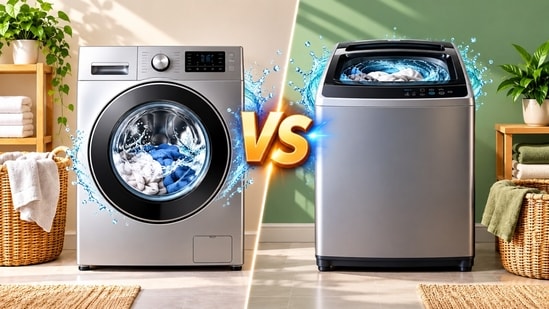
For the unversed, front-load washing machines are generally preferred for their efficient water usage, strong cleaning performance and extensive wash programs, while top-load models appeal to buyers who want simpler operation, quicker access to clothes and a lower upfront price. Neither design is automatically the right choice for every home. Your family size, laundry frequency, available space, water availability and budget can all influence the decision.
To make the choice easier, we have shortlisted 10 washing machines across front-load and top-load categories that are worth considering for a festive home upgrade. From compact options for smaller households to larger-capacity machines designed for busy families, these picks cover different budgets and everyday laundry needs.
But before that, let's understand the difference between the two.
Front-load vs top-load washing machines: What's the difference?
Here are the top differences between a top load washing machine and a front load washing machine model:
FACTOR | FULLY AUTOMATIC FRONT LOAD WASHING MACHINE | FULLY AUTOMATIC TOP LOAD WASHING MACHINE |
| Loading mechanism | Clothes are loaded through a front-facing door | Clothes are loaded from the top |
| Washing mechanism | Horizontal drum tumbles clothes through water and detergent | Vertical drum uses a pulsator/impeller or agitator to move clothes |
| Water consumption | Generally lower because clothes are repeatedly tumbled through a smaller amount of water | Generally higher, although modern impeller models can be considerably more efficient |
| Energy efficiency | Usually more energy-efficient | Generally moderately efficient |
| Cleaning performance | Strong cleaning performance, particularly for mixed loads and heavily soiled clothes | Good everyday cleaning; performance depends on pulsator/impeller and wash program |
| Fabric care | Typically gentler because of the tumbling action | Can be more aggressive depending on the wash mechanism |
| Wash time | Often longer | Usually shorter |
| Ease of loading | Requires bending down to load/unload | Easier to load and unload without bending |
| Adding clothes mid-cycle | Usually limited once the door locks | More commonly possible during the wash cycle |
| Space requirements | Requires clearance in front for the door to open | Requires sufficient clearance above the machine for the lid |
| Best for small laundry areas | Can be stacked with a compatible dryer; useful for vertical space utilisation | Easier if there is no room for a front-opening door |
| Spin speed | Typically offers higher maximum RPMs | Generally lower RPMs |
| Drying time after washing | Clothes generally come out drier because of higher spin speeds | Clothes may retain more moisture |
| Detergent requirement | Usually requires low-detergent amount | Detergent requirements depend on the model |
| Maintenance | Requires regular drum cleaning and keeping the door gasket dry to minimise odour/moisture buildup | Tub-clean cycles are important; generally no front-door gasket to maintain |
| Upfront price | Usually higher | Often available at a lower entry price |
| Running costs | Potentially lower because of reduced water and energy consumption | Can be higher depending on water usage and efficiency |
| Main drawback | Higher upfront cost, bending required, longer cycles and more maintenance around the door/gasket | Higher water use on many models, potentially less gentle fabric treatment and lower spin performance |
Fully automatic top load washing machine: Key benefits and who should buy it?
- Easier loading and unloading: The top-opening design means you can add and remove clothes while standing. This is especially useful for users who find repeated bending uncomfortable.
- Simple to operate: Most models offer straightforward controls and preset programs for everyday fabrics, which makes them easy for first-time washing-machine buyers.
- Faster everyday washing: Top-load machines generally complete regular wash programs faster than many front-load models, which can be useful when you have multiple loads to finish.
- Convenient mid-cycle additions: Many top-loaders allow you to pause the machine and add forgotten clothes during a wash cycle.
- Lower upfront cost: Top-load machines are available across a wide range of prices and can offer a lower entry price than comparable fully automatic front-load models.
- No need to manage a front door: There is no large front door that needs clearance to open, which can make a top-loader easier to position in certain laundry areas.
Who should buy a fully automatic top-load washing machines?
These machines are ideal for families who wash clothes frequently, first time buyers who want simple controls and straightforward operation, people who have difficulty bending, households with limited front clearance, buyers who are tight on a budget, homes where convenience matters more than maximum efficiency and tenants or buyers who want easy installation.
Fully automatic front load washing machine: Key benefits and who should buy it?
- Better water efficiency: These machines generally use less water because clothes are repeatedly lifted and tumbled through a relatively small amount of water.
- Effective cleaning: The tumbling action gives detergent more opportunity to work through fabrics, which makes front-loading washing machines particularly useful for heavily soiled everyday laundry.
- Gentler on clothes: The absence of a traditional central agitator can reduce mechanical stress on many fabrics, which preserves the clothes better.
- Higher spin speeds: Front-load washing machines offer high-speed spinning, extracting more water from clothes and potentially reducing drying time.
- Higher energy savings: Lower water consumption means less energy may be needed to heat water, particularly on machines with efficient wash programs.
- More wash programs: Mid-range and premium models often offer dedicated cycles for cotton, synthetics, delicate fabrics, wool, quick washes and heavily soiled clothes.
- Premium features: These washing machines generally come with advanced features such as Wi-Fi controls, steam/hygiene cycles, automatic dosing and load-sensing to name a few.
Who should buy a fully automatic front-load washing machines?
Fully automatic front-load washing machines are ideal for families that do laundry several times a week owing to its energy saving feature, buyers whose priority is conserving water, people who frequently wash delicate or expensive clothes at home as its tumbling mechanism can provide relatively gentle fabric treatment, buyers who want drier clothes after washing and buyers planning a washer-dryer setup.
Similar articles for you
The Research
I’ve used and tested hundreds of washing machines. I’ve also been writing about consumer electronic devices and home appliances for over a decade.
To compile this guide, I’ve used a dozen top-load and front-load washing machine models and combed through Reddit pages that talk about their drum technology, motors, cleaning mechanism and factors that impact their overall performance. Like all HT journalists, I review products with complete editorial independence and recommend products based on my learnings.
- Which is better, a fully automatic front-load or top-load washing machine?
Both have advantages. Front-load washing machines generally use less water and offer strong fabric care and high-speed spinning, while top-load machines are easier to load and often offer shorter wash cycles.
- Which washing machine uses less water, front-load or top-load?
Front-load washing machines generally use less water than conventional top-load models because their tumbling action does not require filling the entire drum. Actual consumption varies by model.
- Which washing machine is better for hard water in India?
If you live in a hard-water area, look for a model with features specifically designed to deal with mineral deposits or improve rinsing performance.
- Are inverter motors better in fully automatic washing machines?
Inverter motors can offer advantages such as quieter operation, variable-speed control and potentially improved energy efficiency, depending on the machine's design and usage.
- What spin speed should I look for in a washing machine?
A higher spin speed generally removes more water from clothes, which can reduce drying time. Many front-load models offer higher maximum spin speeds than basic top-load machines.
Disclaimer: At Hindustan Times, we help you stay up-to-date with the latest trends and products. Hindustan Times has an affiliate partnership, so we may get a part of the revenue when you make a purchase. We shall not be liable for any claim under applicable laws, including but not limited to the Consumer Protection Act, 2019, with respect to the products. The products listed in this article are in no particular order of priority.