UI, or user interface, has long been a polarising factor when buying an Android smartphone, as it is what people interact with most. No matter how beautiful a phone looks or how powerful its processor is, users will still call it sluggish and boring if its software experience stutters or fails to excite them with its design language.
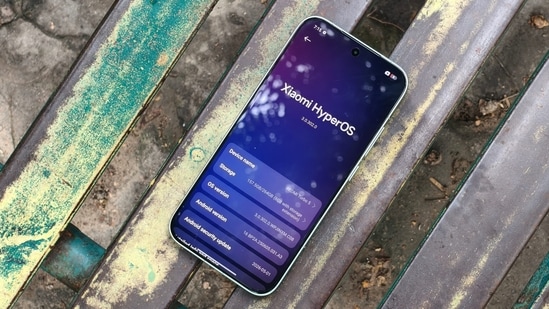
To avoid such reactions to its smartphone, Xiaomi unveiled HyperOS 4, a new version of its user interface yesterday. The update promises a refined software experience, faster app loading, and a host of other changes.
In this article, we examine the improvements Xiaomi has made to its new version of the user interface and how it claims to speed up app loading.
HyperOS 4 gets more translucent and customisable
With HyperOS 4, Xiaomi has delivered a substantial visual upgrade to its software experience. It has followed in Apple's footsteps, incorporating a glass-like appearance across key areas. This results in translucent surfaces and lighting effects on quick settings toggles, menu buttons, widget and folder backgrounds, and more. Xiaomi describes this visual change as the ‘Soft Light Glass’ aesthetic. The brand says its system engine has been optimised to use advanced rendering techniques to simulate realistic light refraction across menus, lending a premium touch to the software experience.
Beyond the glass-inspired look, Xiaomi has introduced stacked notifications on the lock screen with HyperOS 4. We previously saw a stacked notification style on ColorOS 16 and OriginOS 6. Users can now resize the clock on the lock screen. On the home screen, folders can now be enlarged or shrunk, and widgets can be grouped together. Xiaomi has tuned the floating applications to rotate dynamically, so they remain aligned with the screen orientation.
HyperOS 4 is also built to speed things up
{{/usCountry}}Beyond the glass-inspired look, Xiaomi has introduced stacked notifications on the lock screen with HyperOS 4. We previously saw a stacked notification style on ColorOS 16 and OriginOS 6. Users can now resize the clock on the lock screen. On the home screen, folders can now be enlarged or shrunk, and widgets can be grouped together. Xiaomi has tuned the floating applications to rotate dynamically, so they remain aligned with the screen orientation.
HyperOS 4 is also built to speed things up
{{/usCountry}}Not just a visual refresh, Xiaomi claims that HyperOS 4 is also configured to make its phones feel faster. For starters, the brand has optimised its software experience to use less memory than HyperOS 3. It has also incorporated a redesigned app runtime environment intended to make system apps run more efficiently. In Xiaomi’s test, it claimed 30 apps opened 17.5% faster when launched one after another during extended use.
With HyperOS 4, Xiaomi says it has also improved the camera performance on its smartphones. It has made image processing faster, particularly for high-resolution photographs. HyperOS 4 also promises faster HDR image processing, within 240 milliseconds. Additionally, users can expect the native camera app to open faster after a cold startup.
HyperOS 4 puts AI to work across Xiaomi phones
Xiaomi has also focused on enhancing AI on its smartphones with HyperOS 4. The recorder app now helps users create intelligent outlines and summaries, highlight key details, and automatically skip silent sections of a recording.
Another AI-focused addition is the Inspiration Ball, a contextual pointer designed to make everyday tasks easier. Users can drag it over addresses to get navigation assistance or use it to search for products shown in on-screen images. However, Xiaomi may initially limit the feature to select regions.
HyperOS 4 rollout begins in mid-August
Xiaomi will roll out HyperOS 4 in phases, with the first rollout beginning in mid-August. The update will initially reach the company’s latest flagship smartphones and premium tablets. Following this, the brand will expand the rollout in late August and September, introducing HyperOS 4 to more mid-range smartphones.
| Rollout Phase | Start Date | Eligible Xiaomi and Redmi Smartphones |
|---|---|---|
| First Batch | 14 August | Xiaomi 17 Ultra, Xiaomi 17 Pro Max, Xiaomi 17 Pro, Redmi K90 Pro Max, Redmi K90, Xiaomi Pad 8 Pro, Xiaomi Pad 8 |
| Second Batch | 27 August | Xiaomi 17 Max, Xiaomi 17T Pro, Xiaomi 17T, Xiaomi 15 Ultra, Xiaomi 15S Pro, Xiaomi 15 Pro, Xiaomi 15, Redmi K90 Max, Redmi K90 Ultra, Redmi K Pad 2 |
| Third Batch | 17 September | Redmi K100 Pro Max, Redmi K100 Pro, Redmi K80 Pro, Redmi K80 Pro Extreme Edition, Redmi K60, Xiaomi Mix Flip 2, Xiaomi Pad 7 Ultra, Xiaomi Pad 7S Pro 12.5 |
HyperOS 4 update will initially be reserved for China, Xiaomi's home ground. It won't be long before the brand kicks off the update rollout for the global market, including India.